%20(3)_edited_edited.png)


7 Mistakes You’re Making with CRM Automation (and How to Fix Them)
- Peter Casey
- Apr 29
- 5 min read

CRM automation is designed to be the engine that drives your business growth. When executed correctly, it streamlines repetitive tasks, ensures no lead falls through the cracks, and provides your sales team with the data they need to close deals faster. However, many organizations find that their automation efforts often lead to more confusion rather than increased efficiency.
At Bullpen Business, we frequently see mid-market companies struggling with tools that are supposed to make life easier. Generally speaking, the problem isn't the software itself, but how the automation is structured and maintained. If your sales automation feels like a burden, you are likely making one of the following seven common mistakes.
1. Building Automation on a Foundation of "Dirty" Data
The most sophisticated automation in the world cannot fix poor data. If your CRM is filled with duplicate entries, outdated contact information, or missing fields, your automated workflows will only scale those errors. Industry research suggests that outdated or duplicate data can waste hundreds of hours per sales representative annually.
When your CRM automation sends a personalized email to a contact who has already left their company: or worse, sends it to the wrong person entirely: it damages your brand’s credibility. This is especially critical in B2B lead generation services where first impressions are vital.
The Fix: Implement strict data validation rules at the point of entry. Before launching a new automation sequence, perform a comprehensive data audit. You may also want to consider meeting with our team to discuss how our boutique partners handle data cleansing as part of their service offerings.
2. Over-Complicating Your Workflows
It is tempting to automate every single possible scenario a customer might encounter. However, creating overly complex, multi-branching "spiderweb" workflows often leads to technical debt. When a workflow is too complex, it becomes difficult to troubleshoot when something inevitably breaks.
Highly complex systems often result in "automation collisions," where a lead receives two different, conflicting messages at the same time because they triggered two different workflows simultaneously.
The Fix: Keep your initial workflows simple and linear. Focus on the 20% of tasks that provide 80% of the value, such as lead assignment and basic follow-up reminders. As you scale, you can add layers of complexity only when the data proves it is necessary for conversion.
3. Neglecting the Human Touch in B2B Interactions
In the world of B2B lead generation services, relationships are the primary currency. A common mistake is automating too much of the communication process, leading to "robotic" interactions. If a prospect feels like they are just a record in a database, they are less likely to engage.
Automation should empower your team to have better conversations, not replace those conversations entirely. Automated emails that are too generic often end up in the spam folder or are ignored by high-value decision-makers.
The Fix: Use automation for "under-the-hood" tasks like lead routing and internal notifications. For external communication, use "semi-automation." This means the system drafts the email and populates the data, but a human review is required before the "send" button is pushed. This ensures that the context remains accurate and professional.
4. Failing to Align Automation with the Sales Pipeline
Many businesses set up their pipeline automation based on what they think should happen, rather than what actually happens in their sales cycle. If your automation triggers a "request a demo" email when a lead is only in the "awareness" stage, you will alienate potential clients.
A disconnect between your marketing automation and your sales pipeline creates a disjointed experience for the buyer. It often results in sales representatives reaching out too early or too late, which directly impacts your appointment setting success rate.
The Fix: Map out your customer journey on paper before touching your CRM settings. Ensure that every automated trigger corresponds to a specific action or milestone in your real-world sales process. For companies looking to refine this process, reviewing our core solutions can help identify where specific boutique firms can bridge these gaps.
5. Operating in Integration Silos
Your CRM should be the "single source of truth" for your organization. A major mistake is running sales automation tools that do not talk to your CRM. If your email marketing tool, your LinkedIn outreach tool, and your CRM are all running independent automations, you will likely send redundant or conflicting messages.
Data silos prevent you from seeing the full picture of a lead’s behavior. Without integration, you cannot accurately measure the ROI of your B2B lead generation services.
The Fix: Prioritize tools that offer native integrations with your CRM. If a native integration isn't available, use middleware like Zapier or Make to ensure data flows back and forth. Bullpen Business connects you with boutique firms that specialize in creating these seamless ecosystems to improve your overall profitability.

6. Ignoring Lead Scoring and Prioritization
Not all leads are created equal. If your automation treats a lead who downloaded a whitepaper the same as a lead who requested pricing, your sales team will waste time on low-value prospects. Failing to implement lead scoring means your most valuable opportunities might be buried under a mountain of "lukewarm" noise.
Effective appointment setting services rely on knowing exactly who to call and when. Without automated scoring, your team is essentially guessing which leads to prioritize.
The Fix: Develop a lead scoring model that assigns points based on both demographic fit and behavioral actions. Use your CRM automation to automatically escalate high-scoring leads to your top sales representatives immediately. You can find more information on how to structure these strategies in our blog.
7. The "Set It and Forget It" Mentality
Perhaps the most dangerous mistake is assuming that once an automation is built, it never needs to be touched again. Markets change, customer behaviors shift, and software updates can break existing connections. An automation that worked perfectly six months ago might be completely irrelevant today.
Without regular monitoring, you won't know if your conversion rates are dropping or if your automated emails are being flagged as spam by major providers.
The Fix: Schedule a monthly "Automation Audit." Review your key performance indicators (KPIs), such as open rates, click-through rates, and conversion-to-meeting ratios. If the numbers are trending downward, it is time to refresh your messaging or adjust your triggers.

How Bullpen Business Fixes the Automation Gap
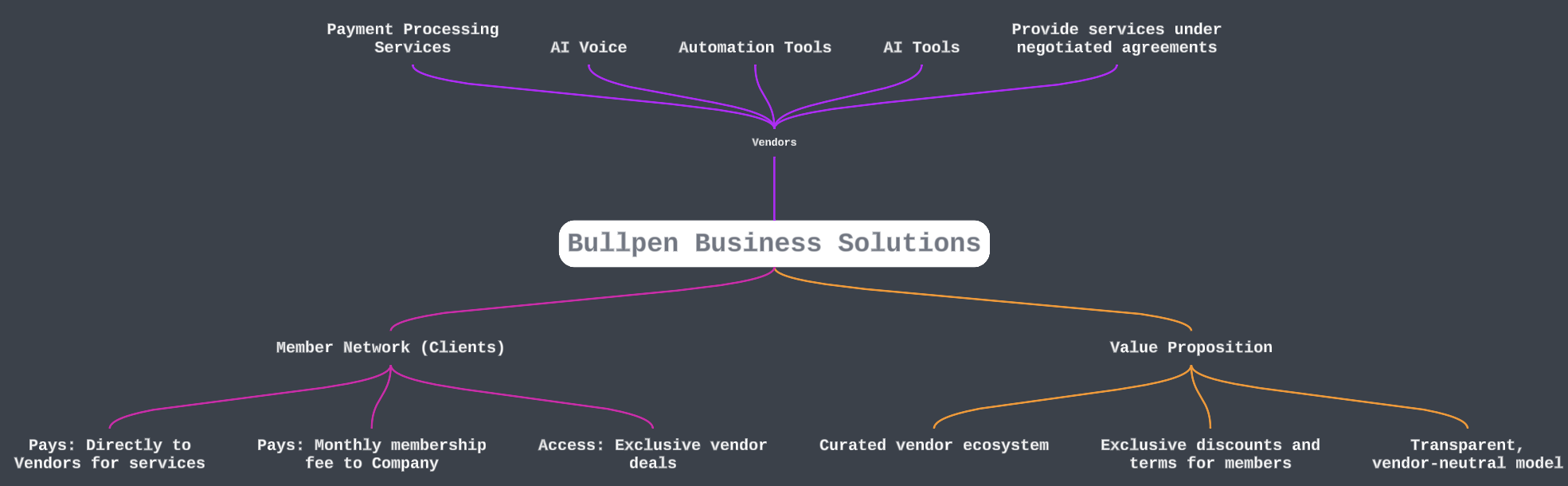
At Bullpen Business, we understand that mid-market companies often lack the time to vet every boutique firm offering pipeline automation or appointment setting services. Our role is to act as your strategic partner, connecting you with highly specialized firms that have a proven track record of success.
By leveraging our network, you gain access to negotiated deals and a curated ecosystem of vendors who understand how to implement CRM automation the right way. We help you move away from generic, "one-size-fits-all" solutions and toward a customized model that focuses on profitability and efficiency.
Whether you are looking for help with wireless optimization to cut costs or need a partner for sophisticated B2B lead generation services, we provide the bridge to the right experts.
Final Thoughts
Automation is a powerful tool, but it is not a magic wand. It requires a strategic approach, clean data, and a commitment to ongoing optimization. By avoiding these seven common mistakes, you can transform your CRM from a static database into a dynamic growth engine.
If you are ready to stop guessing and start growing, we invite you to explore our pricing and plans or book a session with our team to see how we can help your business reach its full potential.
Generally speaking, the path to improved profitability begins with better systems. Let us help you find the right boutique firm to build those systems for you.
Comments