%20(3)_edited_edited.png)


How to Build a Pipeline Automation Strategy That Pays for Itself
- Peter Casey
- Apr 13
- 5 min read

In the current B2B landscape, the efficiency of your sales funnel is often the deciding factor between scaling and stagnation. Many organizations struggle with manual processes that drain resources and introduce human error into the sales cycle. To remain competitive, implementing a robust pipeline automation strategy is no longer optional; it is a fundamental requirement for maintaining profitability and predictability.
Building a strategy that effectively pays for itself requires more than just purchasing software. It demands a structured approach to identifying high-friction tasks, selecting the right boutique partners for implementation, and measuring the return on investment (ROI) with precision. At Bullpen Business, we specialize in connecting companies with the specialized firms necessary to execute these complex transitions.
1. Defining ROI Metrics for Automation
A successful pipeline automation strategy must be grounded in measurable financial outcomes. Generally speaking, if an automation tool or service does not demonstrate a clear path to paying for itself within twelve months, the implementation strategy should be reassessed. There are three primary pillars of ROI to monitor:
A. Reduction in Sales Cycle Time
Pipeline automation accelerates the transition of a lead from initial contact to a closed deal. By removing manual bottlenecks: such as waiting for a representative to manually log a call or send a follow-up email: prospects move through the funnel with greater velocity.
B. Increased Conversion Rates
Automation ensures that no lead is neglected. Through sophisticated CRM automation, prospects receive timely interactions based on their specific behaviors. This consistency typically results in higher conversion rates at every stage of the funnel, directly impacting the bottom line.
C. Improved Forecasting Accuracy
When data entry is automated, the information within your CRM remains accurate and up-to-date. This allows leadership to generate revenue forecasts that are based on real-time data rather than optimistic estimates or outdated spreadsheets.
2. Identifying High-Impact Automation Targets
To maximize the immediate financial impact of your strategy, you should focus on labor-intensive manual tasks that consume the majority of your sales team's time. By offloading these responsibilities to automated systems, your representatives can focus on high-value relationship building and closing.
Automated Lead Routing and Scoring
One of the most significant wastes of resources in B2B sales is pursuing leads that are not ready to buy. Automated lead scoring uses predefined criteria and AI-driven insights to rank prospects. Furthermore, automated routing ensures that the highest-value leads are instantly delivered to the most appropriate sales representative, preventing delays that could result in lost opportunities.
CRM Automation and Data Logging
Manual data entry is a primary source of friction and error. Modern sales automation tools can automatically log emails, calls, and meetings directly into your CRM. Research indicates that automating these administrative tasks can save individual representatives significant time per day, which can then be redirected toward revenue-generating activities.
B2B Lead Generation and Appointment Setting
Many companies benefit from integrating B2B lead generation services and appointment setting services into their automated workflow. By partnering with boutique firms that specialize in these areas, you can ensure a consistent flow of qualified meetings without burdening your internal team with the heavy lifting of cold outreach and initial qualification.

3. The Role of Specialized Boutique Firms
While many "all-in-one" platforms exist, the most effective pipeline automation strategies often involve a combination of market-leading software and specialized boutique consulting firms. Bullpen Business acts as the bridge between your organization and these expert providers.
Boutique firms offer a level of customization and deep industry knowledge that large-scale vendors often lack. Whether you require a specialized firm for pipeline automation or a niche agency for appointment setting services, the right partnership ensures that the technology is implemented correctly and integrated seamlessly into your existing workflows.
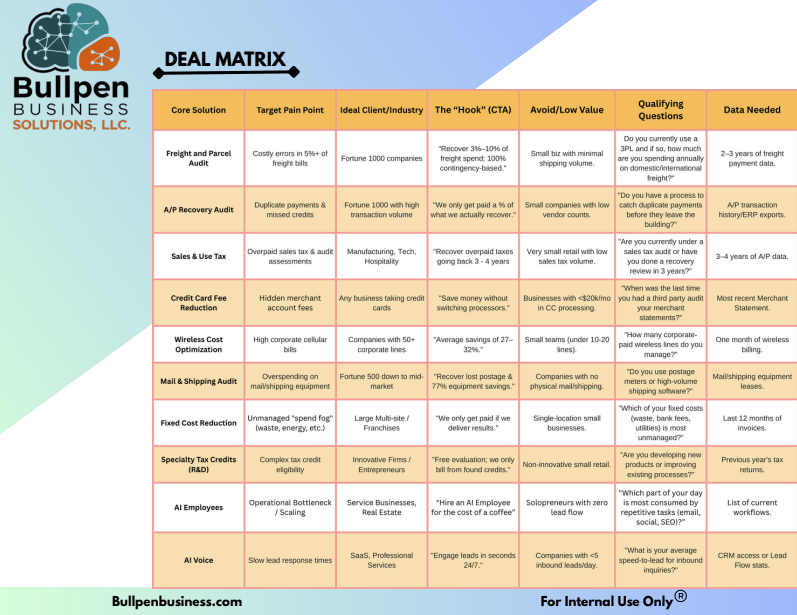
You may explore our curated network of solutions to understand how different services can be integrated into your specific business model by visiting our product page.
4. Measuring Time Savings and Human Capital Impact
The true value of automation is often found in the reclamation of human capital. When administrative "busywork" is handled by software, the cost-per-acquisition typically decreases.
Consider the following impact areas:
Focus Shift: Calculate how many hours your sales team currently spends on administrative tasks. If automation can reduce this by 80%, calculate the revenue potential of those recovered hours being spent on active selling.
Consistency: Human follow-up is prone to inconsistency. Automated sequences ensure that 100% of leads receive the required touchpoints, regardless of how busy the sales team becomes.
Reduced Training Costs: When workflows are automated and standardized, onboarding new sales representatives becomes faster and less expensive, as the "system" guides the user through the process.
To further understand how our business model supports this transition, you can view our Business Model Mind Map or meet with our team to discuss your specific needs.
5. Evaluating the Total Cost of Ownership (TCO)
When building your strategy, it is imperative to look beyond the initial subscription price of a tool. The total cost of ownership includes:
Implementation and Integration: The cost of connecting new tools with your existing tech stack.
Training and Adoption: The time and resources required to ensure your team actually uses the new systems. Low adoption rates are the primary reason automation strategies fail to deliver ROI.
Maintenance: The ongoing requirement to update workflows and sequences as your market or product evolves.
By working with boutique firms recommended by Bullpen Business, you can often mitigate these risks. These firms are selected for their ability to deliver tangible results with minimal friction, ensuring that the transition to an automated pipeline is both smooth and profitable.

6. Implementing a Unified Data Foundation
Scattered data is the enemy of automation. If your prospect information lives across various spreadsheets, email threads, and disconnected apps, your automation will be inherently flawed. A central component of any strategy that pays for itself is the creation of a "Single Source of Truth."
A unified data foundation allows your CRM automation to function at peak performance. It ensures that when a prospect interacts with your website, that data is immediately available to the automated email sequence, the lead scoring system, and the sales representative. This level of synchronization prevents embarrassing overlaps and ensures that your brand presents a professional, cohesive image to every prospect.
For a deeper dive into the technical aspects of how we structure these connections, you can review The Deck, which outlines our approach to business consulting and vendor management.
7. Conclusion: The Path to Scalable Profitability
Building a pipeline automation strategy is a journey of continuous improvement. By focusing on high-impact areas, defining clear ROI metrics, and leveraging the expertise of boutique firms, your organization can create a sales engine that not only pays for itself but drives significant long-term growth.
The transition from manual to automated processes requires careful planning and the right partners. At Bullpen Business, we remain committed to helping you navigate this landscape, connecting you with the tools and firms that turn operational efficiency into a competitive advantage.
If you are ready to begin optimizing your sales funnel, we invite you to explore our blog for more insights or contact us directly to discuss how we can improve your company’s profitability through specialized automation solutions.
Comments