%20(3)_edited_edited.png)


How to Integrate CRM Automation With Your Growth Strategy to Stop Profit Leaks
- Peter Casey
- Apr 27
- 6 min read

Growth is the primary objective for most mid-market and enterprise organizations. However, growth without efficiency often leads to a phenomenon known as "profit leakage." Profit leaks occur when revenue is lost due to inefficient processes, manual errors, or missed opportunities within your sales and marketing funnel.
Integrating CRM automation into your overarching growth strategy is no longer a luxury; it is a fundamental requirement for maintaining healthy margins. When your Customer Relationship Management (CRM) system acts as a passive database rather than an active engine, you are likely leaving significant capital on the table.
1. Identifying the Sources of Profit Leakage
Before you can fix a leak, you must understand where the water is escaping. In most B2B environments, profit leaks are rarely the result of a single catastrophic failure. Instead, they are the cumulative effect of small, repetitive inefficiencies.
Manual Data Entry and Human Error Every hour your sales team spends manually inputting contact details or updating deal stages is an hour not spent closing revenue. Furthermore, manual entry is prone to errors, misspelled emails, incorrect phone numbers, or forgotten follow-up dates, which can effectively kill a lead before it even reaches a representative.
Lead Decay Speed to lead is a critical metric. When a prospect engages with your content or requests information, their interest is at its peak. Without automated B2B lead generation services and instant routing, a lead may sit in an inbox for 24 to 48 hours. By that time, they may have already contacted a competitor.
Lack of Pipeline Visibility If you cannot accurately forecast your revenue because your data is siloed or outdated, you cannot make informed decisions about hiring, inventory, or marketing spend. This uncertainty often leads to over-leveraging or missed investment opportunities.

2. The Role of Sales Automation in Modern Growth
Sales automation is the process of using software to automate repetitive, manual tasks in the sales cycle. By offloading these tasks to a digital system, your human talent can focus on high-value activities like relationship building and complex problem-solving.
When integrated correctly, sales automation ensures that every prospect receives a consistent experience. This consistency is vital for brand reputation and conversion rates. It allows your organization to scale without a linear increase in administrative headcount.
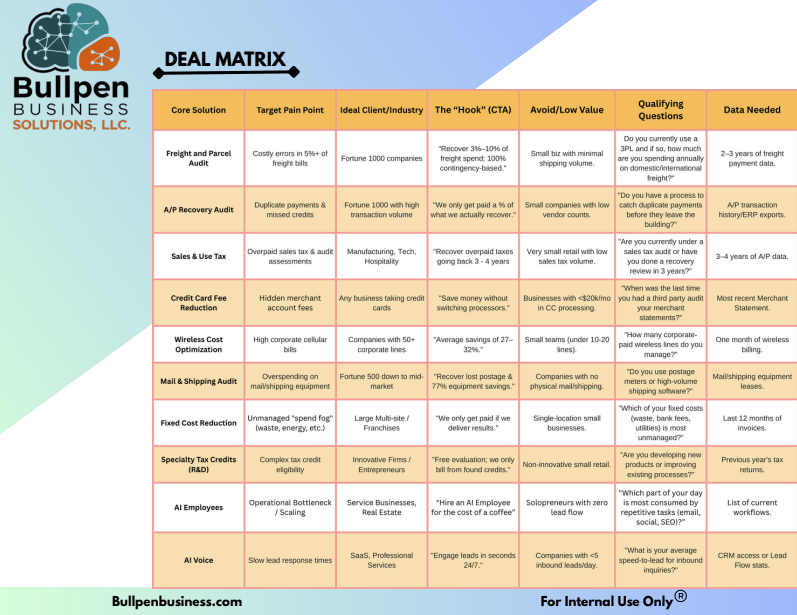
At Bullpen Business, we specialize in identifying the specific boutique firms that can implement these advanced automation layers. Rather than trying to navigate the massive marketplace of software vendors alone, we connect you with experts who tailor these systems to your specific industry needs. You can learn more about our process by viewing The Deck.
3. Implementing CRM Automation Strategically
To stop profit leaks, your CRM automation must be deeply woven into your business logic. It should not be an afterthought or a "plugin" that sits on top of your existing mess.
A. Centralize Your Data Hub Your CRM should be the single source of truth for your entire organization. This means integrating it with your accounting software, your email marketing platforms, and your customer support tools. When data flows seamlessly between these systems, you eliminate the need for duplicate entry and reduce the risk of conflicting information.
B. Automate Lead Capture and Qualification Use automated forms and tracking to capture leads the moment they interact with your digital assets. Sophisticated CRM automation can then qualify these leads based on pre-defined criteria, such as company size, industry, or budget, before assigning them to the right salesperson.
C. Standardize the Follow-Up Automated sequences ensure that no lead is ever truly "lost." If a prospect isn't ready to buy today, they should be placed into an automated nurturing sequence that provides value over time, keeping your brand top-of-mind until they are ready to re-engage.
4. Enhancing Output with Pipeline Automation
A healthy pipeline is one that moves. Stagnation is the enemy of profitability. Pipeline automation involves setting up triggers that move deals through various stages based on specific actions or milestones.
For example, when a contract is sent, the system should automatically update the deal stage and set a reminder for the sales rep to follow up in three days if the document remains unsigned. If a deal stays in the "Proposal" stage for more than two weeks without activity, the system can trigger an internal alert for management to review the account.
This level of oversight prevents deals from "rotting" in the pipeline. It forces a decision, either the deal moves forward, or it is cleared out to make room for fresh opportunities. By maintaining a clean, high-velocity pipeline, you ensure that your resources are always focused on the most likely sources of revenue.
5. Integrating Appointment Setting Services
For many B2B organizations, the biggest bottleneck is getting the first meeting. This is where appointment setting services become invaluable. However, if these services are disconnected from your CRM, you create another potential profit leak.
When you utilize professional appointment setting services, the data from those initial conversations must flow directly into your automated pipeline.
The appointment setter identifies a qualified prospect.
The meeting is booked directly on the sales rep's calendar.
The CRM automatically sends a calendar invitation and a confirmation email to the prospect.
The system sends a briefing note to the sales rep with all gathered intelligence.
Post-meeting, the system prompts the rep for a status update to trigger the next stage of automation.
This seamless handoff ensures that the momentum generated by the appointment setter is never lost. If you are struggling to maintain this handoff, you may need to meet with our team to discuss better integration strategies.
6. Closing the Loop with B2B Lead Generation Services
Lead generation is the fuel for your growth engine. However, not all fuel is created equal. High-volume, low-quality leads can actually decrease your profitability by wasting your sales team’s time.
Effective B2B lead generation services focus on quality and intent. When integrated with CRM automation, these services allow you to track the exact ROI of every lead source. You can see which campaigns are producing closed-won deals and which ones are simply cluttering your database.
By identifying your most profitable lead sources, you can reallocate your marketing budget to the channels that produce the highest lifetime value (LTV) customers. This data-driven approach is the ultimate way to stop profit leaks at the top of the funnel.
7. The Bullpen Business Advantage
Many companies attempt to handle all aspects of automation and lead generation in-house. While this offers control, it often leads to "generalist" results. The landscape of sales automation and CRM automation is changing too rapidly for a generalist internal team to keep up.
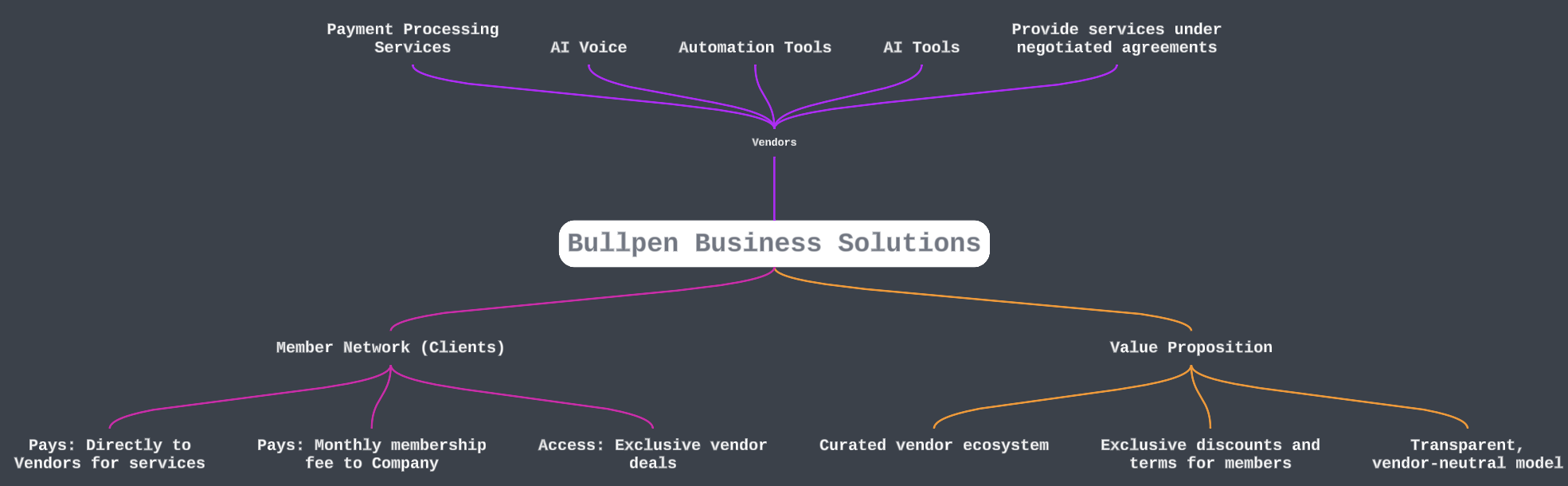
Bullpen Business acts as a bridge. We represent a curated network of boutique firms that are specialists in their respective fields: whether that is wireless optimization, tax recovery, or advanced AI-driven sales tools.
We help you identify the specific gaps in your current strategy and connect you with the right partner to close those gaps. This model ensures you get expert-level implementation without the overhead of a massive consulting firm.
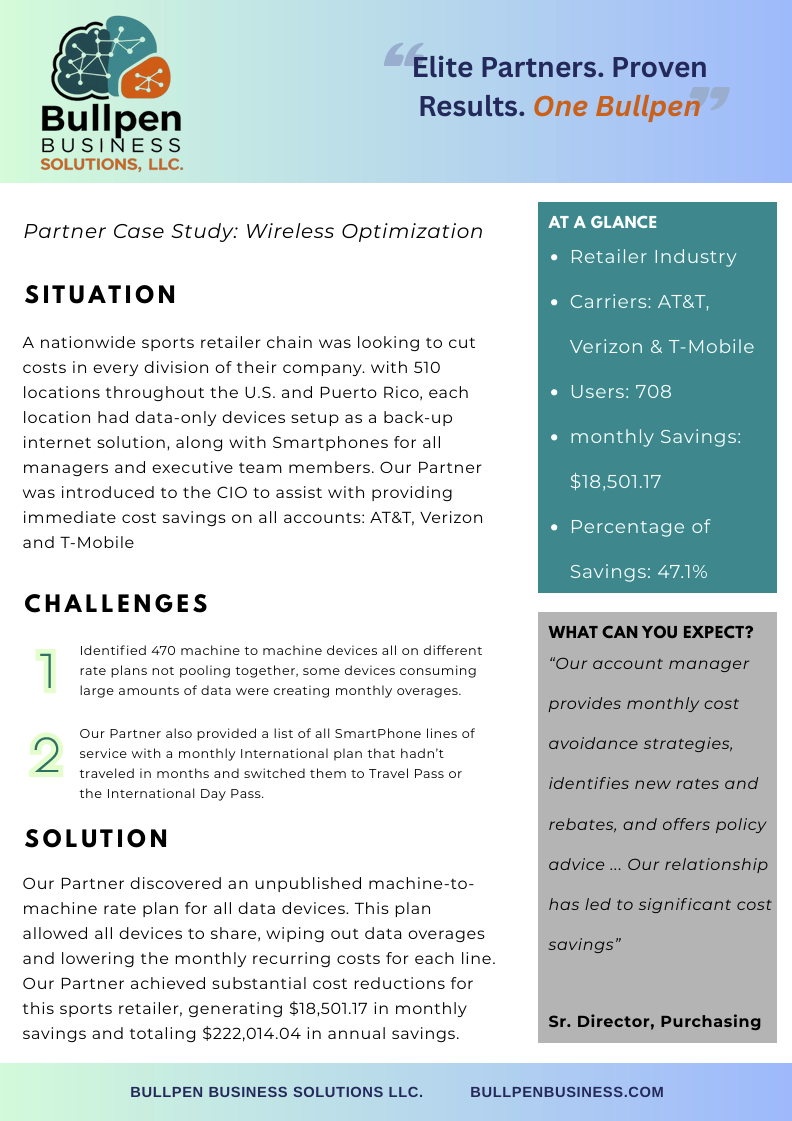
As seen in our case studies, such as the wireless optimization for a nationwide sports retailer, the right specialized intervention can result in immediate and dramatic cost savings. The same principle applies to your sales tech stack. A precisely tuned CRM can recover thousands of dollars in "lost" time and missed opportunities every month.
8. Steps to Get Started
If you are ready to stop the profit leaks in your organization, follow this roadmap:
Audit Your Current Process: Document every step a lead takes from first contact to closed-won. Identify where manual work is currently required.
Define Your Success Metrics: What does a "stopped leak" look like? Is it a 20% increase in lead response time? A 10% increase in pipeline velocity?
Clean Your Data: Automation only works if the data it relies on is accurate. Perform a deep clean of your CRM before turning on new automated workflows.
Partner with Specialists: Do not try to build complex pipeline automation from scratch if it isn't your core competency.
Iterate and Optimize: Automation is not a "set it and forget it" solution. Monitor your workflows and adjust them based on real-world performance data.
Integrating these technologies requires a strategic mindset. It is about more than just buying software; it is about redesigning your business to be more resilient and profitable.
To explore how our network of boutique firms can help you implement these solutions, we invite you to book an introductory call. We can help you evaluate your current state and determine which automation paths will yield the highest return on investment for your specific business model.
By taking these steps today, you transform your CRM from a digital filing cabinet into a high-performance engine that powers your growth while protecting your bottom line. Stop the leaks, automate the mundane, and let your team focus on what they do best: growing the business.
Comments