%20(3)_edited_edited.png)


The Ultimate Guide to Pipeline Automation: Everything You Need to Succeed
- Peter Casey
- Apr 10
- 5 min read

In the current business landscape of 2026, efficiency isn't just a competitive advantage: it is a requirement for survival. For many companies, the "pipeline" is the lifeblood of the organization. Whether we are discussing a sales funnel, a data stream, or a deployment cycle, the manual management of these processes is often where profitability goes to die.
Pipeline automation is the strategic implementation of technology to enforce rules, validate data, and manage workflows without constant human intervention. By the time you finish this guide, you will understand how to leverage sales automation, CRM automation, and specialized B2B lead generation services to transform your business from a manual grind into a high-velocity machine.
1. What Exactly is Pipeline Automation?
Generally speaking, pipeline automation removes the "human friction" from repeatable processes. It involves setting up a series of triggers and actions that move a task from point A to point B based on predefined logic.
In a business context, this usually falls into three categories:
Sales Pipeline Automation: Enforcing deal stages and ensuring that your sales team is following a proven process rather than "winging it."
Data Pipeline Automation: Moving information between platforms (like from your marketing tools to your CRM) without manual export-import errors.
Lead Flow Automation: Ensuring that every lead from your appointment setting services is immediately routed to the right representative.
The goal is simple: allow your people to focus on high-value activities: like closing deals: while the software handles the administrative heavy lifting.
2. The Core Pillars of a Successful Automated Pipeline
To build a pipeline that actually scales, you need to focus on more than just the software. You need a strategy that encompasses data integrity and process mapping.
Sales Automation: The Engine of Growth
Sales automation is about more than just sending "automated" emails that feel like spam. It is about automating the internal triggers that keep a deal moving. This includes:
Automated Follow-ups: Ensuring no lead is left behind.
Task Creation: Automatically assigning a call to an account executive when a prospect downloads a whitepaper.
SLA Timers: Detecting when a deal has stagnated in a specific stage for too long and alerting management.
CRM Automation: The Foundation of Truth
Your CRM should be your "single source of truth." However, a CRM is only as good as the data inside it. CRM automation ensures that your data remains structured and clean. By using mandatory fields and automated validation rules, you prevent the "garbage in, garbage out" scenario that plagues most mid-market companies.
3. Why Boutique Firms are the Secret to Better Results
Many companies try to build their automated pipelines in-house or hire massive, "one-size-fits-all" consulting agencies. These approaches often lead to bloated budgets and systems that don't actually fit the business's specific needs.
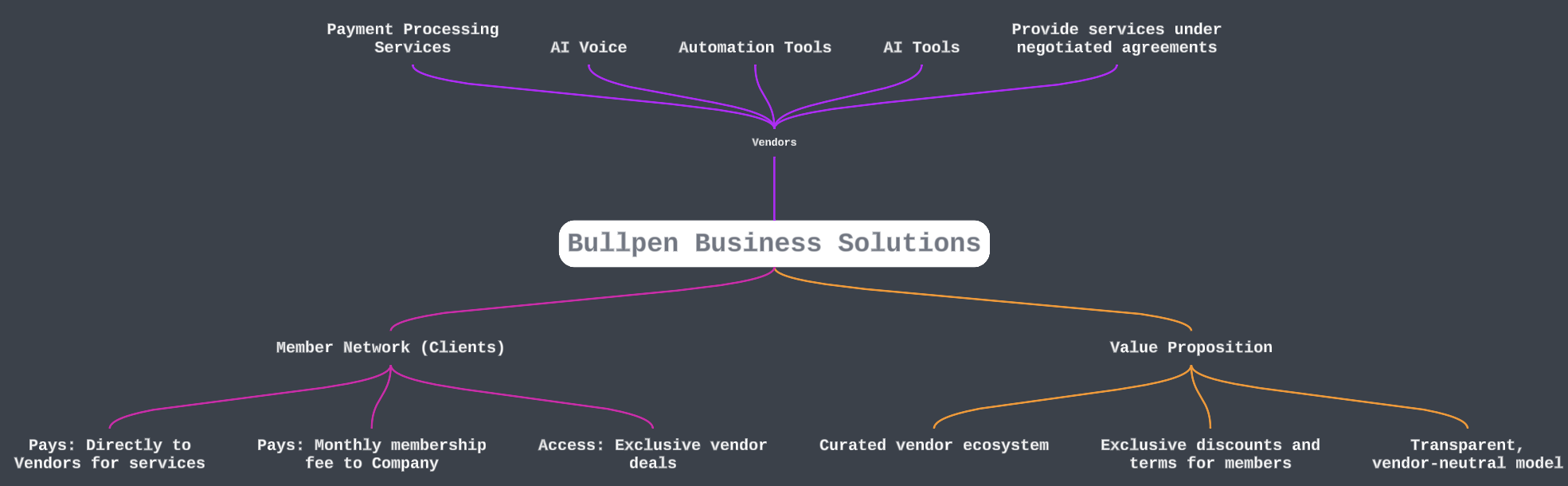
At Bullpen Business, we believe in a different model. We connect companies with boutique firms that specialize in niche areas like B2B lead generation services and appointment setting services. These specialized firms have refined their own automation stacks, allowing them to deliver results at a fraction of the cost of a full-time internal department.
When you work with a curated boutique partner, you aren't just buying a service; you are buying an optimized pipeline that has already been battle-tested. You can view our approach to identifying these opportunities in The Deck.
4. Step-by-Step: How to Implement Pipeline Automation
Implementing automation can feel overwhelming, but it is manageable when broken down into logical phases.
Phase 1: Define Your Goals and Pain Points
Before you touch a single piece of software, you must identify where your pipeline is currently "leaking." Are leads disappearing? Is your data inconsistent? Are your account executives spending four hours a day on data entry?
Phase 2: Clean Your Data
Automating a broken process only makes it break faster. You must standardize your data entry before you automate it. Use structured properties: like dropdown menus instead of open text fields: to ensure the automation has clean data to work with.
Phase 3: Map the Workflow

Visualize the journey from the first touchpoint to the final signature. Where can a trigger replace a manual action? For example, when an appointment setting service books a meeting, the automation should:
Create the record in the CRM.
Send a calendar invitation.
Assign a "Discovery" task to the salesperson.
Send a confirmation email to the prospect.
Phase 4: Select the Right Tools
From orchestration tools like Zapier or Make to enterprise-level solutions like Airflow, your tech stack should match your complexity. For most B2B companies, a robust CRM combined with a specialized lead gen partner is the winning combination.
Phase 5: Monitoring and Scaling
Automation is not "set it and forget it." You must monitor your success metrics. Are your conversion rates increasing? Is your sales velocity (the time it takes to close a deal) decreasing?
5. Maximizing Profitability Through Specialized Services
One of the biggest mistakes business owners make is trying to be "everything to everyone." In the world of pipeline automation, this translates to trying to build every automation yourself.
By leveraging B2B lead generation services, you are essentially "outsourcing" the front end of your pipeline to experts who have already mastered the automation of that specific stage. This allows your internal team to focus on the "middle and end" of the pipe: the relationship building and closing.
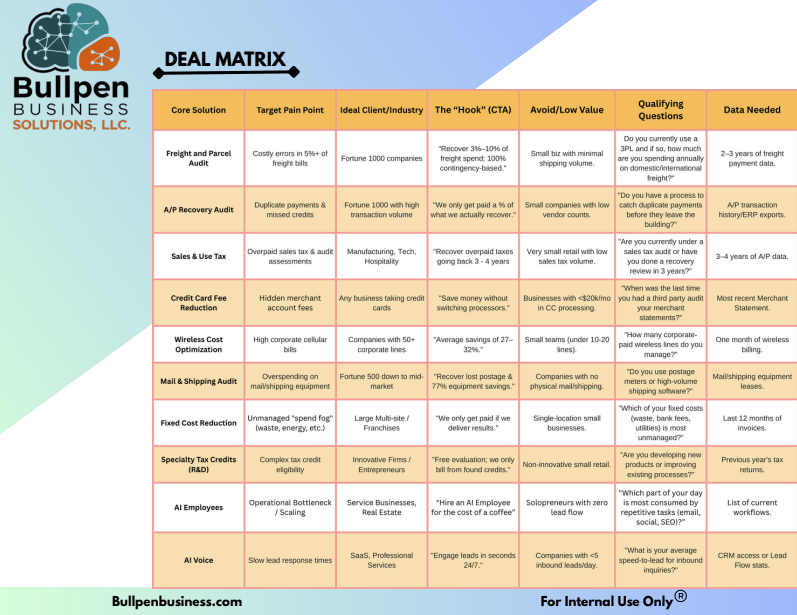
As shown in our Deal Matrix, identifying the right partner for specific pain points: whether it’s cost recovery or AI-driven appointment setting: is key to improving overall profitability.
6. Common Pitfalls to Avoid
Even with the best intentions, automation can go wrong. Here is what to watch out for:
Over-Automating: Sometimes, a human touch is necessary. Don't automate the parts of your sales process that require genuine empathy and high-level negotiation.
Ignoring Traceability: If an automation fails, can you find out why? Ensure your systems have logging and alerting in place so you aren't flying blind.
Neglecting the User Experience: If your automated emails look like they were written by a robot from 2012, your prospects will ignore them. Use automation to facilitate the conversation, not replace it.
7. Measuring the Success of Your Automated Pipeline
You cannot manage what you do not measure. To ensure your investment in pipeline automation is paying off, track the following:
Lead Response Time: How quickly are you engaging with new leads?
Pipeline Velocity: How many days does it take for a lead to move through each stage?
Customer Acquisition Cost (CAC): Has automation allowed you to scale your lead volume without linearly increasing your headcount?
Data Accuracy: What percentage of your CRM records are complete and valid?
8. How Bullpen Business Can Help
We understand that the world of business consulting and automation can be murky. There are thousands of vendors making big promises, but very few that deliver specific, measurable results for your unique situation.
Bullpen Business acts as your advocate. We have already vetted a network of boutique firms that excel in sales automation and appointment setting services. Our goal is to connect you with the right expertise to drive profitability without the headache of trial and error.
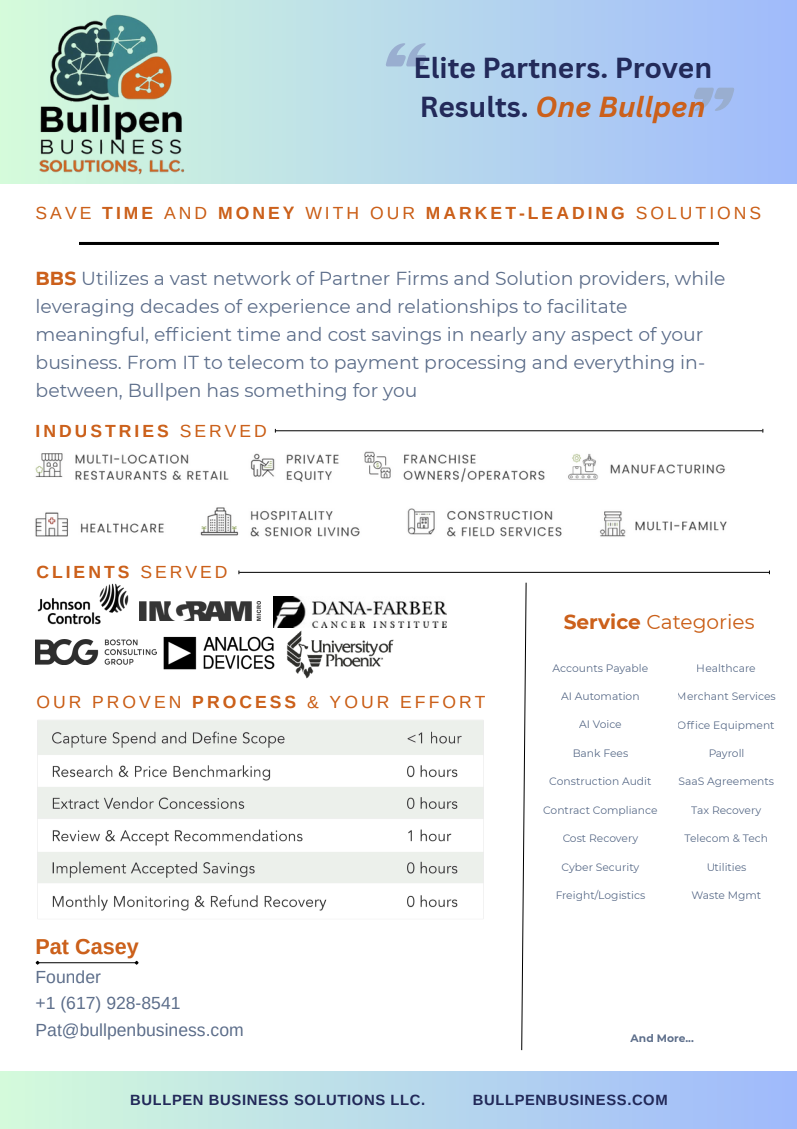
Whether you are a mid-market company looking to scale or a larger organization seeking to trim the fat from your operations, we have the network to help you succeed.
Ready to Optimize Your Pipeline?
Don't let manual processes hold your business back. The technology exists to help you work smarter, not harder. If you are ready to explore how specialized automation and boutique partnerships can change the trajectory of your growth, let's have a conversation.
You can Book Online to schedule a consultation or visit our blog to stay updated on the latest trends in business efficiency.
In the end, pipeline automation isn't just about software; it's about freedom. Freedom for your team to do what they do best, and freedom for your business to grow without limits. Let’s get to work.
Comments