%20(3)_edited_edited.png)


Why Pipeline Automation Will Change the Way You Scale Your Business
- Peter Casey
- Apr 28
- 5 min read

Scaling a business is often misunderstood as a simple matter of increasing headcount or spending more on advertising. However, true growth is frequently throttled not by a lack of effort, but by the weight of manual processes that cannot keep pace with demand.
In the modern B2B landscape, the ability to scale effectively depends on your ability to decouple your team’s capacity from your operational output. This is where pipeline automation becomes a fundamental requirement rather than a luxury.
By implementing sophisticated automated systems, you ensure that your sales and marketing engines run with precision, regardless of how many leads enter the system. We at Bullpen Business focus on connecting you with the right boutique firms to implement these high-level strategies, ensuring your path to profitability is clear and sustainable.
1. The Bottleneck of Manual Sales Cycles
When a business is in its early stages, manual oversight is manageable. A founder or a small sales team can personally track every lead, send every follow-up email, and manually update spreadsheet records.
However, as you grow, these manual touchpoints become significant liabilities. Statistics suggest that data teams can spend a vast amount of their time simply moving data between systems, which is a drain on resources that could be spent on high-level strategy.
Pipeline automation eliminates the "human overhead" that traditionally slows down the sales cycle. Instead of your team spending hours on administrative tasks, automation handles the movement of a prospect from initial contact to a qualified opportunity.
2. CRM Automation: The Foundation of Scale
Your Customer Relationship Management (CRM) system should be more than just a digital rolodex. Without CRM automation, your data quality will inevitably degrade as your volume increases.
Automated CRM workflows ensure that every interaction is logged accurately without human intervention. This leads to several critical advantages for your scaling efforts:
Standardized Data Entry: Automation removes the risk of human error, ensuring that formats, tags, and source tracking remain consistent across thousands of records.
Real-Time Lead Scoring: As prospects interact with your content, an automated CRM can adjust their "score" instantly, alerting your team only when a lead is truly "sales-ready."
Automated Nurture Sequences: You can maintain engagement with thousands of prospects simultaneously through triggered messaging that feels personal but requires zero daily effort from your staff.
By optimizing these workflows, you allow your sales team to focus on closing deals rather than managing software. You can explore how we help facilitate these transitions on our pricing plans page.
3. Revolutionizing B2B Lead Generation Services
Scaling requires a consistent, predictable flow of new opportunities. Traditional lead generation often relies on "burst" campaigns that create feast-or-famine cycles.
Modern B2B lead generation services leverage automation to create a "steady state" of inbound and outbound activity. This ensures that your pipeline is never empty, even when your internal team is focused on bottom-of-the-funnel activities.
When automation is applied to lead generation, you can:
Identify high-intent prospects based on specific web behaviors.
Automatically verify email addresses and LinkedIn profiles to reduce bounce rates.
Distribute leads to the appropriate team members based on territory or specialty without delay.
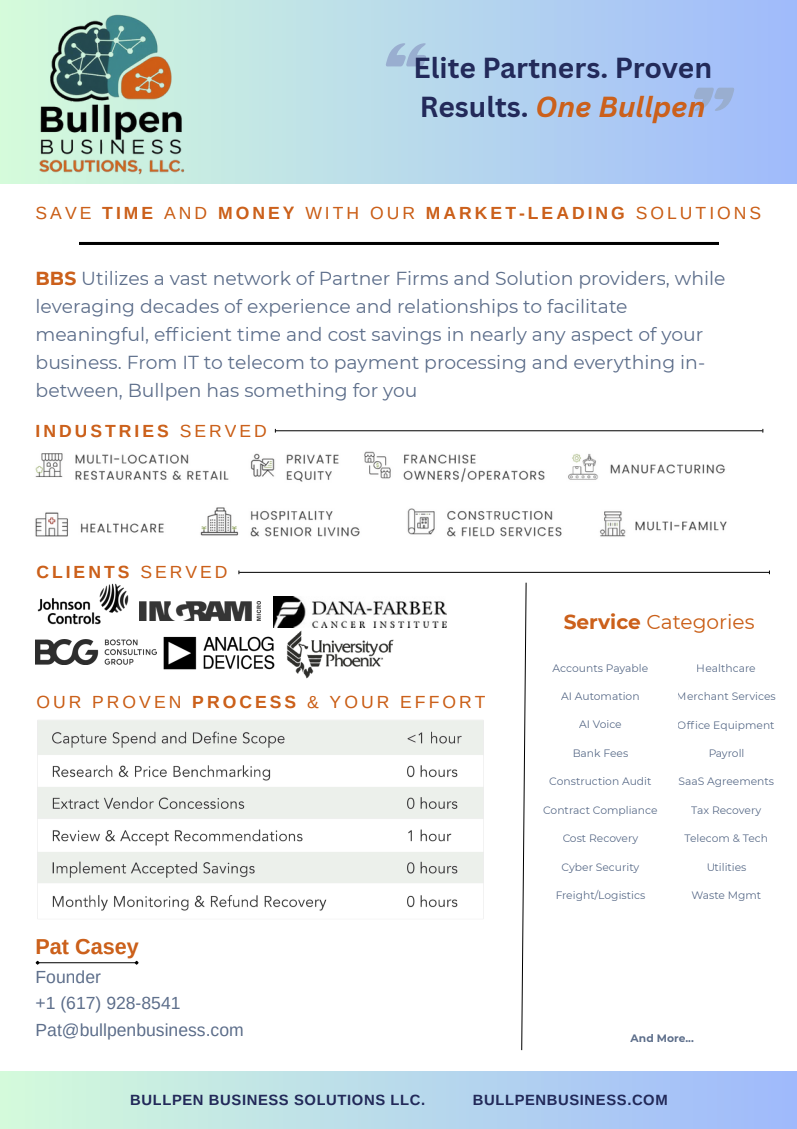
This level of precision is exactly what Bullpen Business looks for when connecting clients with our network of specialized partner firms. We focus on boutique providers who understand the nuance of your specific industry.
4. The Role of Sales Automation in Daily Operations
Sales automation goes beyond simple email blasts. It involves automating the entire sequence of events that leads a prospect toward a purchase decision.
For many mid-market companies, the most significant gain comes from automating the "middle" of the funnel. This includes automated follow-ups after a demo, triggered case study delivery based on a prospect’s pain points, and automatic contract generation.
Consider the efficiency gained when a prospect views a specific product page and receives a tailored success story within minutes. This responsiveness is what separates market leaders from those struggling to keep up.

5. Enhancing Appointment Setting Services
The ultimate goal of many B2B pipelines is to get a qualified prospect on a call. Historically, appointment setting services relied heavily on manual cold calling and tedious back-and-forth scheduling emails.
Pipeline automation changes this dynamic by integrating booking tools directly into the journey. Whether it is through a website bot or a targeted email link, allowing the prospect to choose their own time reduces friction and increases conversion rates.
Furthermore, automated reminders ensure that "no-show" rates drop significantly. When you automate the scheduling and reminder process, your sales representatives spend their time talking to interested parties rather than chasing missed appointments.
If you are looking to refine your own scheduling and discovery process, you can meet with our team here to see how we structure our internal workflows.
6. Data Quality and Decision Speed
One of the most overlooked benefits of automation is its impact on decision-making. In a manual environment, reports are often outdated by the time they are compiled.
Automated pipelines provide real-time insights into your sales health. You can see exactly where prospects are dropping off, which lead sources provide the highest ROI, and what the projected revenue looks like for the next quarter.
When your data is handled automatically, you can make pivots in hours rather than weeks. This agility is a competitive advantage that grows in value as your organization becomes larger and more complex.
7. Cost Efficiency at Scale
Many businesses fear that sophisticated automation is an unnecessary expense. In reality, it is a primary driver of cost reduction.
By consolidating your tech stack and automating repetitive tasks, you reduce the "cost per lead" and "cost per acquisition." You no longer need to hire three administrative assistants to manage data entry when a single automated workflow can do the same task with 100% accuracy.
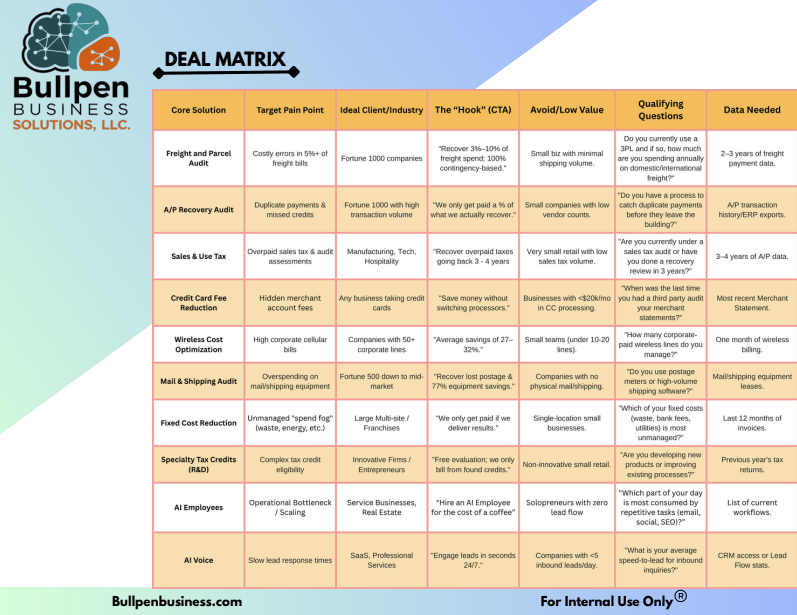
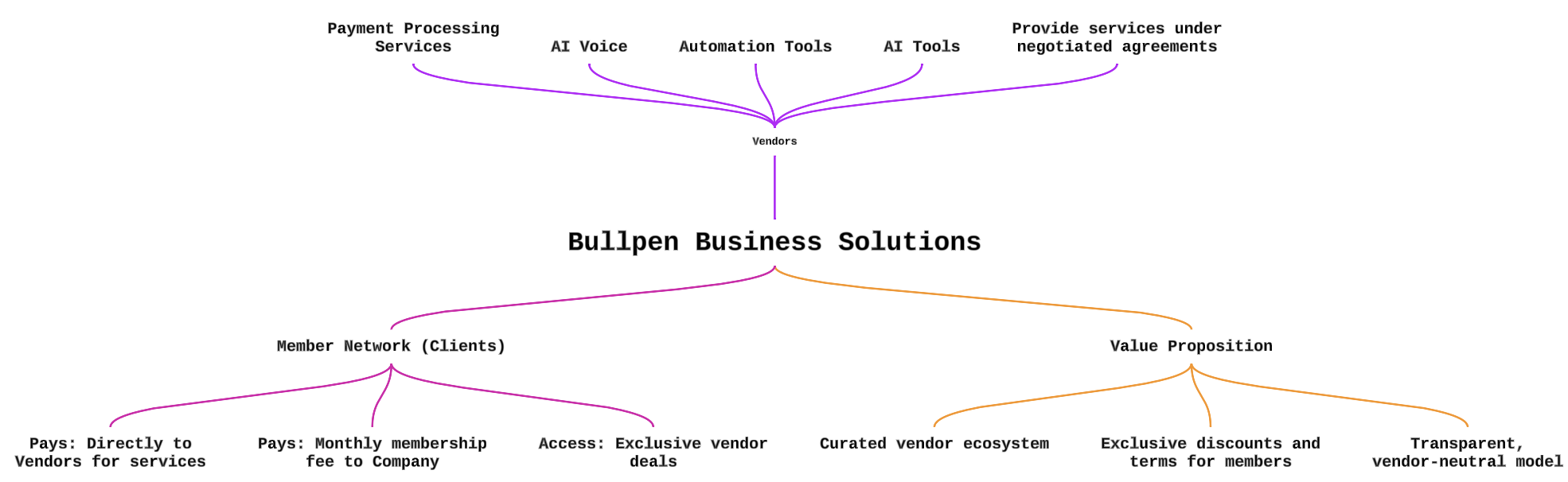
At Bullpen Business, we believe in a transparent, vendor-neutral approach. Our model focuses on connecting you with vendors who provide negotiated deals, ensuring you get the highest quality automation tools without the traditional enterprise markup.
8. Why a Partner Network Matters
Implementing pipeline automation is not a "set it and forget it" task. It requires deep technical knowledge and an understanding of the specific sales triggers unique to your niche.
This is why Bullpen Business operates as a bridge between your needs and boutique firms with proven track records. Rather than navigating the complex world of software and services alone, we provide access to a curated ecosystem of experts.
These firms specialize in everything from wireless optimization to complex AI-driven sales bots. By leveraging our network, you ensure that the automation you implement is tailored to your specific business model.

9. Preparing Your Business for the Future
The shift toward automation is not a trend; it is the new standard for B2B growth. Companies that continue to rely on manual pipeline management will find themselves outpaced by competitors who can respond faster and operate more efficiently.
Scaling your business requires a shift in mindset from "how do we work harder?" to "how do we work smarter?" Automation is the tool that facilitates this transition.
If you are ready to explore how these systems can improve your profitability and streamline your operations, we invite you to view our member network details or book an online consultation to discuss your specific scaling challenges.
Summary of Benefits
To recap, pipeline automation changes the scaling game by:
Eliminating Manual Bottlenecks: Freeing up your team for high-value strategic work.
Maintaining Data Integrity: Ensuring your CRM remains a reliable source of truth.
Predictable Lead Generation: Creating a consistent flow of B2B opportunities.
Reducing Operational Costs: Lowering the overhead required to manage a large pipeline.
Increasing Response Times: Engaging with prospects in real-time to maximize conversion.
As you look toward the remainder of 2026 and beyond, the question is no longer whether you should automate, but how quickly you can implement these changes to secure your market position. We are here to help you navigate that journey with precision and professional expertise.
Comments