%20(3)_edited_edited.png)


10 Reasons Your Pipeline Automation Isn't Working (And How to Plug the Revenue Leak)
- Peter Casey
- May 13
- 6 min read

Many businesses invest in automation with the promise of "set it and forget it" growth. They expect a flood of high-quality leads and seamless conversions without lifting a finger. However, the reality is often quite different, with many organizations finding that their automated systems actually create more work and less revenue.
When pipeline automation is poorly executed, it doesn't just stall growth: it actively leaks revenue. These leaks occur through missed opportunities, damaged brand reputation, and wasted software spend. Understanding why your automation is failing is the first step toward building a high-performance sales engine.
At Bullpen Business, we help companies identify these friction points and connect them with specialized boutique firms that can fix them. Below are the ten most common reasons your pipeline automation might be underperforming and how you can course-correct.
1. Poor CRM Data Hygiene
The most common reason for failed CRM automation is "garbage in, garbage out." If your database is filled with duplicate records, outdated contact information, or missing fields, your automation will inevitably fail.
Automated sequences rely on accurate data triggers to remain relevant to the prospect. When a "first name" field is empty or contains a company name instead of a person, your automated outreach becomes an immediate red flag for the recipient.
To fix this, you must implement strict data entry protocols or use automated cleaning tools. A clean CRM is the foundation upon which all successful sales automation is built.
2. Lack of Meaningful Personalization
There is a significant difference between "automated" and "robotic." Many companies fail because their pipeline automation looks and feels like a mass blast.
Modern B2B buyers can spot a generic template from a mile away. If your automation doesn't include deep personalization: such as referring to a specific industry challenge or a recent company milestone: it will likely be ignored or marked as spam.
Effective sales automation should use "liquid syntax" and dynamic content blocks. This allows you to tailor the message based on the lead's specific behavior or firmographic data without manual intervention.

3. The "Frankenstein" Tech Stack
Many businesses suffer from tool fragmentation, where various software platforms are bolted together without a cohesive strategy. Your lead generation tool might not talk to your CRM, and your CRM might not sync with your email dialer.
When systems aren't integrated, data gets lost in the "cracks" between platforms. This leads to prospects receiving the wrong messages or being contacted by multiple people at the same time.
True pipeline automation requires a centralized source of truth. You can learn more about building a cohesive system in our guide on Sales Automation 101.
4. Missing the Human Handoff
Automation is excellent for the "top of the funnel," but it rarely closes deals on its own. A common revenue leak occurs when there is no clear process for transitioning a lead from an automated sequence to a human representative.
If a prospect responds to an automated email with a specific question and doesn't get a human response for 48 hours, the momentum is lost. Appointment setting services often fail when the internal team isn't ready to catch the "hot" leads generated by the automation.
We recommend a hybrid model where automation handles the repetitive tasks, but humans are alerted the moment a high-intent action is taken.
5. Over-Reliance on High Volume
Many B2B lead generation services focus solely on volume, assuming that more emails sent equals more revenue. However, sending thousands of automated messages can lead to domain blacklisting and a "burned" market.
When you prioritize quantity over quality, your conversion rates usually plummet. The revenue leak here is the cost of reaching out to thousands of people who will never buy from you, while annoying the few who might have.
Focusing your pipeline automation on a highly targeted "Ideal Customer Profile" (ICP) will always yield better results than a spray-and-pray approach.
6. Ignoring Lead Scoring and Prioritization
Not all leads are created equal. If your automation treats a student researching a blog post the same as a VP of Sales at a Fortune 500 company, you are wasting your resources.
Without automated lead scoring, your sales team is forced to sort through a mountain of "junk" to find the "gold." This delay allows high-value prospects to go cold or move to a competitor.
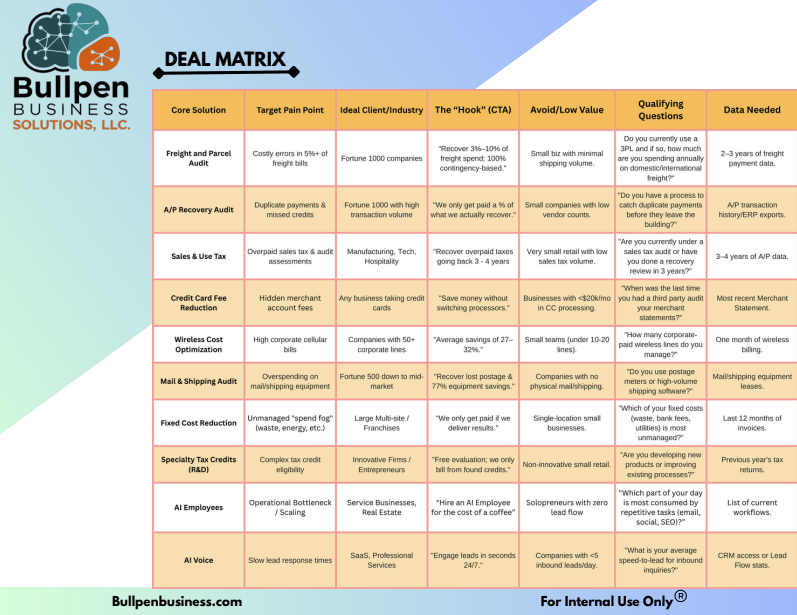
Implementing lead scoring within your CRM automation ensures that your best people are spending their time on the most profitable opportunities. You can see how we help identify these high-value opportunities in our Deal Matrix chart.
7. Static Workflows in a Dynamic Market
Buyer behavior changes rapidly, but many companies leave their automated workflows untouched for months or even years. What worked in 2024 might be completely ineffective by 2026.
If your sales automation doesn't account for how buyers are currently researching and purchasing products, it will feel outdated and tone-deaf. You must regularly audit your sequences to ensure they align with the current market reality.
Testing different subject lines, messaging angles, and call-to-actions is essential for plugging the revenue leak caused by stagnation.
8. Friction in the Appointment Setting Process
The goal of most B2B lead generation services is to get a meeting on the calendar. However, if your automated booking process is difficult, prospects will drop off before finishing.
Common friction points include requiring too much information in a booking form or offering limited availability that doesn't match the prospect's timezone. Professional appointment setting services ensure that the path from "interested" to "scheduled" is as short as possible.
Removing just one or two unnecessary steps in your booking flow can lead to a massive increase in captured revenue.
9. Lack of a Feedback Loop
Automation is not a one-way street. If you are sending out thousands of messages but not analyzing which ones are generating meetings, you are flying blind.
A lack of data analysis is a silent revenue killer. You might be spending thousands of dollars on pipeline automation software that is only delivering a 0.1% conversion rate, while a different approach could yield 5%.
Regularly reviewing analytics: such as open rates, click-through rates, and meeting show rates: is vital. If you need help analyzing your current sales process, you can meet with our team here.
10. Neglecting Multi-Channel Outreach
If your sales automation is limited to just email, you are missing out on a large portion of your market. In the B2B world, prospects are increasingly found on LinkedIn, industry forums, and via direct mail.
Relying on a single channel makes you vulnerable to algorithm changes or platform fatigue. A "multi-touch" approach that combines automated emails with social selling and phone calls is far more effective at capturing attention.

How Bullpen Business Plugs the Leaks
At Bullpen Business, we understand that managing a complex sales stack is overwhelming. Most companies don't need more tools; they need better strategy and execution. This is where our network of boutique consulting firms comes into play.
We act as the bridge between your company and specialized experts who excel in CRM automation, B2B lead generation services, and appointment setting services. By leveraging our negotiated agreements and curated ecosystem, you gain access to top-tier talent without the overhead of a massive agency.
Our model is designed to improve your profitability by ensuring every dollar spent on automation actually returns value. We help you move away from a "Frankenstein" stack and toward a streamlined, revenue-generating machine. You can view our full range of solutions and pricing plans here.
Integrating Human Intelligence with Automation
The most successful companies in 2026 are those that have found the perfect balance between AI-driven automation and human expertise. Automation should handle the heavy lifting of data entry and initial outreach, while humans handle the nuance of negotiation and relationship building.
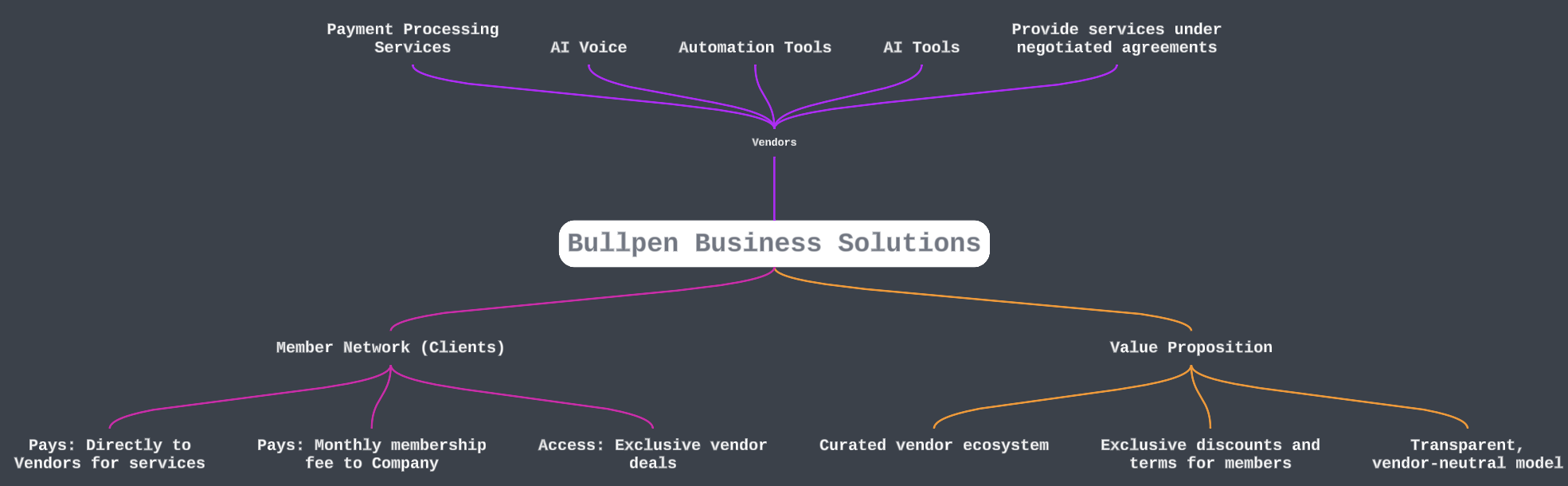
As shown in our Bullpen Business Solutions Mind Map, we connect you to a broad network of vendors that cover everything from AI voice to payment processing. This integrated approach ensures that no part of your business is operating in a silo.
Next Steps for Your Business
If your pipeline feels like a leaking bucket, it’s time to stop pouring more leads into it and start fixing the holes. Whether it’s poor data hygiene or a lack of personalization, identifying the root cause is the only way to recover lost revenue.
If you are ready to stop the leaks and start growing with precision, we invite you to explore our full category of products and services. Don't let another month of potential revenue slip through the cracks of a broken automated system.
For more insights into optimizing your sales process, check out our recent post on Sales Process Automation Tips.
Comments