%20(3)_edited_edited.png)


7 Mistakes You’re Making with CRM Automation (And How "Found Money" Audits Fix Them)
- Peter Casey
- May 11
- 6 min read

In 2026, the promise of the "fully automated sales floor" is everywhere. Every software vendor claims their platform will be the silver bullet that solves your growth woes. Yet, for many mid-market organizations and Fortune 1000 enterprises, the reality is a bloated tech stack that costs more in monthly licensing fees than it returns in actual closed-won revenue.
At Bullpen Business, we see it daily: companies invest in high-end CRM automation, but their sales teams are still drowning in manual data entry, lead follow-up is slipping through the cracks, and the "automated" pipeline is more of a leaky bucket than a streamlined funnel.
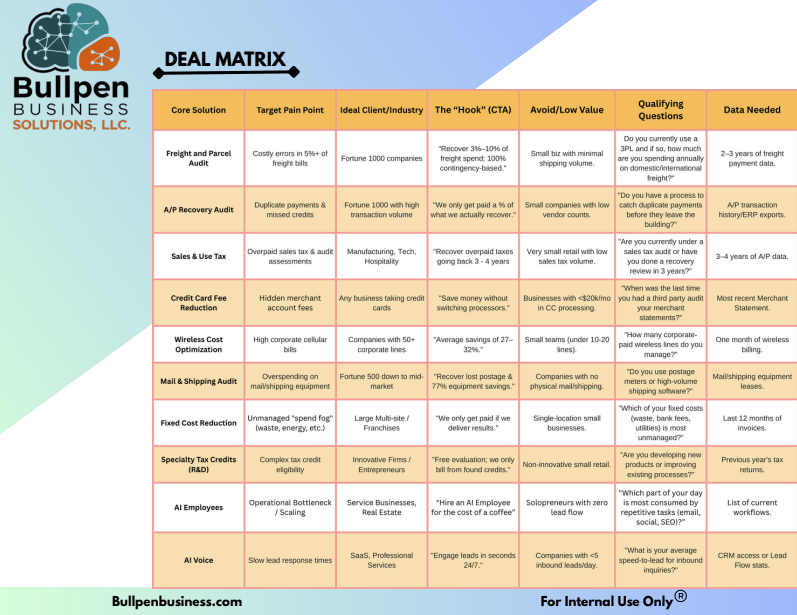
If your automation isn't feeling like a competitive advantage, you’re likely falling into one of seven common traps. The good news? A "Found Money" audit: a specialized assessment offered by the boutique firms in the Bullpen Business network: can pinpoint exactly where your revenue is leaking and how to reclaim it without hiring a single new head.
1. Implementing Software Before Defining the Sales Process
The most frequent mistake we see is "tech-first" thinking. Many businesses buy a expensive sales automation tool and then try to bend their sales process to fit the software's defaults. This is backwards.
When you automate a broken or non-existent process, you simply break things faster. Without a clearly defined customer journey, your automation will send the wrong messages to the wrong people at the wrong time. A Found Money audit starts by mapping your actual human sales process first. Only then do the experts recommend how to layer in sales automation tools to amplify what already works.
2. Linear "One-Size-Fits-All" Automation Branching
Are your automated sequences just a series of five emails sent three days apart? If so, you're missing out on the power of dynamic branching. In high-stakes B2B lead generation services, prospects don't move in a straight line. They click links, they visit pricing pages, they download white papers, or they go silent for weeks.
If your CRM treats a prospect who opened every email the same way as one who hasn't opened any, you are leaving money on the table. Boutique firms specialize in creating "if-this-then-that" logic that pivots based on prospect behavior. This level of pipeline automation ensures that hot leads are fast-tracked to a human rep, while colder leads are nurtured with relevant content until they are ready to engage.

3. Automation-Induced Information Overload
There is a fine line between "data-driven" and "data-distracted." We often find CRMs cluttered with hundreds of custom fields, redundant records, and automated notifications that fire every time a prospect breathes.
When your sales reps are bombarded with "automated" alerts, they eventually start ignoring all of them. This digital friction slows down your appointment setting services and causes high-value opportunities to be ignored. A Found Money audit looks for "clutter costs": the measurable loss in productivity when reps spend 20% of their day just filtering through automation noise.
4. Automating on Top of "Dirty" Data
According to recent industry benchmarks, poor data quality costs organizations an average of $32,000 per sales rep annually. If your CRM automation is pulling from a database filled with duplicates, incorrect titles, or "no-longer-at-company" emails, your automation is essentially a high-speed engine for burning your brand’s reputation.
Automating outreach to the wrong person isn't just ineffective; it's expensive. Boutique firms in the Bullpen network use advanced data cleansing and verification protocols to ensure your sales automation software is fueled by high-integrity data. This is often the first place we "find money" during an audit.
5. Siloed Appointment Setting Services
Is your lead generation team using one tool while your closing team uses another, with no automated bridge between them? Siloed tools are the enemy of growth. When appointment setting services aren't tightly integrated with your core CRM, data gets lost in the handoff.
A Found Money audit examines the "seams" of your organization. By ensuring that your B2B lead generation services feed directly into your pipeline automation workflows, you eliminate the manual "copy-paste" tasks that kill momentum. We’ve seen companies boost revenue instantly simply by automating the handoff between a booked meeting and the account executive’s calendar.
6. The "Set It and Forget It" Mentality (Lack of Training)
The tech isn't the only thing that needs to be updated; your team’s skills do too. Statistics show that sales reps forget nearly 90% of their training within a month if it isn't reinforced. Many companies roll out sophisticated CRM automation but fail to train the team on how to leverage the new insights.
If your team doesn't understand the "why" behind the automation, they will develop workarounds. These workarounds create data gaps that make your reporting useless. Part of a Found Money audit involves assessing user adoption. If your team isn't using the tools, the licensing fees are a direct hit to your bottom line.
7. Over-Customization and Technical Debt
It’s tempting to build a CRM that handles every possible edge case. However, over-customization leads to a "fragile" system. One update to a third-party API can break your entire workflow, leaving your sales team blind for days.
Boutique firms focus on "lean" automation. They prioritize the 20% of workflows that drive 80% of your revenue. This reduces technical debt and ensures your pipeline automation is resilient. By simplifying your tech stack, you often "find money" in the form of reduced maintenance costs and fewer expensive developer hours.
How "Found Money" Audits Turn Mistakes into Capital
You might be wondering: What exactly is a "Found Money" audit?
At Bullpen Business, we believe that most companies are sitting on a goldmine of unrealized efficiency. A Found Money audit is a systematic review of your current operations: specifically your CRM automation, procurement, and service contracts: to identify where you are overpaying or under-producing.
The boutique firms we partner with don't just look at your software; they look at the financial "leaks." This includes:
Unused Licenses: Identifying software seats you're paying for but no one is using.
Process Redundancy: Finding where two different tools (or two different departments) are doing the same job.
Shadow IT: Discovering "unofficial" tools your team bought because your main CRM was too hard to use.
Lead Decay: Calculating the dollar value of leads that were never followed up on due to poor pipeline automation.
The goal is to find enough "lost" capital to fund your next major project or AI transformation without touching your existing budget.
Why Boutique Firms Outperform Large Agencies
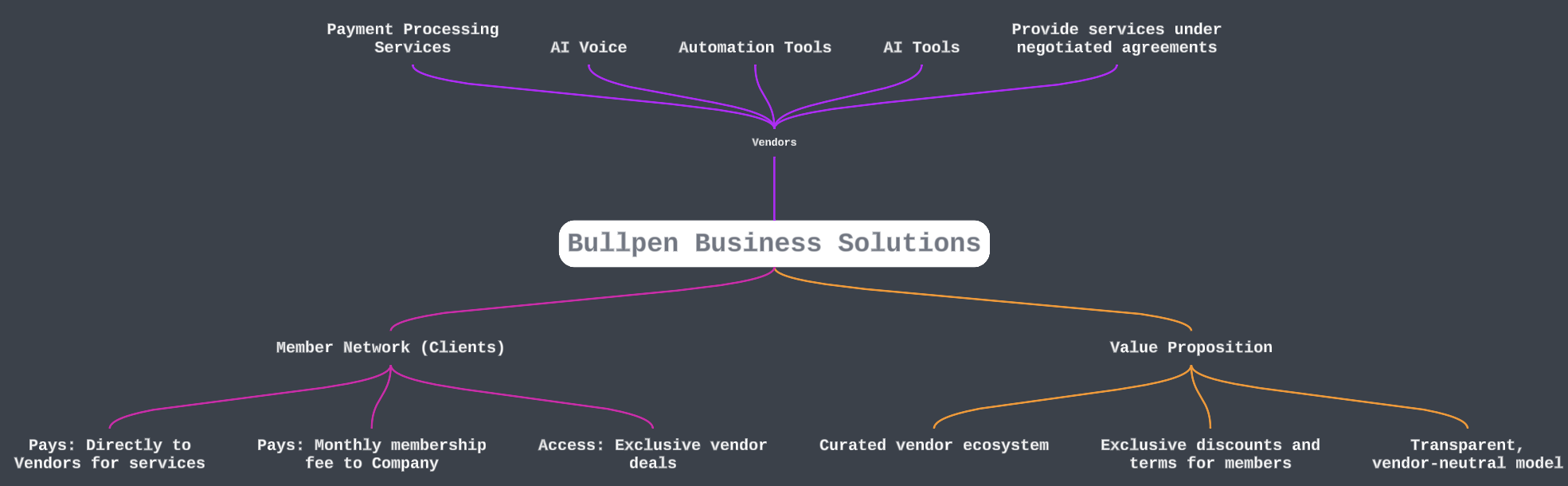
When you work with a massive consulting firm, you often get a generic "best practices" template. Boutique firms, like the ones Bullpen Business connects you with, provide specialized expertise. They understand the nuances of B2B lead generation services and appointment setting services for your specific industry.
These firms are nimble, results-oriented, and often work on a model where their success is tied to the money they "find" for you. They don't just tell you what's wrong; they implement the sales automation hacks that actually move the needle.
The Bullpen Business Advantage
Bullpen Business exists to bridge the gap between mid-market companies and these high-performing boutique firms. We’ve curated an ecosystem of vendors who excel at cost recovery, CRM automation, and operational efficiency.
Our process is simple:
Identify the Leak: We help you determine which area of your business (Sales, IT, Healthcare costs, etc.) has the most "Found Money" potential.
Connect with the Experts: We introduce you to a vetted boutique firm that specializes in that specific problem.
Recover the Capital: The firm performs the audit, fixes the mistakes, and recovers the lost revenue.
Whether you're struggling with choosing the best sales automation tools or you're worried that your manual sales team is losing ground, we provide the roadmap to modern, automated profitability.
Stop Guessing and Start Auditing
The mistakes listed above aren't just technical errors; they are financial liabilities. In a competitive 2026 market, you can't afford to let your CRM be a cost center. It must be a revenue engine.
By addressing these seven mistakes through a structured "Found Money" audit, you can restore capacity to your team without increasing headcount. You’ll uncover the hidden capital needed to scale, and you’ll finally see the ROI that sales automation promised you years ago.
Ready to see how much "Found Money" is hiding in your CRM? Visit our blog for more insights or contact us today to begin your audit. It’s time to stop wasting time on manual prospecting and start mastering growth without the bloat.
Comments