%20(3)_edited_edited.png)


Why Sales Automation Will Change the Way You Fund Your 2026 AI Transformation
- Peter Casey
- Mar 27
- 5 min read

As we navigate through the first quarter of 2026, the corporate landscape is defined by a single, pressing mandate: AI transformation. For most organizations, the question is no longer whether to adopt artificial intelligence across their enterprise, but how to fund the massive infrastructure and talent costs associated with it.
Traditional budgeting methods often fall short when faced with the rapid pace of technological evolution. However, a strategic shift is occurring. Forward-thinking leaders are realizing that sales automation is not just a tool for the sales department: it is a sophisticated capital-generation engine. By optimizing the top of the funnel and streamlining internal processes, companies are discovering that sales automation provides the necessary liquidity to fund broader AI initiatives.
At Bullpen Business, we specialize in connecting organizations with boutique firms that excel in these efficiencies. By leveraging professional B2B lead generation services and advanced automation, your business can shift from defensive budgeting to a self-funded model of innovation.
1. The Economics of Self-Funded Transformation
The primary barrier to enterprise-wide AI adoption is the initial capital outlay. Whether it is retraining staff, upgrading legacy systems, or deploying custom LLMs, the costs are substantial. Sales automation directly addresses this by accelerating the revenue cycle.
Recent data indicates that sales teams utilizing intelligent automation are 1.3x more likely to experience significant revenue growth. When 83% of AI-enabled teams achieve their revenue targets compared to only 66% of those using manual processes, the financial disparity becomes an insurmountable competitive gap. This expanded revenue provides the internal capital needed to fund AI transformation projects without relying solely on external debt or equity dilution.
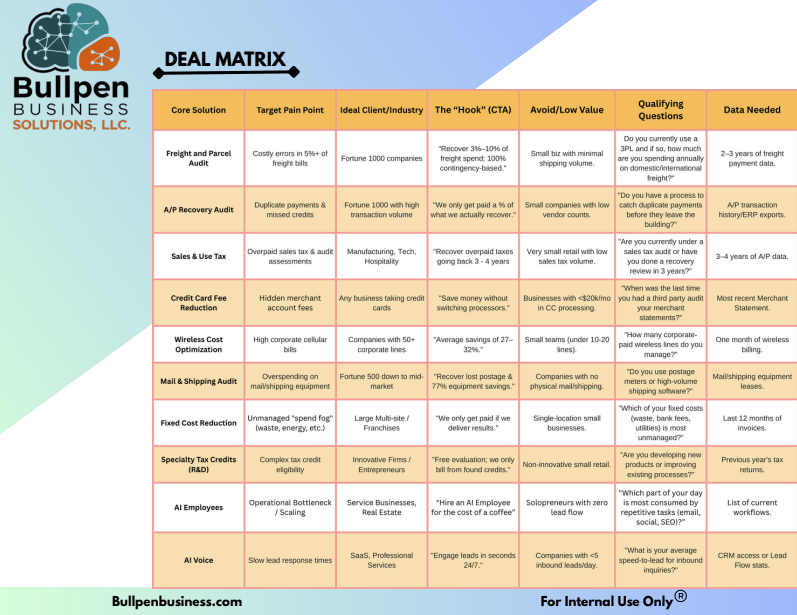
As shown in our Deal Matrix, identifying core pain points: such as inefficient revenue cycles: allows for the application of targeted solutions like tax credits or AI employees. These savings and revenue boosts create a "war chest" for future technology investments.
2. Efficiency Gains: Turning Time into Working Capital
Efficiency is the currency of 2026. Companies implementing intelligent pipeline automation are achieving 25-30% increases in revenue-generating activity time. The goal for many top-tier firms is to reach 70-80% efficiency, where human intervention is reserved only for high-value strategic closing.
When your sales team is freed from the administrative burden of manual data entry and lead tracking, they can focus on conversion. This reduction in "non-selling" time effectively lowers your cost per acquisition. The capital saved from reduced hiring needs and optimized software spend can be redirected.
For a deeper dive into how to achieve this, you may refer to the ultimate guide to sales automation. Scaling without increasing your corporate career risk or headcount is the most sustainable way to find the margin required for your 2026 AI roadmap.

3. CRM Automation and the Death of "Ghost Departments"
Many organizations suffer from "Ghost Departments": segments of the business that consume resources but provide little transparent value due to fragmented data. CRM automation is the antidote to this phenomenon.
By automating the flow of data between your lead sources and your customer relationship management system, you eliminate the "leaky bucket" syndrome where leads are lost or ignored. CRM automation ensures that every interaction is logged, every follow-up is scheduled, and every insight is actionable.
Choosing the right path is critical. You must decide if CRM automation vs manual sales tracking is the right move for your current growth stage. Generally speaking, the manual approach is no longer viable for companies looking to maintain a competitive edge in 2026. Automated systems provide the clean data necessary for the "training" phase of any broader AI transformation you plan to implement later in the year.
4. Signal-Based Selling and Appointment Setting Services
The era of "spray and pray" outreach is over. In 2026, high-performing organizations utilize signal-based selling. This involves identifying specific digital triggers: such as a prospect’s funding round, a new hire, or a specific technology installation: and responding with personalized outreach.
Appointment setting services that leverage these signals achieve significantly higher ROI. While traditional cold email might see a 3-5% reply rate, signal-personalized outreach can reach 15-25%.
Consider the impact on your budget when your appointment setting services are four times as effective as they were in the previous fiscal year. This dramatic improvement in conversion metrics creates a predictable revenue stream. This predictability allows CFOs to forecast and allocate funds toward AI infrastructure with much higher confidence.
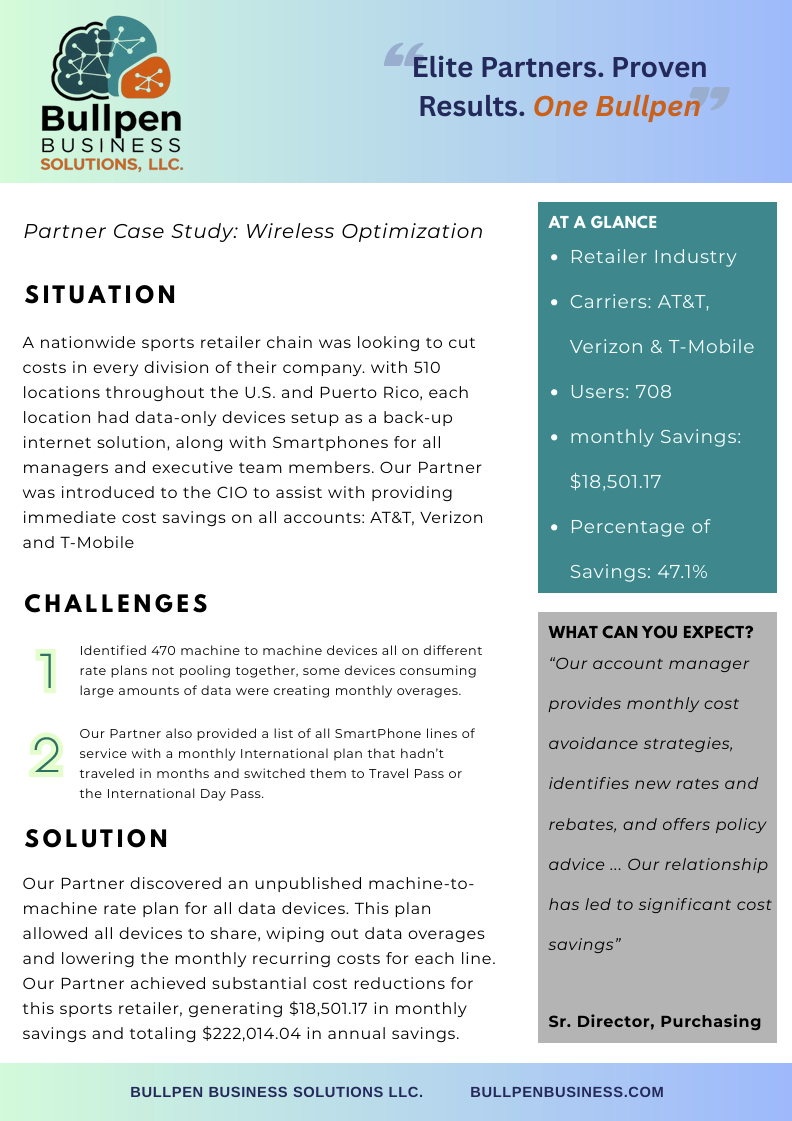
In the case study above, we see how optimization in just one area (wireless expenses) saved a retailer over $18,000 monthly. When you combine cost-recovery strategies with the revenue growth of sales automation, the cumulative effect is a massive influx of working capital.
5. Overcoming "Software Bloat" with Boutique Partnerships
A common mistake in the pursuit of sales automation is "software bloat": investing in expensive, complex platforms that the team never fully utilizes. This waste is exactly what organizations must avoid if they wish to fund a true AI transformation.
Bullpen Business takes a different approach. We believe in a 3-partner stack that actually works. By connecting you with specialized boutique firms, we ensure that your technology stack is lean, effective, and tailored to your specific B2B lead generation needs.
Boutique firms often offer more agility and specialized expertise than large, "all-in-one" software providers. This focus allows for faster implementation and a quicker return on investment, which is essential when the goal is to use those gains to fund other initiatives.
6. Pipeline Automation: The Strategic Architect's Tool
For the strategic architect within a firm, pipeline automation represents more than just a workflow improvement; it is a risk mitigation strategy. Automating the pipeline ensures that the sales process is not dependent on the idiosyncratic habits of individual sales representatives. Instead, it becomes a repeatable, scalable corporate asset.
Organizations are increasingly asking, does pipeline automation really matter in 2026?. The answer is a resounding yes. Without a structured, automated pipeline, your lead generation efforts are likely inconsistent, making it impossible to accurately project the revenue needed for long-term AI projects.
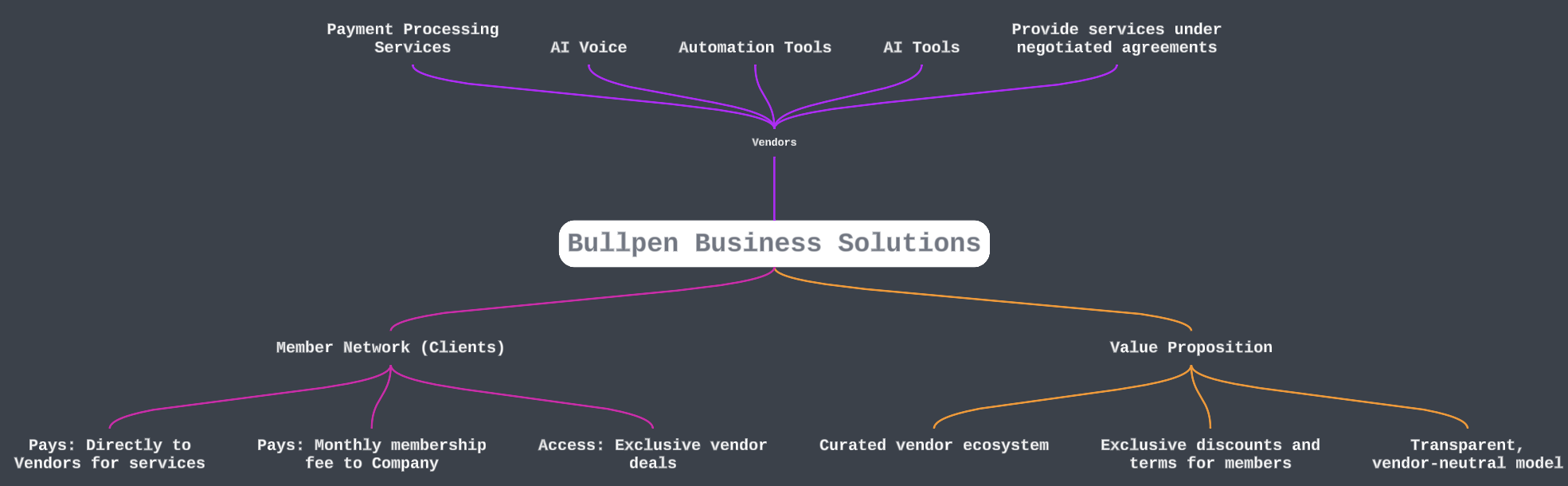
Our curated ecosystem, as illustrated in the Bullpen Business Mind Map, connects you with the vendors who provide these automation tools under negotiated, exclusive deals. This vendor-neutral model ensures that the solutions are chosen based on their ability to improve your profitability, not because of a specific software bias.
7. The Roadmap to 2026 AI Transformation
To successfully fund your AI transformation through sales automation, we recommend a phased approach:
Audit Your Current Stack: Identify areas of "software bloat" and manual bottlenecks in your current CRM.
Implement Pipeline Automation: Standardize how leads move through your system to ensure no revenue is left on the table.
Engage B2B Lead Generation Services: Partner with boutique firms that provide high-quality, signal-based leads rather than bulk data.
Automate Appointment Setting: Use AI-driven tools to handle the initial outreach, ensuring your human closers are only speaking with qualified prospects.
Reinvest the Margin: Take the increased revenue and the cost savings from efficiency gains and earmark them for your broader AI transformation goals.
The gap between early adopters of these strategies and those who wait will soon become insurmountable. By automating your sales processes today, you are not just improving your sales team's performance; you are building the financial foundation for the future of your entire company.
At Bullpen Business, we are committed to helping you navigate this transition. Whether you are looking for 10 things to know before choosing sales automation software or need a direct connection to a vetted partner, our network is designed to restore your capacity and improve your bottom line.

The future of business is automated, intelligent, and self-funding. Let us help you find the right partners to make that future a reality for your organization. For more information on our services and how we can help you scale without adding headcount, visit our pricing and plans page.
Comments