%20(3)_edited_edited.png)


Sales Automation Software: The 3-Partner Stack That Actually Works (No Bloatware Needed)
- Peter Casey
- Feb 21
- 7 min read

The Enterprise Software Trap
You purchased an enterprise sales automation platform because your team needed pipeline automation. Six months later, you are paying $90 per user monthly for features you will never use. Your sales team ignores half the dashboard. Your data sits in disconnected silos. The promised CRM automation feels more like CRM frustration.
This scenario repeats across thousands of organizations. The problem is not that sales automation software fails to deliver value. The problem is that all-in-one platforms deliver too much of the wrong value and not enough of what your team actually needs.
The solution may not involve adding more features. It involves strategic subtraction: building a lean, three-partner stack that automates what matters without the enterprise bloat.
Why All-In-One Platforms Create More Problems Than They Solve
Most sales automation software operates on a simple premise: bundle every possible feature into one platform, and customers will pay premium prices for the convenience. This approach works exceptionally well for software vendors. It rarely works for the companies purchasing these systems.
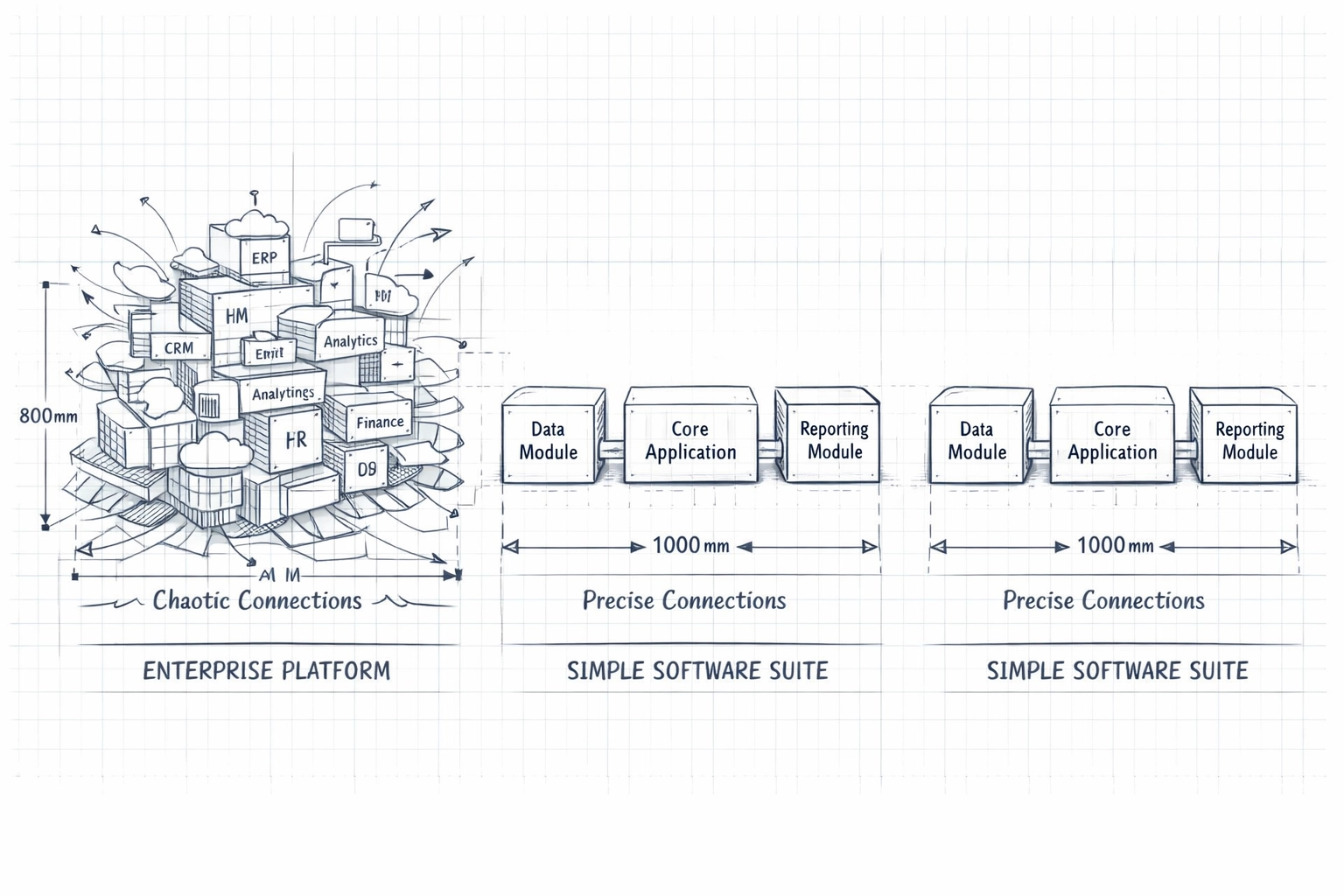
Consider the typical enterprise CRM. You receive lead scoring, email automation, social media integration, customer service ticketing, marketing attribution, content management, and dozens of other modules. Your sales team needs three of these features. You pay for all of them.
The complexity tax extends beyond monthly subscription costs. Your team spends weeks in training sessions learning features they will never use. Your IT department manages integration issues between modules that were never designed to work together seamlessly. Your data becomes fragmented across different sections of the same platform.
Generally speaking, organizations that adopt all-in-one sales automation software experience three common failure points:
Feature Overload: Sales representatives face dashboards cluttered with irrelevant options. The cognitive load reduces productivity rather than enhancing it.
Process Rigidity: Enterprise platforms force your unique sales process into their standardized workflow. Your team adapts to the software instead of the software adapting to your needs.
Cost Escalation: What begins at $25 per user monthly quickly scales to $90 or more as you add necessary features locked behind higher pricing tiers.
The Three-Partner Stack: A Leaner Approach to Sales Automation
The alternative to enterprise bloatware involves assembling three specialized partners rather than one generalist platform. Each partner excels at a specific function. Together, they create a sales automation system that actually serves your pipeline automation needs without unnecessary complexity.
Partner 1: Your Focused CRM Layer
Your first partner handles core customer relationship management without attempting to do everything. This may be Pipedrive at $14 per user monthly or HubSpot Sales Hub Starter at $9 per seat monthly.
These focused CRM systems prioritize visual sales pipeline tracking and essential contact management. You see your deals moving through stages. You track communication history. You generate basic reports. That is the entirety of their function: and that limitation becomes their greatest strength.
The focused CRM layer provides three advantages over enterprise alternatives:
Simplicity: Your sales team learns the system in days, not weeks. The interface shows what matters and hides what does not.
Cost Efficiency: You pay for CRM automation functionality, not for marketing automation and customer service features your sales team will never touch.
Speed: Lightweight systems load faster, sync quicker, and respond immediately to user input.
Partner 2: Your AI Orchestration Layer
Your second partner connects your various tools without forcing them into a single platform. Zapier serves this role effectively, functioning as an AI orchestration layer that integrates with over 8,000 applications.
This layer automates the busywork that consumes sales productivity: copying data between systems, triggering follow-up reminders, updating multiple databases simultaneously, and routing leads based on predefined criteria.
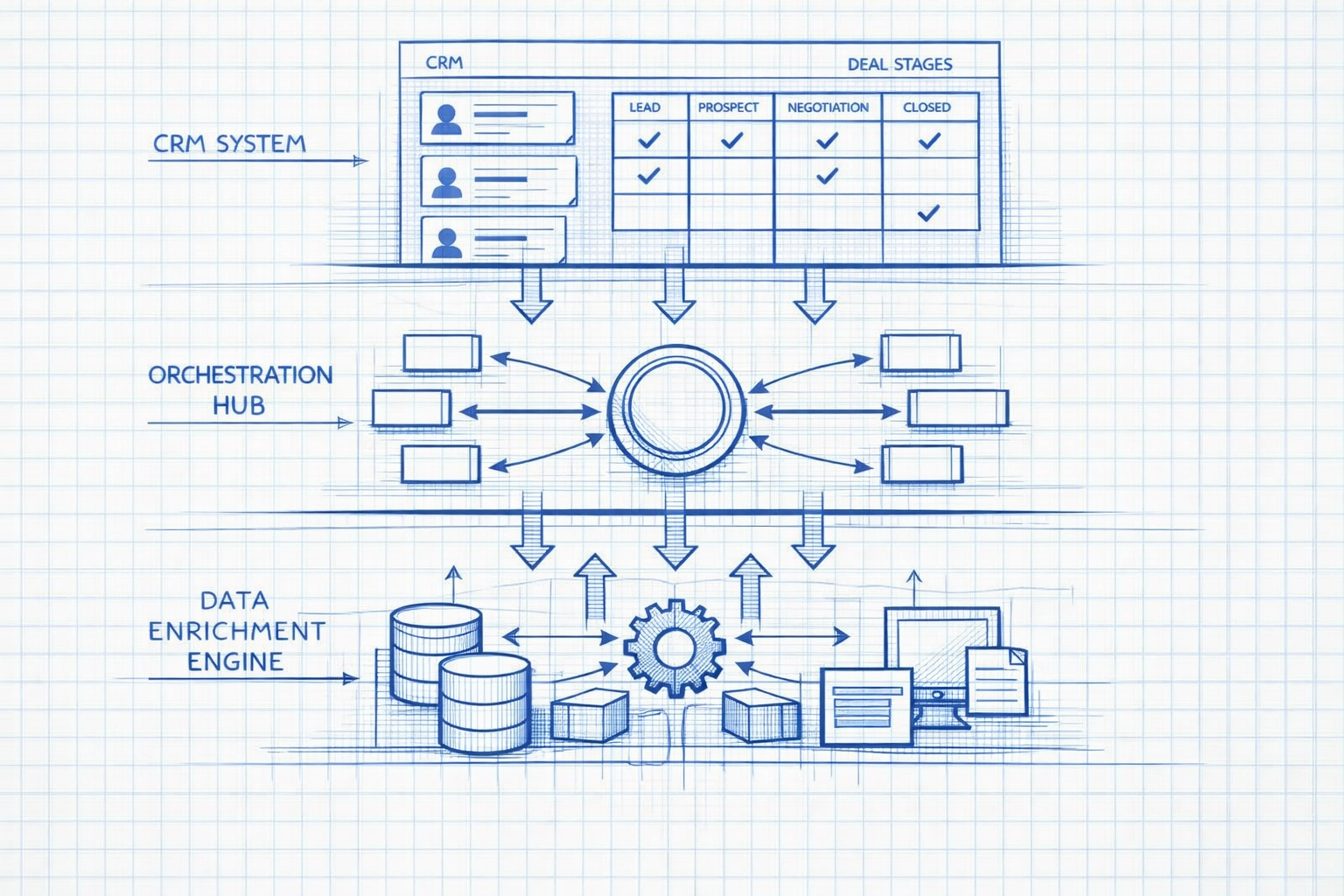
The orchestration approach solves a fundamental problem with all-in-one platforms. Enterprise systems claim to eliminate integration needs by housing everything under one roof. In practice, you still need to connect to external tools your company already uses. Your accounting software. Your project management system. Your communication platforms. The enterprise CRM charges premium prices for native integrations or forces you to use their inferior alternatives.
An orchestration layer accepts that your company uses multiple tools. It connects them efficiently without requiring you to abandon working systems or pay enterprise licensing fees.
Partner 3: Your Specialized Layer
Your third partner handles the function that general CRM systems consistently fail to address adequately: intelligent lead research and data enrichment. Clay represents this category, though other specialized tools may better serve your specific industry or use case.
This layer automates B2B lead generation services tasks that sales representatives traditionally perform manually. It researches prospects before first contact. It enriches contact records with relevant data points. It identifies decision-makers within target accounts. It scores leads based on fit criteria unique to your business.
The specialized layer operates as your research team, your data analyst, and your lead qualifier: all automated. Your sales representatives receive prospects who are pre-researched, properly scored, and ready for meaningful outreach rather than cold contact attempts.
How This Stack Addresses Real Pipeline Automation Needs
The three-partner approach succeeds where all-in-one platforms fail because it matches tools to actual workflow requirements. Consider how this stack handles a typical B2B sales scenario:
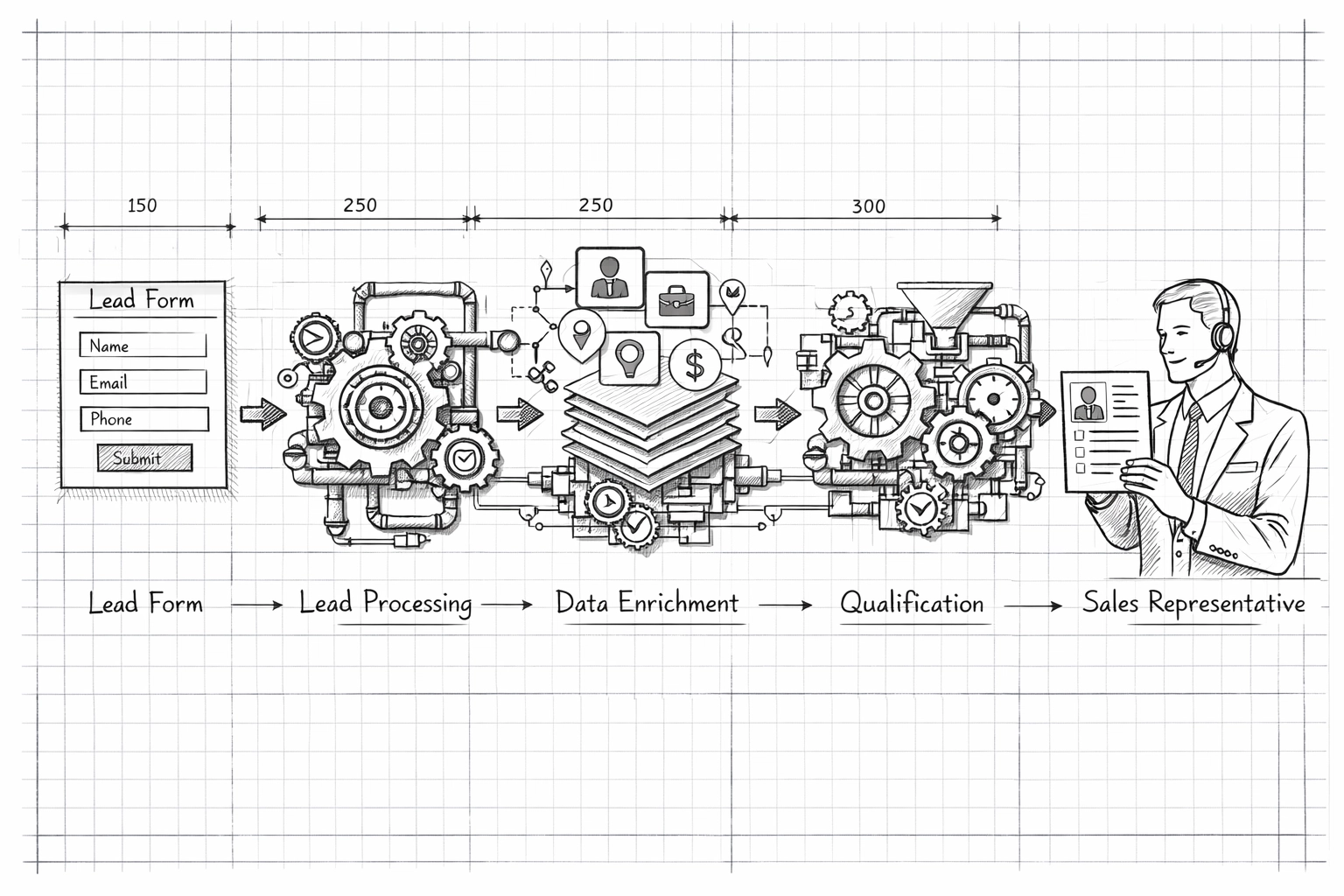
A new lead enters your system through your website form. Your orchestration layer (Zapier) captures this submission and creates a contact record in your focused CRM (Pipedrive or HubSpot). Simultaneously, it sends the lead information to your specialized layer (Clay) for enrichment.
Clay researches the prospect company, identifies additional decision-makers, and scores the lead based on your criteria. This enriched data flows back through Zapier into your CRM. Your sales representative receives a notification with a complete prospect profile, not just a name and email address.
The entire sequence occurs automatically. No manual data entry. No switching between multiple tabs. No time wasted on research that software handles more efficiently. Your sales team focuses on the high-value activity they do best: having meaningful conversations with qualified prospects.
The Boutique Advantage: Why Specialized Partners Outperform Generalists
Organizations often assume that purchasing from a single vendor simplifies operations. The opposite frequently proves true. A boutique firm specializing in CRM automation understands CRM automation deeply. A boutique firm specializing in lead enrichment understands lead enrichment deeply. A generalist platform spreading development resources across dozens of features rarely achieves excellence in any single area.
Bullpen Business connects companies with these boutique firms specifically because specialized expertise delivers superior results. When your CRM partner focuses exclusively on sales pipeline visibility, they innovate faster than enterprise competitors managing fifteen different product lines. When your orchestration partner dedicates all development effort to connection reliability, your automations work consistently.
The boutique approach offers additional advantages that matter for appointment setting services and ongoing sales operations:
Responsive Support: Small, specialized firms respond to customer needs quickly because those customers represent a larger percentage of their business.
Flexible Pricing: Boutique partners often negotiate based on your actual usage rather than forcing you into enterprise pricing tiers.
Faster Evolution: Specialized tools adapt to market changes and customer feedback more rapidly than enterprise platforms constrained by legacy code and corporate bureaucracy.
Implementation: Building Your Three-Partner Stack
Transitioning from an all-in-one platform to a three-partner stack requires planning, but the process typically completes faster than full enterprise implementations. You may approach this transition in phases:
Phase 1: Audit Your Current Usage (Week 1) Identify which features your team actually uses in your existing platform. You may discover that 70-80% of available functionality remains untouched. These unused features represent wasted budget and unnecessary complexity.
Phase 2: Select Your Core Partners (Weeks 2-3) Choose your focused CRM layer based on your sales process requirements. Add your orchestration layer to connect existing tools. Identify gaps in lead research or data enrichment that a specialized layer would address.
Phase 3: Configure Essential Automations (Weeks 4-6) Build the core workflows that drive your pipeline automation. Lead capture, contact enrichment, follow-up sequencing, and deal stage progression should receive priority. Secondary automations can wait.
Phase 4: Migrate and Train (Weeks 7-8) Transfer essential data from your previous system. Train your team on the new stack. Because each partner tool focuses on a specific function, training time typically reduces by 60-70% compared to enterprise platform onboarding.
When This Approach Makes Sense for Your Organization
The three-partner stack suits organizations that value efficiency over feature counts. If your sales team needs proven automation capabilities without enterprise complexity, this approach deserves evaluation. If your current platform costs continue rising while usage remains static, the economics favor a leaner alternative.
However, this stack may not fit every situation. Organizations with deeply complex enterprise requirements spanning sales, marketing, and service functions may benefit from integrated platforms despite the bloatware. Companies with compliance needs requiring all data within a single system may find a three-partner approach introduces unacceptable risk.
Generally speaking, mid-market companies pursuing aggressive growth through improved sales efficiency gain the most from this approach. You possess sufficient sophistication to manage multiple vendor relationships but lack the budget for enterprise pricing tiers filled with unused features.
How Bullpen Business Facilitates Better Technology Decisions
Selecting the right sales automation software involves more than comparing feature lists. It requires understanding how different tools work together, which boutique firms deliver reliable service, and how pricing structures evolve as your needs grow.
Bullpen Business specializes in connecting organizations with boutique firms that excel at specific functions rather than attempting to be everything to everyone. This approach to business consulting acknowledges that no single vendor serves every need optimally. By curating relationships with specialized partners, we help you assemble a technology stack that actually serves your pipeline automation requirements.
We negotiate with these boutique firms on behalf of our network, securing pricing and terms that individual companies rarely access independently. More importantly, we provide transparent guidance about which tools genuinely fit your situation rather than pushing whatever solution offers the highest commission.
Your sales automation decisions impact revenue generation for years. Those decisions deserve careful consideration based on your actual needs rather than vendor marketing claims about all-in-one convenience.
Moving Beyond the Bloatware Mentality
The assumption that more features equal more value has dominated enterprise software for decades. This assumption fails consistently in practice. Your sales team does not need 1,000 features. They need 20 features that work flawlessly and integrate seamlessly with other tools they already use.
The three-partner stack represents a fundamental shift in how organizations approach sales automation software. Instead of purchasing a platform and adapting your process to its limitations, you assemble partners that adapt to your actual workflow requirements. Instead of paying for enterprise bloat, you invest in focused capabilities that drive measurable results.
The companies seeing the strongest returns on their sales technology investments share a common characteristic: they stopped seeking all-in-one solutions and started building purpose-driven stacks. Your organization may benefit from the same approach.
Comments