%20(3)_edited_edited.png)


7 Mistakes You’re Making with Sales Automation (And How to Use Forensic Audits to Fix Them)
- Peter Casey
- May 7
- 5 min read

By May 2026, the promise of "set it and forget it" sales automation has largely been revealed as a myth. While the tools have become more sophisticated, many organizations find themselves trapped in a cycle of high-volume, low-conversion outreach that damages brand reputation and drains resources.
The difference between a high-performing revenue engine and a digital "noise machine" often comes down to the quality of your oversight. This is where a forensic audit of your sales automation becomes essential. Unlike a standard review, a forensic audit digs into the "why" behind the data, identifying the hidden friction points that are killing your profitability.
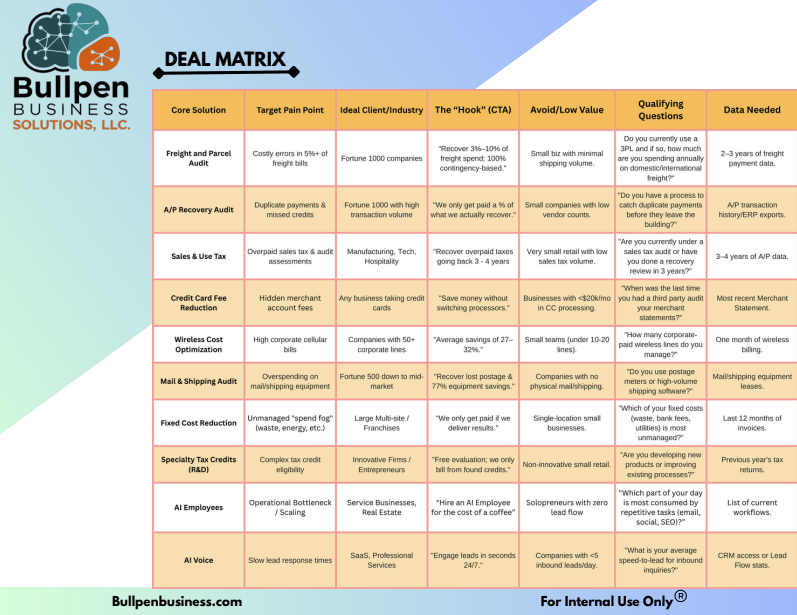
At Bullpen Business, we specialize in connecting companies with boutique firms that handle these deep-dives, ensuring your pipeline automation is an asset, not a liability.
1. Automating a Broken Process
The most common mistake in 2026 remains the same as it was a decade ago: trying to automate chaos. If your manual sales process is inconsistent, unclear, or ineffective, automation will only serve to scale those failures.
When you automate a broken process, you are essentially "accelerating your journey to a dead end." This leads to wasted spend on B2B lead generation services that never convert because the underlying workflow is flawed.
The Forensic Fix: Before you turn on the software, perform a "Step-Zero" audit. Map out every touchpoint a prospect has with your brand. Identify where leads currently fall out of the funnel. A forensic approach requires you to look at historical data to see if the "happy path" you’ve designed actually exists in reality.
2. Sacrificing Personalization for Velocity
In an era of AI-driven outreach, buyers have developed a "sixth sense" for automated messages. The mistake here is focusing solely on the volume of messages sent rather than the value of the interaction. If your sales automation looks like a bot, it will be treated like a bot: deleted and ignored.
The Forensic Fix: Audit your "Personalization Depth." Review your last 500 automated emails. Are they using dynamic fields beyond just "First Name"? A forensic audit looks at engagement rates across different segments. If your generic sequences are underperforming, it’s time to pivot toward behavior-triggered messages that respond to specific prospect actions.

3. Ignoring CRM Data Decay
Your CRM automation is only as good as the data it sits on. Research indicates that sales reps can waste nearly 27% of their time dealing with incorrect or outdated contact information. When you automate outreach to "dirty" data, your bounce rates skyrocket, and your domain authority plummets.
The Forensic Fix: Conduct a "Data Integrity Audit." This involves cross-referencing your CRM records with third-party verification tools. Look for duplicate entries, missing job titles, and inactive email addresses. Clean data ensures your appointment setting services are targeting the right people at the right time.
4. Complexity Overload: The "Everything at Once" Fallacy
Many businesses attempt to automate their entire sales stack simultaneously: from lead capture to closing. This creates a "black box" where it becomes impossible to tell which part of the system is failing when the numbers dip.
The Forensic Fix: Utilize a "Modular Audit" strategy. Break your automation into three distinct phases: Top of Funnel (Discovery), Mid-Funnel (Nurture), and Bottom of Funnel (Closing). Review each module independently. By isolating the variables, you can pinpoint exactly which part of your pipeline automation needs a tune-up.
5. Removing the "Human-in-the-Loop"
In 2026, the most successful sales teams use automation to enable humans, not replace them. A significant mistake is failing to build in triggers that notify a real salesperson when a prospect shows high-intent behavior. Without a human touch at critical moments, complex B2B deals often stall.
The Forensic Fix: Perform a "Friction Point Audit." Identify the moments in your automated sequence where prospects stop responding. Frequently, these are the moments that require a phone call or a personalized video rather than another automated follow-up.
6. The "Wrong Tool" Syndrome
Not all software is created equal. Often, companies invest in enterprise-level tools that are too complex for their needs, or they patch together "cheap" tools that don't communicate with each other. This results in data silos and missed opportunities.
The Forensic Fix: A "Tech Stack Forensic Audit" involves looking at the ROI of every tool you pay for. Are you using all the features of your CRM? Is your lead generation software integrating seamlessly with your email sender? If not, you are leaking profitability every single month.
7. Failure to Monitor Long-Term ROI
The final mistake is treating sales automation as a one-time setup. Markets change, buyer preferences shift, and email algorithms evolve. If you aren't auditing your results monthly, your automation will eventually become obsolete.
The Forensic Fix: Set up a "Performance Dashboard" that tracks more than just open rates. You need to see the "Lead-to-Revenue" journey. A forensic audit asks: "Did this automated sequence actually result in a closed deal, or just a lot of busy work for the sales team?"
How to Conduct Your First Forensic Audit
A forensic audit is more than a cursory glance at your dashboard. It is a systematic investigation into the health of your sales engine. Here is the framework we recommend to our clients at Bullpen Business:
Step 1: The Historical Deep-Dive
Look at the last six months of sales data. Where did your best customers come from? Was it an automated sequence, a referral, or manual outreach? If automation isn't in your top three sources of closed revenue, something is fundamentally wrong.
Step 2: The Workflow Stress Test
Run a "dummy" lead through your entire automated system. Does the experience feel cohesive? Are there contradictory messages? Does the CRM automation update the lead status correctly at every stage?
Step 3: The Cost Analysis
Calculate the total cost of your automation, including software subscriptions, data costs, and the time spent by your team managing the tools. Compare this to the revenue generated specifically by those automated efforts. This is your "Automation ROI."

Why Bullpen Business?
Navigating the complexities of sales automation vs. headcount is a challenge for any growing business. You don't have to do it alone.
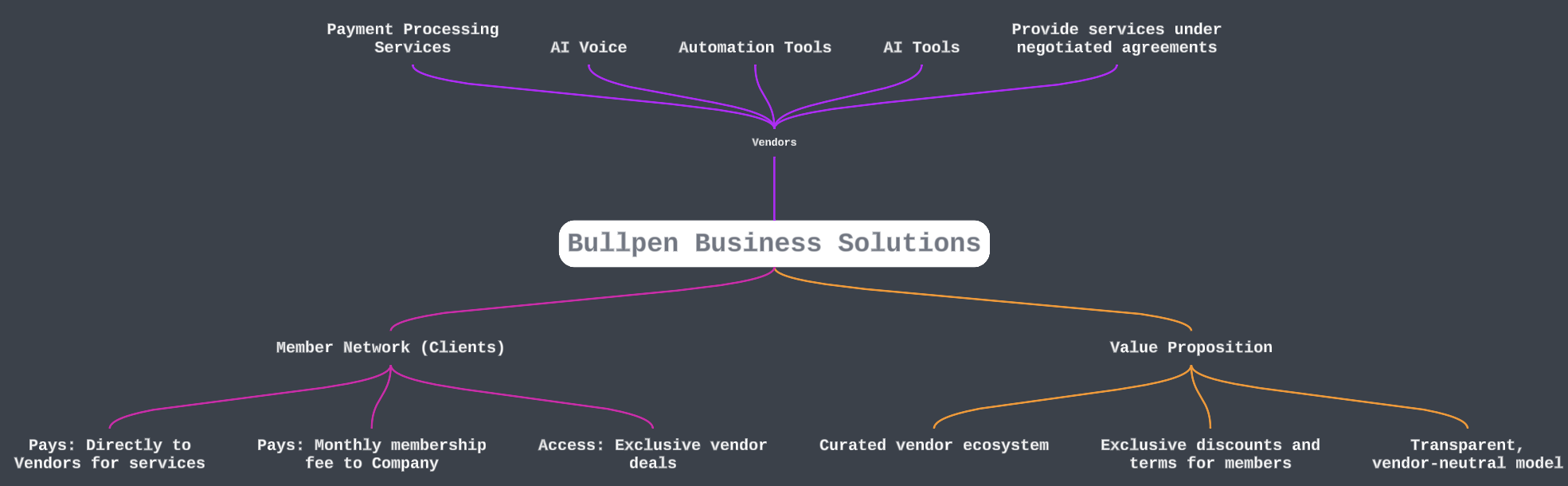
At Bullpen Business, we act as your strategic partner. We don't just sell you software; we connect you with the boutique firms and experts who can perform these forensic audits for you. We help you identify the "holes in the bucket" so you can stop wasting money and start scaling profitably.
Our curated ecosystem of vendors provides specialized B2B lead generation services and automation tools that are vetted for performance. We focus on mid-market to Fortune 1000 organizations, helping them find hidden ROI in their tech stacks.
Final Thoughts
Sales automation in 2026 is no longer about who has the loudest "megaphone." It's about who has the most precise "scalpel." By avoiding these seven common mistakes and implementing a regular forensic audit schedule, you can ensure your sales process remains lean, effective, and: most importantly: profitable.
Ready to see how your current stack measures up?
Explore our insights or book a consultation today:
Don't let your automation be the reason you lose your next big deal. Use the forensic audit approach to turn your sales engine into a precision instrument.
Comments