%20(3)_edited_edited.png)


Why Sales Automation Will Change the Way You Neutralize Operational Waste
- Peter Casey
- May 8
- 6 min read

In the competitive landscape of 2026, operational waste is no longer just a minor nuisance, it is a silent killer of profitability. For mid-market and enterprise organizations, waste often manifests in the sales department as lost leads, manual data entry errors, and hours spent on administrative tasks that should be handled by technology. As businesses strive to scale, the traditional answer has been to increase headcount. However, increasing your payroll often increases your operational complexity and waste.
The modern solution lies in a strategic implementation of sales automation. By leveraging advanced workflows and connecting with specialized boutique firms, you can neutralize waste and ensure that every dollar spent on your sales process yields a measurable return.
1. Defining Operational Waste in the Sales Cycle
Operational waste in a sales context refers to any activity that consumes resources, time, money, or talent, without adding value to the customer or the bottom line. Generally speaking, this waste occurs in three primary areas:
Data Friction: Sales representatives spending hours manually updating CRM records or hunting for contact information.
Process Latency: Deals stalling in the pipeline because follow-ups are handled manually and inconsistently.
Talent Misallocation: Highly skilled (and highly paid) account executives performing low-value tasks like appointment setting or basic lead qualification.
To effectively neutralize this waste, you must transition from a manual-first mindset to an automation-first strategy. This doesn't mean removing the human element from sales; rather, it means using CRM automation to handle the "robotic" tasks so your team can focus on the "human" tasks of negotiation and relationship building.
2. CRM Automation: The Foundation of Efficiency
Your CRM is the central nervous system of your business. When it is managed manually, it quickly becomes a graveyard of outdated information and missed opportunities. Research suggests that manual data entry is one of the most significant sources of operational waste in B2B organizations.
By implementing CRM automation, you ensure that every interaction is recorded in real-time without human intervention. This leads to:
Improved Data Integrity: Automated syncing between email, calendar, and CRM eliminates the "I forgot to log that call" excuse.
Enhanced Lead Scoring: Systems can automatically rank leads based on engagement, ensuring your team only talks to the most qualified prospects.
Better Forecasting: With accurate data, leadership can make informed decisions rather than relying on gut feelings.
For a deeper dive into how this compares to traditional methods, you may find our article on CRM automation vs. manual sales tracking helpful in identifying your specific needs.

3. Neutralizing Waste Through Pipeline Automation
A "leaky" pipeline is perhaps the most visible form of operational waste. When a lead enters your system but falls through the cracks due to a lack of follow-up, you are essentially throwing away the marketing budget used to acquire that lead. Pipeline automation ensures that every prospect follows a predetermined, optimized path from first contact to close.
Automation tools can trigger personalized email sequences, task reminders for reps, and even direct mail pieces based on where a prospect is in the buyer’s journey. This level of consistency is impossible to achieve manually, especially at scale.
If you are wondering if these tools are still relevant in the current tech climate, see our post on whether pipeline automation really matters in 2026. The short answer is yes: it is the difference between a business that scales and one that stagnates.
4. The Role of B2B Lead Generation Services
One of the greatest operational wastes is the "cold outreach" cycle performed by internal teams. Often, internal sales reps are not equipped with the latest data scraping tools or multi-channel outreach technology. This leads to low conversion rates and high burnout.
By partnering with specialized B2B lead generation services, you outsource the "waste-heavy" portion of the sales funnel to experts. These boutique firms utilize their own proprietary tech stacks to find and qualify leads at a fraction of the cost of an internal department.
Bullpen Business specializes in connecting organizations with these boutique firms. We understand that finding the right partner is a process that requires a neutral, expert eye. This allows your internal team to focus on closing deals rather than searching for them.
5. Appointment Setting Services: Reclaiming Executive Time
Appointment setting is a high-volume, repetitive task that is perfectly suited for automation and specialized outsourcing. When your top-tier sales talent is busy cold-calling, they are not closing. This is a classic case of misallocated talent.
Appointment setting services bridge the gap between lead generation and the final sale. By using a combination of sales automation tools and skilled human callers, these services ensure your calendar is full of "qualified" meetings.
This transformation allows you to scale your revenue without necessarily adding more headcount. In fact, many of our clients find that they can double their output while keeping their core team small and elite. For more on this strategy, read about scaling without adding more salespeople.
6. Sales Automation Tools: Finding Hidden ROI
The market for sales automation software is flooded with "solutions" that often just add more complexity. To neutralize waste, you must find the tools that provide a hidden ROI: those that integrate seamlessly with your current "ghost departments" and restore capacity to your team.
Key tools to consider in 2026 include:
AI Voice Assistants: For initial lead qualification and basic inquiry handling.
Automated Prospecting Engines: To keep the top of the funnel consistently full.
Revenue Intelligence Platforms: To analyze sales calls and provide real-time coaching.
Finding the right mix of tools is a challenge. Many experts keep their "secrets" close to the chest, but we believe in transparency. You can explore some of these sales automation software secrets to see where your current tech stack might be failing you.

7. The Bullpen Business Advantage
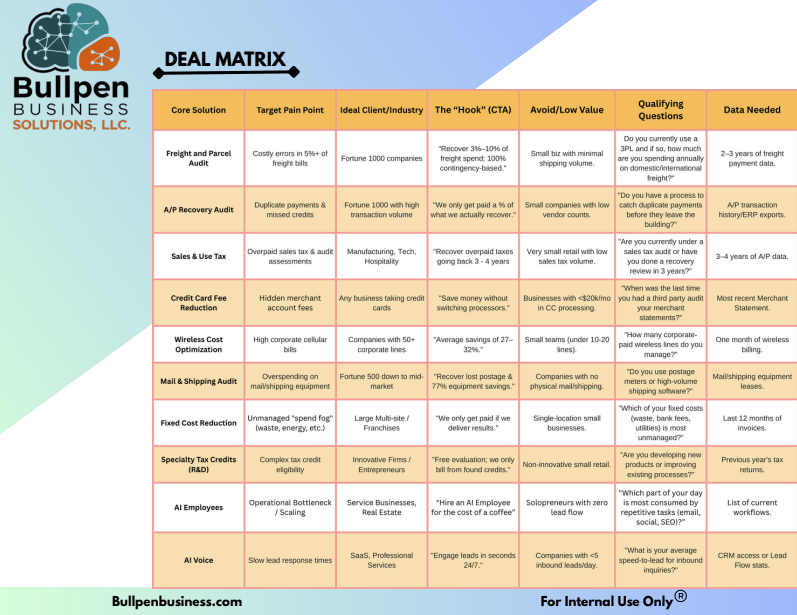
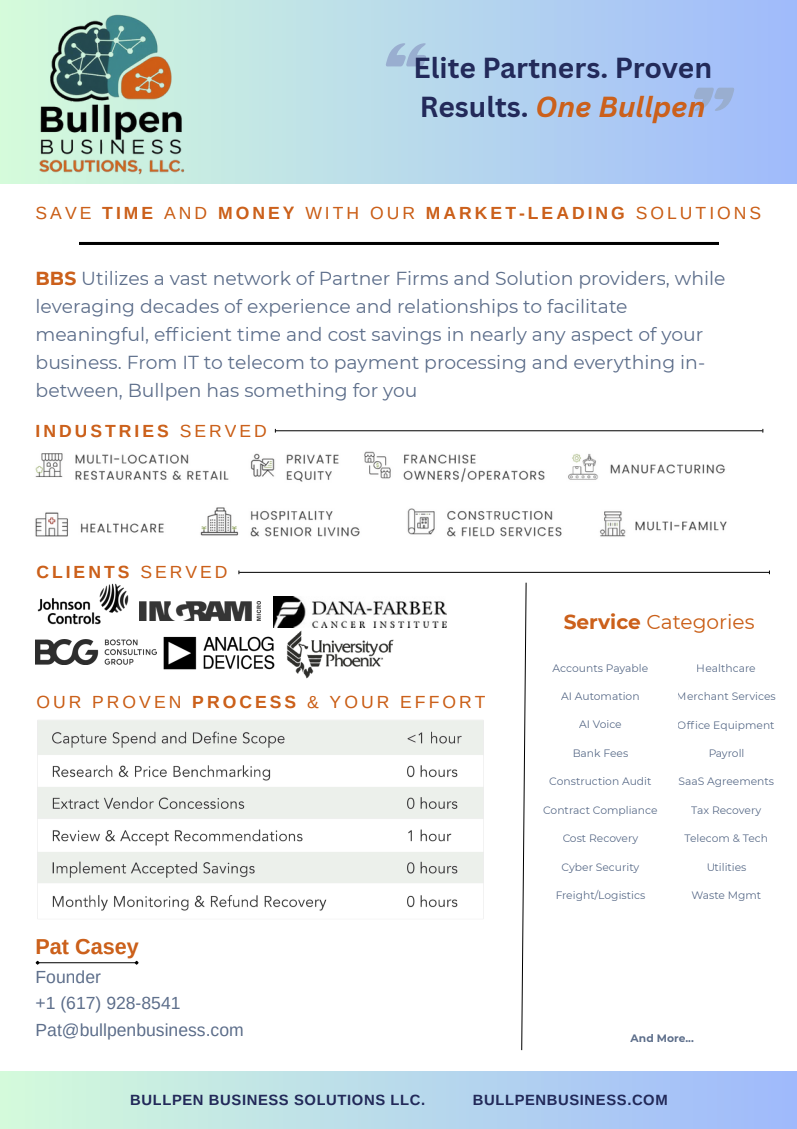
At Bullpen Business, we believe that you shouldn't have to navigate the complex world of sales automation alone. Our business model is designed to simplify the process of improving your profitability. We maintain a curated network of boutique firms that specialize in cost recovery, IT optimization, and, most importantly, sales and pipeline automation.
Our approach is vendor-neutral. We don't just push one software; we look at your specific pain points: whether that’s a stagnant pipeline or high operational costs: and connect you with the right solution from our negotiated member network.
Why Work With a Boutique Firm via Bullpen?
Exclusive Discounts: As part of our member network, you gain access to negotiated rates that aren't available to the general public.
Curated Ecosystem: We have already vetted the firms, so you don't have to waste time in the "trial and error" phase.
Minimal Effort: Our goal is to save you both time and money. We handle the heavy lifting of identifying the best partner for your specific industry and scale.
For instance, our work in cost optimization often leads to immediate, significant savings that can then be reinvested into your sales automation strategy. You can see an example of this in our wireless optimization case study, where we helped a client achieve a 47.1% reduction in expenses.
8. Implementing Your Automation Framework
To neutralize operational waste in 2026, you need a framework. You cannot simply buy a tool and hope for the best.
Audit Your Current Process: Where are the manual bottlenecks?
Identify Low-Value Tasks: Which tasks can be automated or outsourced to an appointment setting service?
Integrate and Optimize: Use pipeline automation to ensure no lead is left behind.
Reinvest Savings: Take the operational costs you’ve neutralized and put them back into growth-focused B2B lead generation.
If you are looking for a roadmap, our proven sales process automation framework provides a step-by-step guide to turning stalled deals into active meetings in under 30 days.
Conclusion: The Future of Profitable Sales
Sales automation is not just a trend; it is the fundamental way that modern businesses neutralize the operational waste that prevents them from scaling. By moving away from manual tracking and embracing CRM automation, pipeline automation, and specialized B2B lead generation services, you position your company for a profitable 2026.
Bullpen Business is here to help you navigate this transition. Whether you are looking for the best pricing plans for your business or simply need to understand how to build an automation strategy that pays for itself, our goal is to connect you with the expertise you need to succeed.
Don't let operational waste consume your margins. Automate the routine, outsource the specialized, and focus your team on what they do best: growing your business.
Comments