%20(3)_edited_edited.png)


The Proven Sales Process Automation Framework: Turn “Stalled Deals” Into Next-Step Meetings in 30 Days
- Peter Casey
- Feb 27
- 6 min read

In the high-stakes world of B2B sales, the silence following a "great discovery call" is deafening. You’ve presented the value, the prospect seemed engaged, and the fit was undeniable. Then, the trail goes cold. This phenomenon, the "stalled deal", is the silent killer of quarterly targets and company growth.
Most organizations attempt to solve this with brute force: more manual follow-ups, more frantic emails, and more "just checking in" phone calls that go to voicemail. However, in an era where buyers are more protective of their time than ever, manual persistence often yields diminishing returns. To turn these stalled prospects back into active participants, you need a systematic approach.
By implementing a strategic sales automation framework, you can transform your pipeline from a graveyard of "maybe later" into a streamlined engine of "what's next." At Bullpen Business, we specialize in connecting companies with high-level boutique firms that master these exact transitions, ensuring your profitability isn't leaked through the cracks of a manual process.
The Anatomy of a Stalled Deal
Before we can fix the pipeline, we must understand why it breaks. Deals typically stall due to three factors: friction in the decision-making process, a lack of consistent follow-up from the sales side, or a shift in the prospect's internal priorities.
When your team relies on manual memory or messy spreadsheets, follow-ups are the first thing to go. A salesperson might wait five days to follow up when the "iron was hot" at forty-eight hours. CRM automation eliminates this human error by ensuring that no deal is left to wither without a predefined touchpoint.
Step 1: Auditing Your Pipeline for Bottlenecks
The first phase of the framework involves a rigorous audit of your current sales cycle. You cannot automate what you haven't defined.
Identify the "Drop-off" Zones: Where do most of your prospects stop responding? Is it after the initial demo? After the proposal is sent? Or during the contract negotiation phase?
Quantify the Delay: On average, how many days pass between a "stalled" status and the last meaningful interaction?
Analyze the Content: Are your follow-ups providing value, or are they simply asking for time?
By identifying these bottlenecks, you can prioritize high-impact automation opportunities. For instance, if deals consistently stall after the proposal stage, your pipeline automation should focus on automated "case study" deliveries that address common late-stage objections.
Step 2: The CRM Automation Foundation
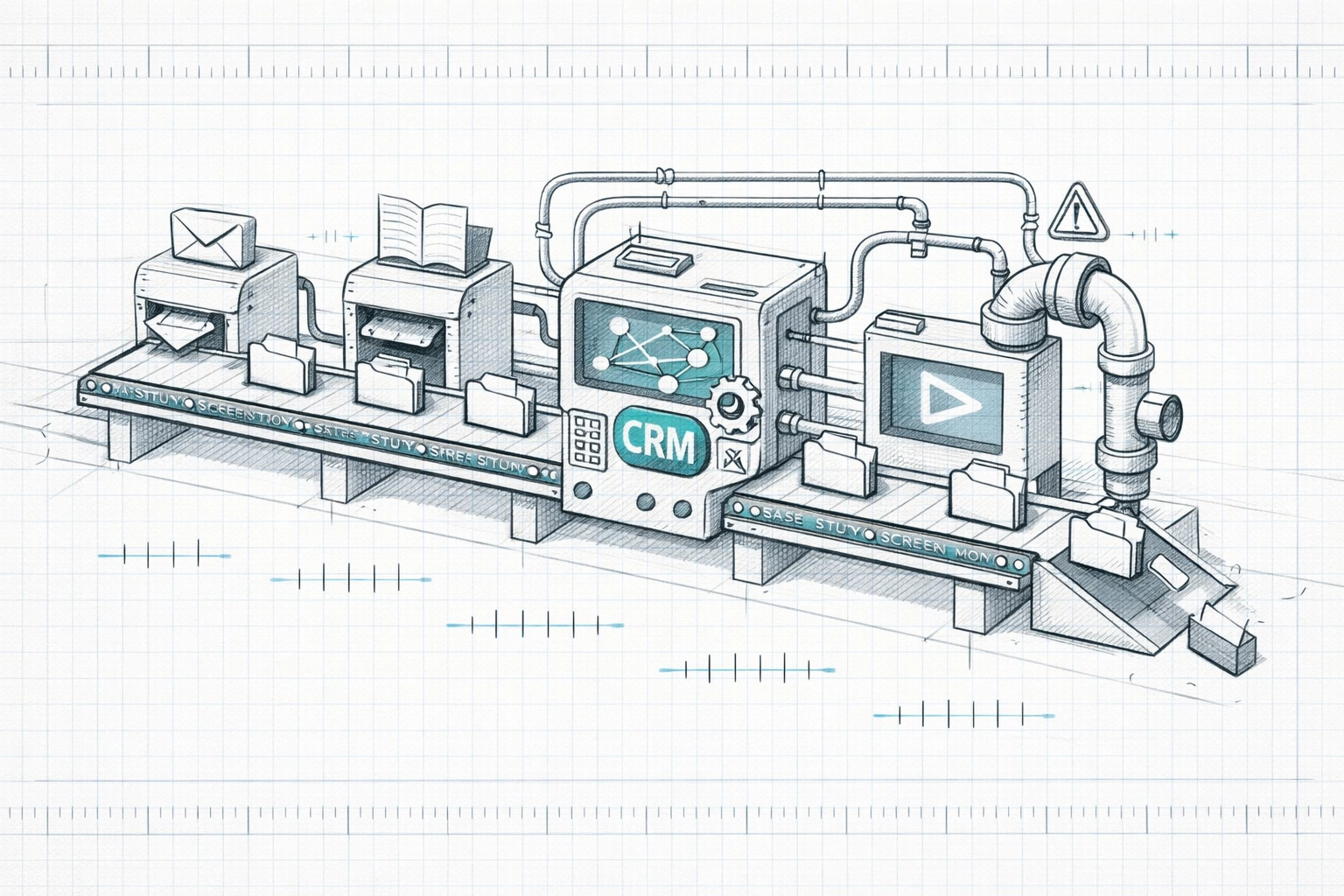
Your CRM should be more than a digital Rolodex; it must be a dynamic engine that triggers action. Effective CRM automation ensures that all prospect activity, or lack thereof, is tracked in real-time.
A core component of our framework is the implementation of trigger-based task creation. When a deal reaches a specific stage, the CRM should automatically:
Enroll the prospect in a personalized re-engagement sequence.
Notify the account executive if no movement has occurred within 72 hours.
Update lead scoring based on digital interactions (e.g., if the prospect re-opens the proposal PDF).
Syncing these actions back to your CRM provides total visibility. When your team logs in, they aren't guessing who to call; they are presented with a prioritized list of prospects who have shown recent "intent signals" through automated workflows.
Step 3: Implementing Intelligent Lead Nurturing
Once the foundation is set, we move to the communication layer. Sales automation does not mean sending generic, robotic emails. It means using technology to deliver the right message at the exactly right moment.
For stalled deals, we recommend a "Value-First" nurturing sequence. Instead of the standard "just following up" email, an automated workflow can send:
Day 1 of Stall: A relevant industry white paper or a recent blog post addressing a pain point discussed in the discovery call.
Day 7 of Stall: A video testimonial or a link to a case study featuring a client in a similar industry.
Day 14 of Stall: A "break-up" email that offers a low-friction way to stay in touch, often triggering a "wait, I'm still interested" response from the prospect.
Step 4: Appointment Setting Services and Lead Routing
Sometimes, the best way to revive a deal is to change the environment. If an automated email sequence isn't moving the needle, it may be time to leverage professional appointment setting services.
By integrating these services into your automation framework, you can trigger a "human-in-the-loop" intervention. If a prospect clicks a link in your automated email but doesn't reply, a specialized appointment setter can be alerted to make a personalized outbound call within minutes. This combination of B2B lead generation services and automated tracking creates a seamless experience for the prospect while maximizing the efficiency of your internal sales team.
Automated scheduling tools are also vital here. Every re-engagement email should include a direct link to the rep's calendar. Removing the "email back-and-forth" to find a time can increase meeting booking rates by over 30% in a 30-day window.
Step 5: Leveraging B2B Lead Generation Services for Pipeline Health
While the focus of this framework is on stalled deals, a truly automated sales process also looks at the top of the funnel. Consistent B2B lead generation services ensure that your pipeline is never entirely dependent on a few "whale" deals that might stall.
By outsourcing lead generation to boutique firms within the Bullpen Business network, you ensure a steady stream of high-intent prospects entering your automated nurture flows. This creates a "flywheel effect":
Lead Generation: New prospects enter the funnel via targeted outreach.
Automation: Leads are qualified and nurtured automatically.
Conversion: Sales reps focus only on "next-step" meetings.
Recovery: Stalled deals are automatically re-engaged without rep intervention.
The 30-Day Implementation Timeline
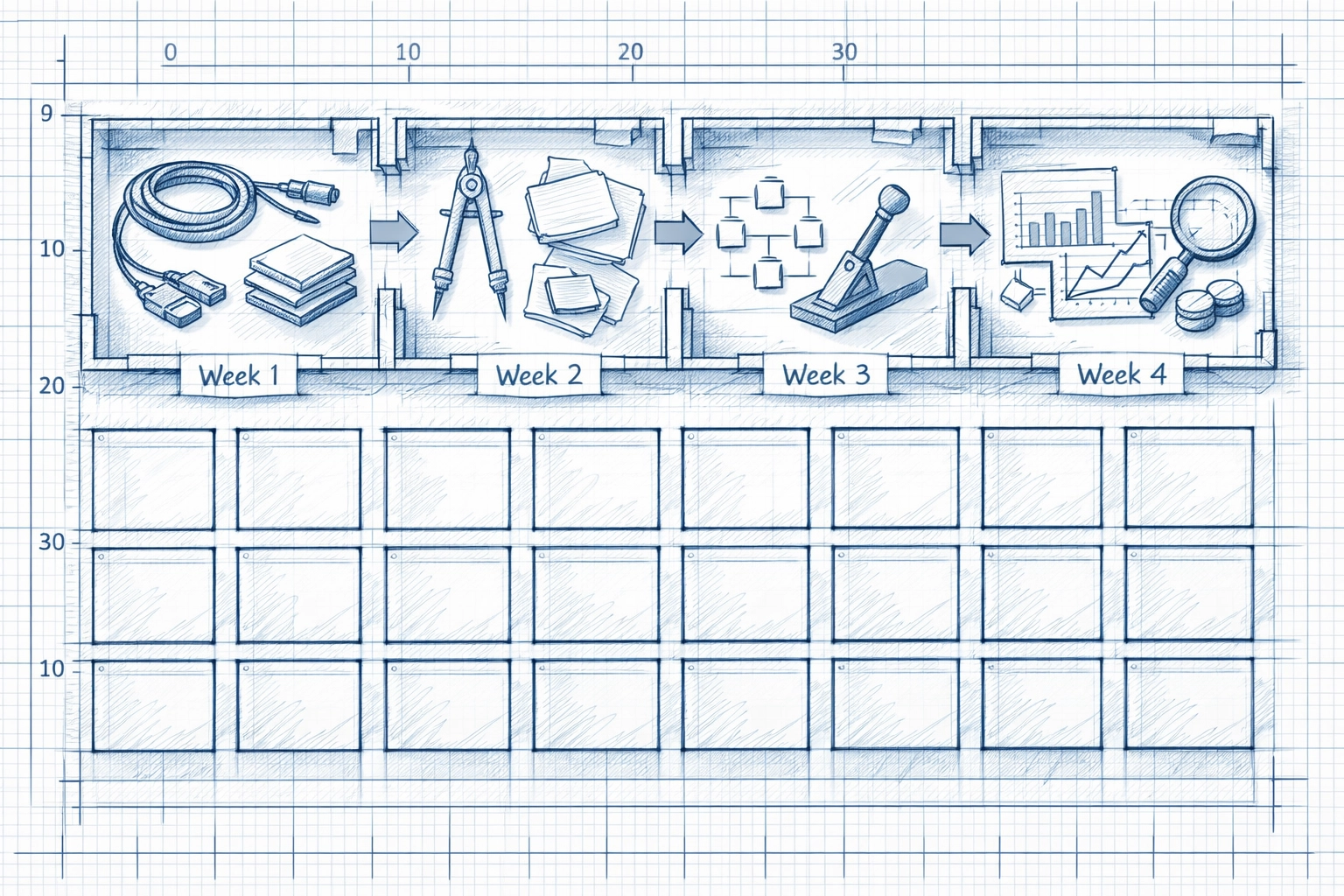
Turning stalled deals into meetings doesn't happen overnight, but it can happen in a month if you follow this structured approach:
Week 1: The Integration Phase
Connect your sales tools. Ensure your CRM, email platform, and LinkedIn outreach tools are communicating. This is where you establish your "Source of Truth." If you aren't sure which tools fit your specific niche, meeting with our team can help clarify the tech stack required for your industry.
Week 2: The Content & Trigger Phase
Build your sequences. Write the emails, record the personalized video snippets, and set the "triggers." For example, "If Deal Stage = 'Proposal Sent' AND Days Since Last Activity > 5, then Trigger 'Proposal Re-engagement Flow'."
Week 3: The Deployment Phase
Launch the automation on your currently stalled deals. This is often the most exciting week, as "dead" leads suddenly start clicking links, downloading resources, and responding to emails.
Week 4: The Optimization Phase
Review the data. Which subject lines are getting opens? Which "next-step" calls to action are leading to booked meetings? Refine your pipeline automation based on these real-world results.
Why Bullpen Business?
At Bullpen Business, we understand that mid-market and Fortune 1000 organizations don't just need software; they need results. We act as your strategic partner, connecting you with boutique firms that specialize in sales automation, CRM automation, and high-level B2B lead generation services.
Our model is designed to improve your profitability by reducing the overhead of manual sales processes and maximizing the value of every lead in your CRM. We vet the vendors, negotiate the deals, and provide you with a curated ecosystem of experts who can execute this framework on your behalf.
The cost of a stalled deal isn't just the lost revenue; it's the wasted time of your most expensive sales assets. By automating the "follow-up" and "re-engagement" phases of your cycle, you free your team to do what they do best: closing deals and building relationships.
Conclusion: Stop Chasing, Start Closing
The "stalled deal" is only a permanent state if you allow it to be. With the right pipeline automation and a commitment to a trigger-based framework, you can ensure that every prospect is moved toward a definitive "yes" or "no."
In the next 30 days, you could continue sending manual "just checking in" emails, or you could build a system that works while you sleep. The choice between stagnation and growth often comes down to the systems you choose to implement today.
Ready to revitalize your sales pipeline and stop losing revenue to the "void"? Explore our full range of services or book a consultation to see how Bullpen Business can connect you with the specialized automation partners you need to scale.
Comments