%20(3)_edited_edited.png)


7 Mistakes You’re Making with Sales Automation (and How to Fix Them)
- Peter Casey
- Mar 10
- 5 min read

In the modern corporate landscape, sales automation has transitioned from a competitive advantage to a fundamental operational requirement. Organizations that successfully implement these technologies often realize significant gains in efficiency and revenue. However, the path to successful automation is frequently obstructed by strategic and technical errors that can diminish your return on investment.
At Bullpen Business, we specialize in connecting mid-market and Fortune 1000 companies with boutique firms that provide specialized services in sales automation and cost recovery. We have observed that many organizations struggle with the same recurring issues. This guide identifies the seven most common mistakes in sales automation and provides actionable strategies to rectify them.
1. The Prevalence of Low-Quality Data in CRM Systems
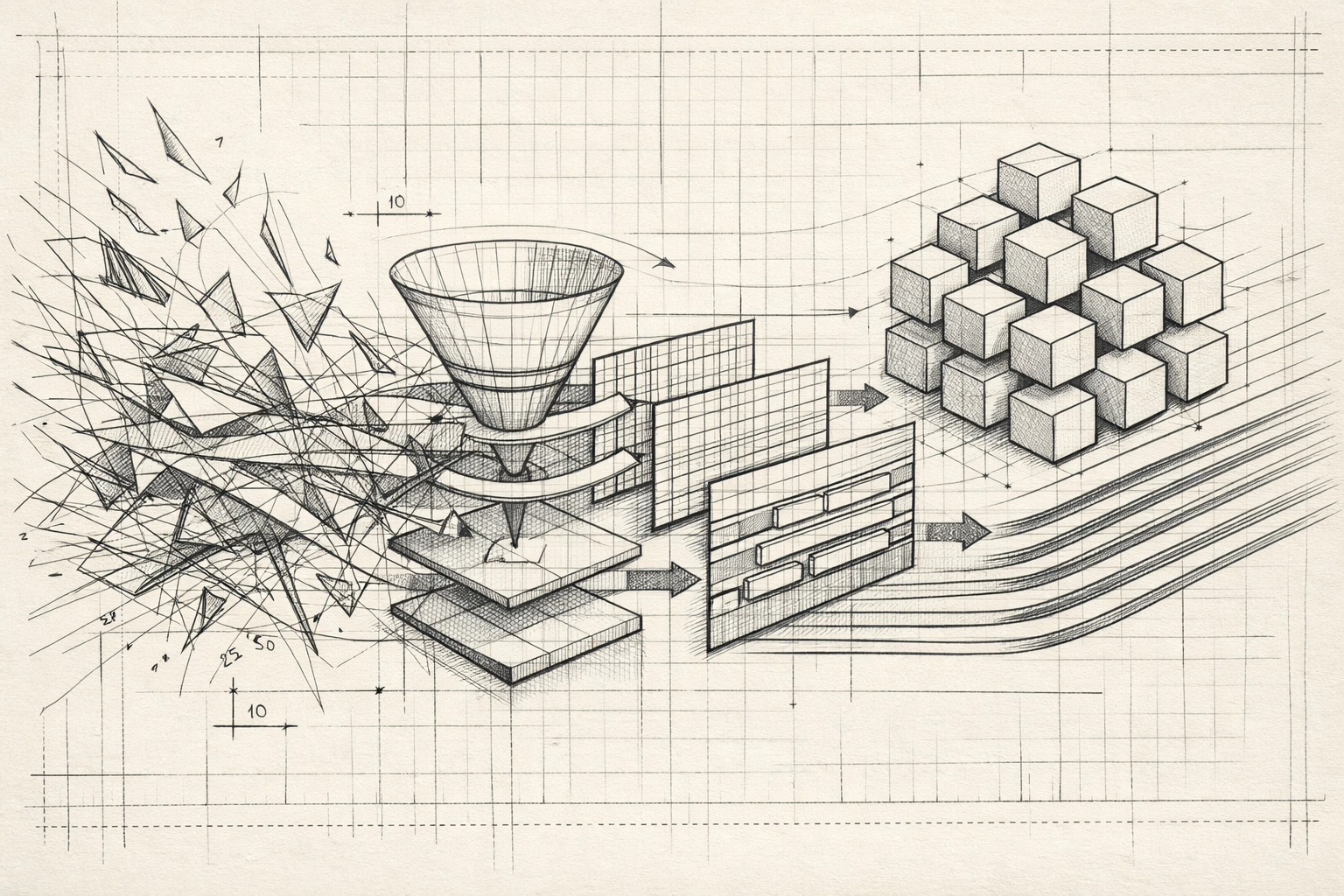
One of the most significant barriers to effective sales automation is poor data hygiene. When your customer information is fragmented across disconnected platforms: such as your CRM, email marketing tools, and support tickets: your automation sequences operate on incomplete or inaccurate data.
Research indicates that sales representatives may lose up to 27.3% of their productive time dealing with incorrect contact information. This inefficiency scales as your organization grows, leading to missed opportunities and damaged brand reputation.
The Fix: Implement Rigorous CRM Automation and Data Cleansing You should establish a regular schedule for data cleansing and validation. Utilize automated tools to verify email addresses, update job titles, and merge duplicate records. Integrating a centralized platform that maintains a real-time, 360-degree view of the customer ensures that your sales automation is always driven by accurate insights.
2. Over-Automating at the Expense of Personalization
While automation is designed to increase volume, excessive reliance on generic templates can alienate high-value prospects. Approximately 62% of consumers report they are less likely to remain loyal to brands that provide impersonal experiences. In the context of B2B lead generation services, a purely robotic approach often results in lower response rates.
If your messaging feels like a mass broadcast rather than a tailored conversation, your prospects will likely ignore your outreach. Over-automation can lead to embarrassing errors, such as sending generic "congratulations" messages during inappropriate circumstances.
The Fix: Adopt a "Human-in-the-Loop" Model You should view sales automation as a digital assistant rather than a replacement for human judgment. Use automation for high-volume, low-complexity tasks, such as distributing whitepapers or initial follow-ups. However, ensure that higher-stage interactions in your pipeline automation remain personalized. Trigger alerts for your sales team to step in when a prospect shows high intent, such as visiting a pricing page multiple times.
3. Inadequate Lead Qualification and Scoring
Many organizations use sales automation to cast the widest possible net, but this often leads to a congested pipeline filled with low-quality leads. Without a robust scoring framework, your sales team may spend valuable time pursuing students, researchers, or competitors rather than qualified buyers.
Mismanaged lead qualification can lead to a 15% decrease in lead-to-sale conversion rates. This creates friction between marketing and sales departments and reduces the overall profitability of your B2B lead generation services.
The Fix: Develop a Strategic Scoring Framework You must collaborate with your sales and marketing teams to define what constitutes a "sales-ready" lead. Your automation system should evaluate identity factors: such as job title, company size, and industry: alongside behavioral signals like content downloads and webinar attendance. This ensures that only high-priority prospects are moved into appointment setting services and direct sales cycles.
4. Relying on Static, Linear Workflows
A common mistake in pipeline automation is the creation of "one-size-fits-all" sequences. Linear workflows assume that every prospect follows the same path at the same speed. In reality, buyer journeys are non-linear and unpredictable.
If your automation does not account for different behaviors: such as a prospect skipping a step or returning to an earlier stage: you risk sending irrelevant content that leads to unsubscribes and disengagement.
The Fix: Utilize Branching Logic and Conditional Workflows Your automation strategy should incorporate branching logic that reacts to specific prospect actions. For instance, if a lead fills out a "product demo" form, they should be diverted from a general educational sequence and placed into a high-intent sales track. This dynamic approach ensures your messaging remains relevant to the prospect's current position in the buying cycle.
5. The "Set It and Forget It" Mentality
Sales automation is not a one-time project; it is an ongoing process of optimization. Many businesses fall into the trap of launching a sequence and never revisiting the performance metrics. Over time, messaging becomes stale, market conditions shift, and once-effective workflows lose their impact.
A sequence that initially yields high engagement may eventually decline into "predictable noise" if not refreshed regularly. Failing to monitor these systems can lead to missed technical errors that quietly break your sales funnel.
The Fix: Continuous Performance Monitoring and Iteration You should treat your automation sequences as living systems. Monitor key performance indicators (KPIs) such as open rates, click-through rates, and conversion percentages on a monthly basis. Conduct A/B testing on subject lines and calls to action to identify what resonates best with your current audience. Regular audits ensure that your CRM automation remains aligned with your evolving business goals.
6. Operating with Disconnected Technology Stacks
When your marketing automation, CRM, and communication tools do not communicate, data silos are inevitable. Disconnected tools lead to duplicate entries, synchronization errors, and a fragmented view of the customer journey.
If your appointment setting services are not integrated with your primary CRM, your sales team may lack the context needed to close a deal. This lack of integration often results in wasted spend on redundant software licenses.
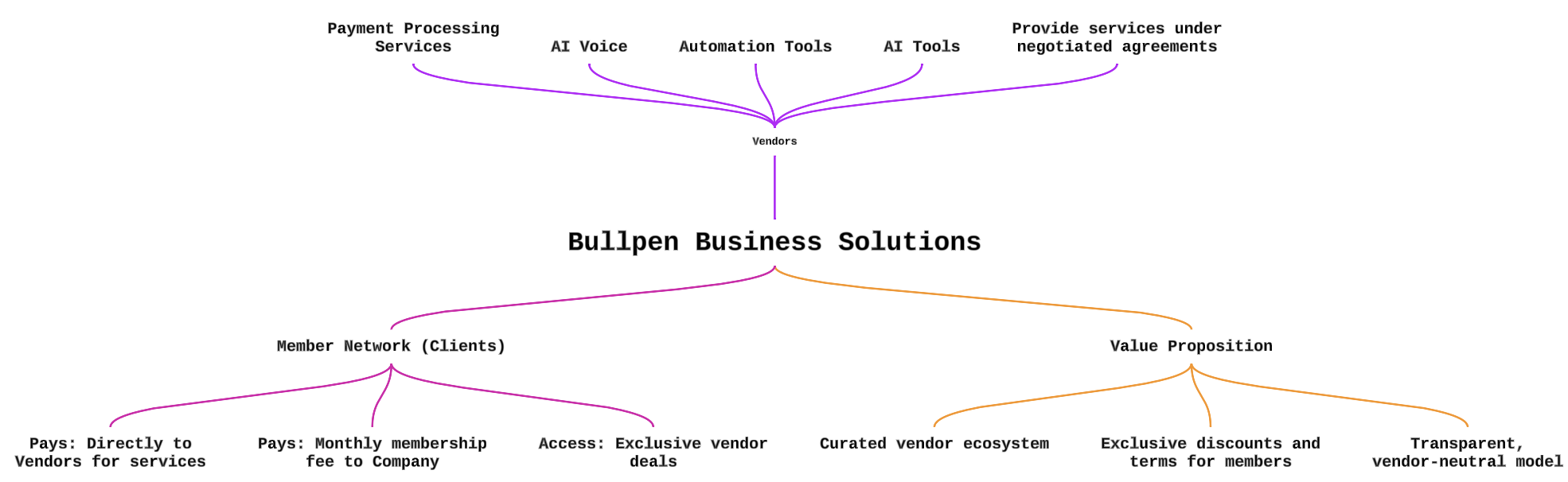
The Fix: Strategic Tool Integration and Vendor Selection You should prioritize platforms that offer seamless integration with your existing technology stack. At Bullpen Business, we help companies navigate this complexity by providing access to a curated network of boutique firms that specialize in building unified automation ecosystems. For more information on how we structure these solutions, you can view our pricing plans.
7. Implementing Too Much Too Quickly Without a Strategy
Attempting to automate every aspect of your sales cycle simultaneously can overwhelm your team and your systems. Without a clear strategic foundation, automation becomes a reactive tactic rather than a purposeful driver of profitability.
Launching complex, multi-stage campaigns without testing the individual components often leads to systemic failures that are difficult to diagnose and repair.
The Fix: Prioritize High-Impact Automations First You should begin with a clear automation strategy that aligns with your broader business objectives. Start by automating the most repetitive and time-consuming tasks first, such as initial lead qualification or meeting scheduling. Once these foundational elements are optimized, you can expand your pipeline automation to more complex scenarios.
How Bullpen Business Enhances Your Automation Strategy
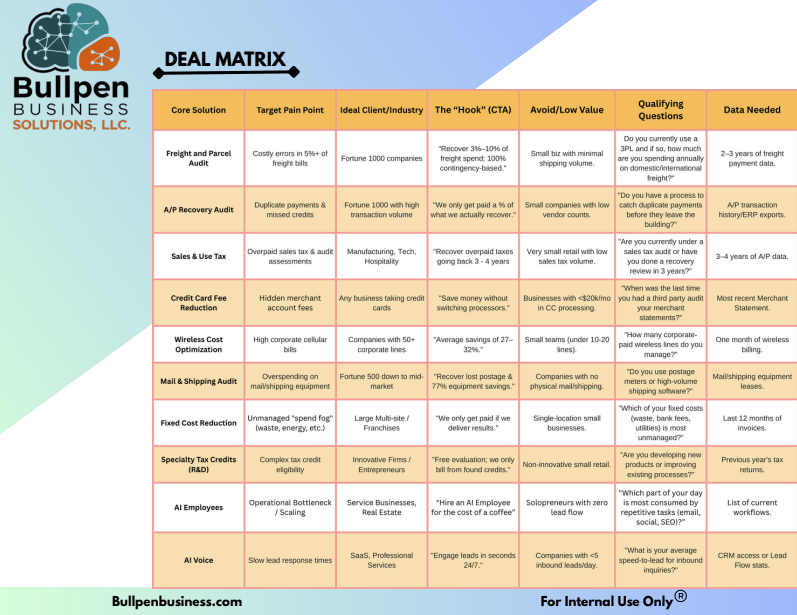
Navigating the complexities of sales automation requires more than just software; it requires specialized expertise. Bullpen Business serves as your strategic partner, connecting you with boutique firms that offer market-leading solutions in B2B lead generation services, CRM automation, and appointment setting services.
Our model is designed to improve your company's profitability by reducing the time and effort required to find and manage high-quality vendors. We provide a transparent, vendor-neutral approach that ensures you receive the best possible tools and services for your specific needs.
By avoiding these seven common mistakes, you can transform your sales automation from a source of frustration into a powerful engine for growth. If you are ready to optimize your sales processes and improve your bottom line, consider exploring our booking services to schedule a consultation.

Conclusion
Effective sales automation is built on a foundation of high-quality data, strategic personalization, and continuous optimization. By addressing data hygiene, lead scoring, and system integration, your organization can significantly enhance its sales efficiency. Bullpen Business remains committed to helping you navigate these technological shifts by providing access to an elite network of specialized boutique firms.
For further insights into how we help organizations recover costs and improve efficiency, you may visit our blog categories or review our product page.
Comments