%20(3)_edited_edited.png)


Appointment Setting Services 101: A Beginner’s Guide to Mastering Scalable Outbound Growth
- Peter Casey
- Mar 11
- 5 min read

For many growing organizations, the primary bottleneck to revenue is not the inability to close deals, but the inability to start enough high-quality conversations. Sales professionals often find their calendars dominated by administrative tasks or cold outreach rather than strategic negotiations.
Appointment setting services provide a specialized solution to this imbalance. By separating the initial prospecting and qualification phases from the final sales presentation, companies can create a more predictable and scalable growth engine.
In this guide, we will explore the fundamental components of professional appointment setting, the role of sales automation, and how your organization can leverage these services to improve profitability without increasing internal headcount.
1. Defining the Role of Appointment Setting
Appointment setting is the strategic process of contacting potential customers, assessing their initial interest, and scheduling meetings between qualified prospects and your senior sales team. This function serves as the bridge between broad B2B lead generation services and the final closing of a contract.
Generally speaking, the goal is to ensure that your Account Executives (AEs) only spend time with prospects who have the budget, authority, and need for your solution. By outsourcing this to specialized firms, your internal team can focus on their core competency: high-level consultative selling.
This division of labor is essential for modern sales environments. According to industry research, it often takes an average of 18 or more calls to connect with a single prospect. Professional appointment setters manage this high-volume activity so your team does not have to.

2. The Six Stages of a Systematic Outbound Process
To achieve consistent results, appointment setting services must follow a structured methodology. A random approach to outreach rarely scales and often leads to brand fatigue. Most successful boutique firms follow these six core stages:
A. Target Identification The process begins by defining the Ideal Customer Profile (ICP). This involves researching and identifying prospects that match specific criteria such as industry, annual revenue, and geographic location.
B. Research and Personalization Effective outreach requires context. Researching recent company news, mutual connections, or specific pain points allows setters to personalize their messaging, which significantly increases response rates compared to generic templates.
C. Outreach and Initial Contact Using a multi-channel approach: including email, LinkedIn, and phone: setters begin engagement. This stage is focused on sparking initial interest and opening a line of communication.
D. Qualification Through Conversation Not every interested person is a good fit. Setters must understand the prospect's decision timeline, authority level, and product fit before a meeting is ever booked.
E. Follow-Up and Nurture Many prospects are interested but not ready for an immediate meeting. Maintaining engagement through consistent, value-added follow-up ensures your brand remains top-of-mind.
F. Scheduling the Appointment The final step is coordinating a meeting between the prospect and your sales team. This includes managing calendar invites and ensuring all relevant context is shared with the AE.
3. Enhancing the Funnel with Sales and CRM Automation
Manual tracking of thousands of leads is nearly impossible in a modern B2B environment. This is where pipeline automation and CRM automation become critical.
Modern appointment setting services leverage sophisticated technology stacks to manage the volume of activity required for growth. CRM automation ensures that every interaction is recorded, providing a clear audit trail of the prospect's journey. This prevents leads from falling through the cracks and allows for data-driven adjustments to the outreach strategy.
Furthermore, sales automation tools can handle the repetitive aspects of follow-up. For instance, automated email sequences can be triggered based on specific prospect behaviors. When these tools are integrated correctly, they allow a small team of appointment setters to punch well above their weight class in terms of output.
4. Key Benefits of Specialized Appointment Setting Services
Investing in professional appointment setting offers several distinct advantages over traditional, unsegmented sales models.
Improved Sales Efficiency
When your closers are freed from the "grunt work" of prospecting, their productivity increases. They can prepare more thoroughly for meetings and manage a larger volume of active deals. This focus typically leads to higher win rates and shorter sales cycles.
Scalability Without Headcount
Building an internal outbound team is expensive and time-consuming. You must account for recruitment, training, benefits, and management overhead. Outsourced services allow you to scale your outreach up or down depending on your current needs and budget.
Access to Specialized Expertise
Boutique firms often specialize in specific industries, such as SaaS, healthcare, or logistics. They bring pre-existing knowledge of industry pain points and established best practices that an internal generalist team might take months to develop.
Better Lead Quality
Because appointment setters are incentivized based on the quality of the meetings they book (not just the quantity of leads found), the filter for entering your pipeline becomes much stronger. This reduces "pipeline noise" and ensures your resources are focused on high-potential opportunities.
5. Implementing Your Outbound Strategy
Before engaging with appointment setting services, it is important to align the service with your broader go-to-market motion. We recommend starting with a clear understanding of your current gaps.
Are you struggling to find new leads, or are you struggling to get those leads to commit to a meeting? If your top-of-funnel is empty, you may need broader B2B lead generation services. If you have leads but a stagnant calendar, a dedicated appointment setting firm is the priority.
You should also establish a feedback loop. Your sales team should provide regular feedback on the quality of the appointments being booked. This allows the setting team to refine their qualification criteria and messaging in real-time.

6. How Bullpen Business Improves Your Profitability
At Bullpen Business, we recognize that finding the right partner for sales and pipeline automation can be a daunting task. The market is saturated with providers, making it difficult to distinguish between high-performing boutique firms and low-quality call centers.
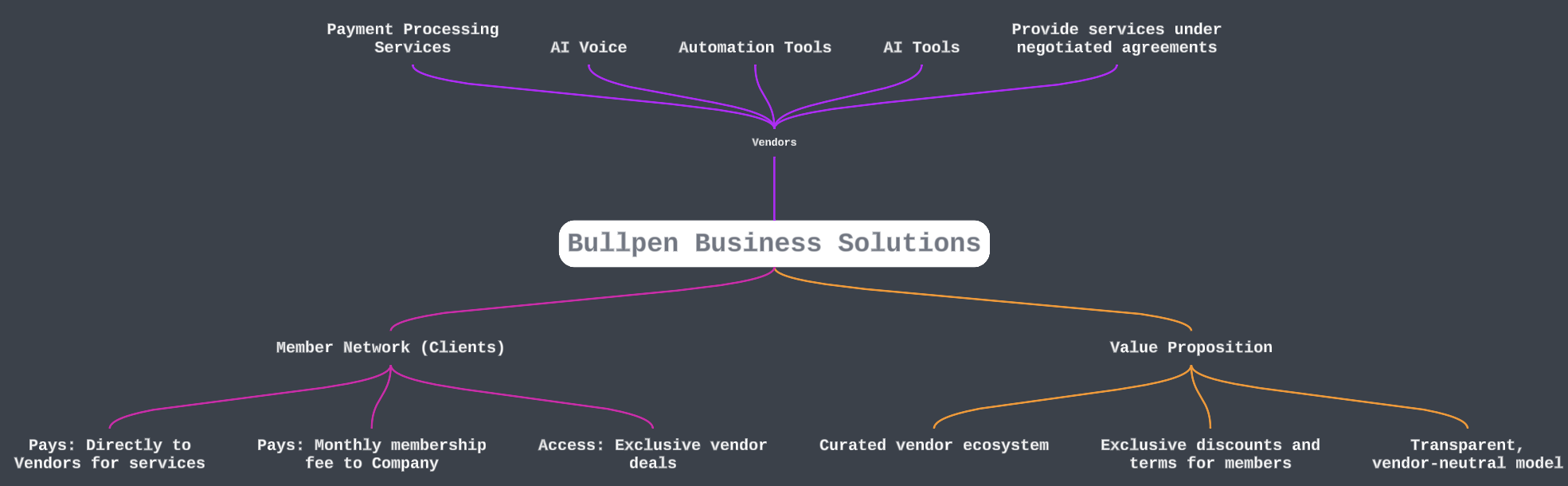
Our role is to connect companies with vetted, high-performing boutique firms that specialize in appointment setting and lead generation. By leveraging our negotiated agreements and member network, you gain access to elite services that improve your bottom line while minimizing risk.
We focus on a transparent, vendor-neutral model. Our goal is to ensure you are matched with a provider that understands your specific industry and can deliver measurable results. You can learn more about our philosophy by viewing the deck.
7. Metrics for Success: What to Track
To ensure your investment in appointment setting is delivering a return, you must track specific Key Performance Indicators (KPIs). Generally speaking, you should monitor:
Lead-to-Meeting Ratio: How many initial contacts result in a scheduled appointment?
No-Show Rate: The percentage of scheduled prospects who fail to attend the meeting.
Meeting-to-Opportunity Rate: How many of the booked meetings are deemed "qualified" by your sales team after the initial call?
Cost Per Qualified Appointment: The total spend divided by the number of meetings that actually enter the sales pipeline.
By monitoring these metrics, you can determine the ROI of your outbound efforts and make informed decisions about scaling your operations.
Conclusion
Appointment setting services are no longer a luxury for large enterprises; they are a necessity for any B2B company looking to achieve scalable, predictable growth. By delegating the early stages of the sales process to specialists and leveraging CRM automation, you can transform your sales department into a high-efficiency revenue engine.
If you are ready to explore how a tailored outbound strategy can work for your organization, we invite you to meet with our team here. Bullpen Business is dedicated to helping you find the right partners to drive your business forward. For more information on our full suite of consulting services, visit our homepage.
Comments