%20(3)_edited_edited.png)


Do You Really Need Sales Automation Software? Here's the Truth About ROI
- Peter Casey
- Feb 16
- 5 min read

You've likely heard the pitch: sales automation will transform your business, free up your team, and multiply your revenue. But between the software subscriptions, implementation costs, and training time, you're wondering whether the investment actually pays off.
The short answer is yes: but only if you understand what you're really buying and whether your business is positioned to capture the returns.
The Real Investment Goes Beyond Software Costs
When evaluating sales automation, most businesses focus exclusively on monthly subscription fees. This approach misses the complete picture. Your total investment includes:
Software licensing fees (typically $50-$150 per user monthly)
Implementation and integration costs
Training time for your sales team
Ongoing optimization and maintenance
Potential consulting fees for custom workflows
For a ten-person sales team, you may be looking at $15,000-$25,000 in year-one costs when you account for all factors. This context makes the ROI question considerably more pressing.
What the Data Actually Shows
Marketing and sales automation delivers an average return of $5.44 for every dollar spent, according to multiple industry studies. More importantly, most companies recover their initial investment within six months of implementation.
Advanced CRM automation tools with built-in AI capabilities show even stronger performance. A 2024 Forrester Study documented approximately 324% ROI over three years for businesses using AI-enhanced CRM systems. These aren't theoretical projections: they're measured outcomes from real implementations.
Consider the operational cost savings alone. One company achieved $6.9 million in savings by using AI and automation to streamline renewal processes. Organizations investing in AI-powered sales tools report a 10-20% uplift in sales ROI, with 76% documenting positive returns within the first year.
The financial case is compelling, but it depends entirely on your ability to leverage the specific capabilities that drive these returns.
Where You'll See Productivity Gains
Sales automation delivers time savings that directly translate to revenue opportunities. Sales professionals using automation tools save an average of 2 hours and 15 minutes daily. That's more than ten hours weekly your team can redirect toward actual selling activities.
The productivity improvements appear across multiple areas:
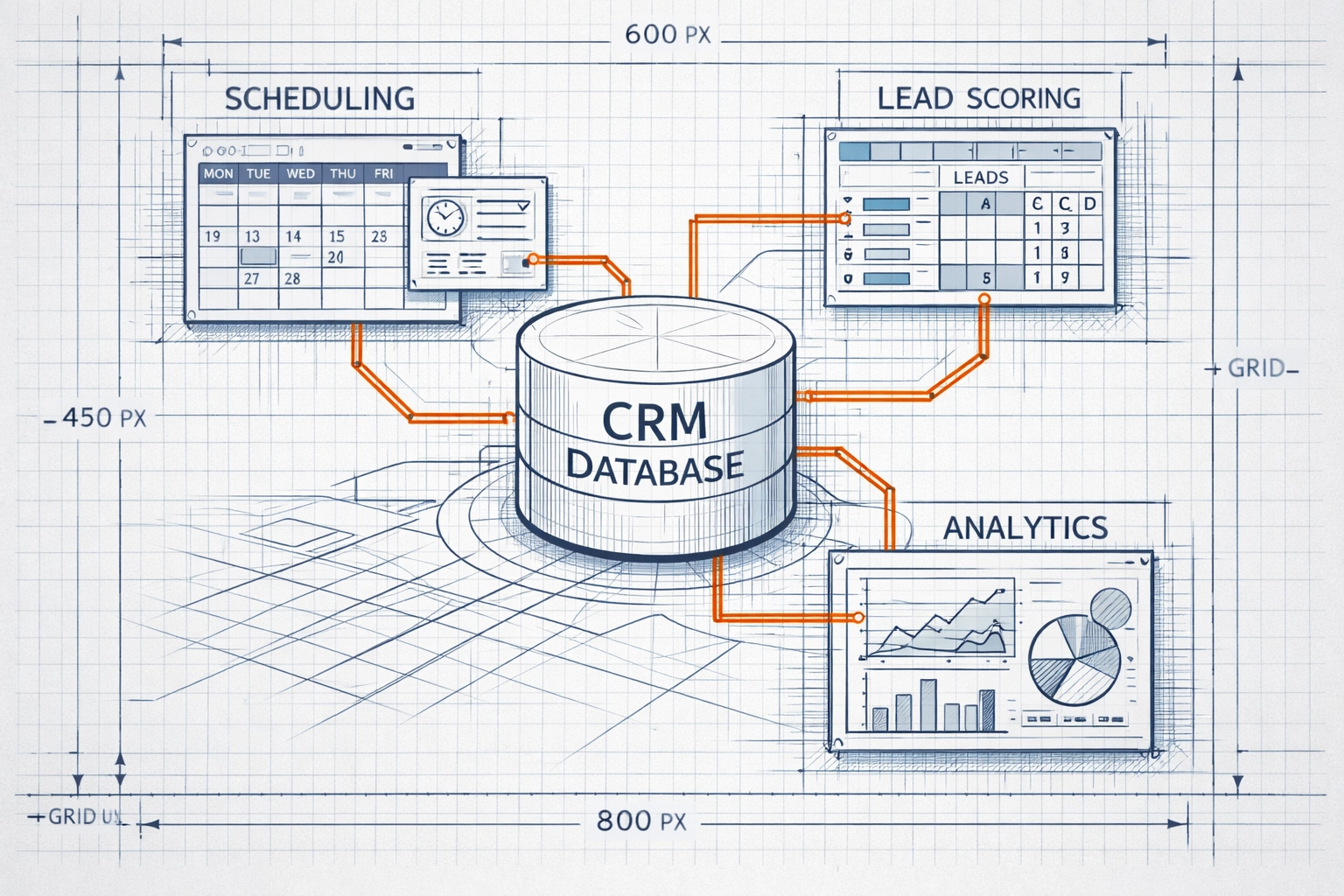
Lead Management and Response Automation cuts lead research and response times by more than 60%. When a prospect expresses interest, your system can immediately deliver relevant information, schedule follow-ups, and notify the appropriate salesperson: all without manual intervention.
Administrative Task Reduction Data entry, meeting scheduling, follow-up reminders, and activity logging consume significant portions of your sales team's day. Pipeline automation handles these tasks automatically, ensuring accuracy while freeing your team for customer-facing work.
Territory and Route Optimization For field sales teams, automation increases customer visits by approximately 30% through optimized route planning and real-time schedule adjustments. GPS tracking and intelligent scheduling ensure your representatives spend maximum time with customers rather than in transit.

Real-Time Performance Visibility Sales leaders gain immediate access to pipeline health, conversion rates, and individual performance metrics. This visibility enables faster course corrections and more informed resource allocation decisions.
When Sales Automation Delivers Maximum Value
Sales automation software isn't universally necessary, but it becomes increasingly valuable under specific conditions. You should seriously consider automation if your business faces any of these situations:
1. Geographic Complexity If your sales team covers multiple territories or regions, automation provides route optimization, territory management, and coordinated scheduling that manual systems simply cannot match.
2. High Lead Volume When you're generating dozens or hundreds of leads weekly across multiple channels, CRM automation ensures no opportunity falls through the cracks. Automated lead scoring, routing, and nurturing become essential rather than optional.
3. Extended Sales Cycles B2B lead generation services often involve months-long sales cycles with multiple touchpoints. Automation maintains consistent engagement without requiring manual tracking of every interaction across every prospect.
4. Administrative Burden If your salespeople spend more than 30% of their time on administrative tasks, automation can recapture that time for actual selling. The productivity gains alone often justify the investment.
5. Scaling Challenges When you're ready to expand your sales team but concerned about maintaining quality and consistency, sales automation provides the infrastructure for scalable growth.

When You Might Not Need Automation Yet
Honesty requires acknowledging situations where sales automation may not be your priority investment. Very small sales teams: typically under five people: with straightforward, short sales cycles may not yet have sufficient complexity to justify automation overhead.
If your entire sales process involves direct conversations with a handful of clients you personally manage, and you're not planning to scale, automation may introduce more complexity than value.
Similarly, if you're still validating your sales process and experimenting with different approaches, you may benefit from manual operation until you've established repeatable workflows worth automating.
However, these situations are relatively uncommon. Most businesses reach automation-worthy complexity faster than they anticipate.
Evaluating Automation for Your Specific Business
The decision ultimately depends on your specific operational challenges and growth trajectory. Consider these qualifying questions:
How many hours weekly does your team spend on administrative tasks versus actual selling?
What percentage of leads do you currently fail to follow up with promptly?
Can you accurately report on pipeline health and sales team performance without manual spreadsheet work?
Are you losing deals to competitors who respond faster?
Do you have clear visibility into which marketing sources generate your best opportunities?
If you answered unfavorably to multiple questions, you're likely leaving money on the table without automation.

The Implementation Factor
Here's what many businesses miss: the ROI of sales automation depends heavily on proper implementation and optimization. Simply purchasing software doesn't deliver results. You need:
Clear process documentation before automation
Thoughtful workflow design aligned with your actual sales process
Adequate training for user adoption
Ongoing optimization based on performance data
This is precisely where working with experienced implementation partners becomes valuable. Rather than navigating vendor selection, integration challenges, and optimization alone, partnering with specialists who understand both the technology and your industry constraints dramatically improves outcomes.
At Bullpen Business, we connect companies with boutique firms specializing in sales automation, CRM implementation, and appointment setting services. These partnerships ensure you're not just buying software: you're implementing proven systems tailored to your specific situation.
Making the Decision
Sales automation software isn't a question of if, but when. The financial returns are documented and substantial. The productivity gains are measurable and immediate. The competitive advantages are real.
For most growing businesses, the question isn't whether automation delivers ROI: it's whether you can afford to delay while competitors capture the efficiency advantages.
The key is approaching automation strategically: understanding your specific needs, selecting appropriate tools, implementing thoughtfully, and optimizing continuously. When you get these factors right, the ROI question answers itself within months.
If you're evaluating sales automation for your business and want guidance on selecting the right solutions and implementation partners, we can help you navigate the options and connect you with specialists who deliver measurable results. The investment is significant, but for businesses positioned to leverage it properly, the returns make it one of the most financially rational decisions you can make.
Comments