%20(3)_edited_edited.png)


Struggling For Consistent Pipeline Growth? 50+ Sales Automation Tools and B2B Lead Generation Services That Actually Deliver ROI
- Peter Casey
- Feb 17
- 6 min read

Your sales team is working harder than ever, yet your pipeline remains unpredictable. You are not alone in this challenge.
According to recent sales operations research, companies implementing sales automation tools see an average 14.5% increase in sales productivity and a 12.2% reduction in marketing overhead. The critical factor separating successful implementations from wasted investments is selecting tools that align with your specific pipeline bottlenecks.
Why Sales Automation Fails for Most Organizations
Many businesses purchase sales automation software expecting immediate pipeline growth, only to discover their team lacks the bandwidth to implement it properly. Others invest in enterprise-level CRM automation without addressing fundamental process gaps.
The most common failure points include:
Tool overload: Adopting multiple platforms without integration strategies
Data quality issues: Automating outreach with outdated or incomplete contact information
Misaligned expectations: Assuming technology replaces strategic sales methodology
Implementation gaps: Lacking internal expertise to configure complex automation workflows
This is where Bullpen Business's approach differs. We connect mid-market and enterprise organizations with specialized boutique firms that implement and optimize sales automation systems specifically for your industry and growth stage.
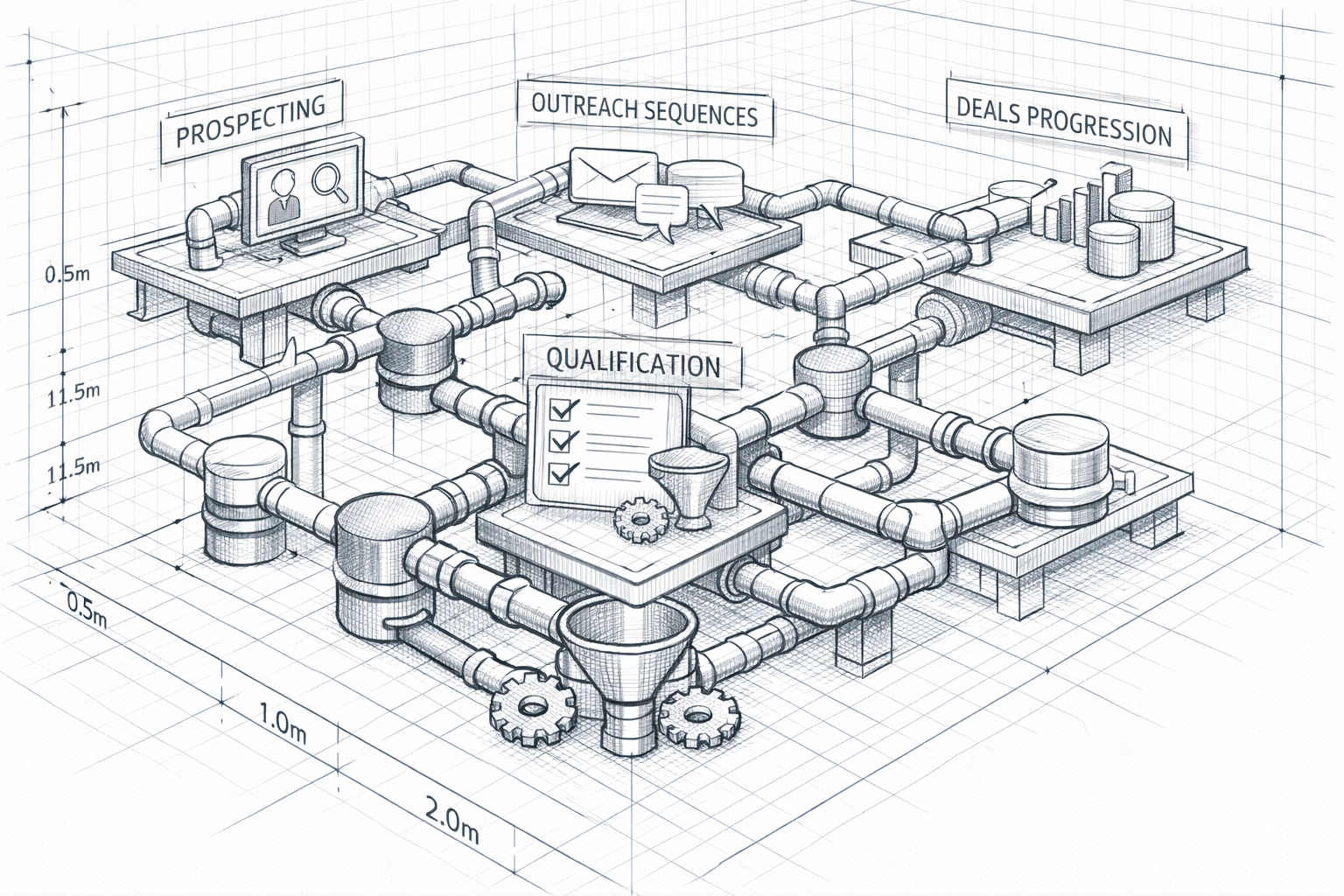
Multichannel Prospecting and Outreach Tools
Your prospects operate across multiple channels. Your outreach strategy should reflect that reality.
La Growth Machine provides the most comprehensive multichannel prospecting automation currently available. The platform coordinates outreach across LinkedIn, email, and Twitter in unified sequences that adapt based on prospect behavior.
Lemlist focuses heavily on personalization at scale. You can automate outreach across email, LinkedIn, WhatsApp, and phone calls while maintaining individualized messaging. Pricing starts at $59 per user monthly for their Email Outreach plan.
Smartlead addresses a critical technical challenge: email deliverability. Their unlimited email warmup feature, starting at $39 monthly, helps maintain sender reputation across multiple email accounts. This matters when you are scaling cold outreach campaigns.
Klenty integrates directly with major CRM platforms and offers AI-powered cadence building at $50 per user monthly. The platform automatically logs all prospect interactions back to your CRM, eliminating manual data entry.
For appointment setting services specifically, these tools provide the infrastructure. However, you still need trained specialists to craft messaging, monitor responses, and qualify leads before they reach your sales team.
Data-Driven Sales Intelligence Platforms
Outreach automation means little without accurate contact data and buyer intent signals.
Apollo provides one of the largest accessible databases: 210 million contacts and 30 million companies: with a functional free tier. Paid plans begin at $49 per user monthly and include email sequencing, call recording, and meeting scheduling.
ZoomInfo operates at the enterprise level with technographic data, intent signals, and organizational charts. Pricing typically starts around $15,000 annually, making it suitable for larger organizations with dedicated sales operations teams.
These platforms excel at B2B lead generation services when combined with experienced researchers who can validate data accuracy and identify buying committee members. Technology provides the foundation, but human judgment determines which contacts actually matter for your specific solution.
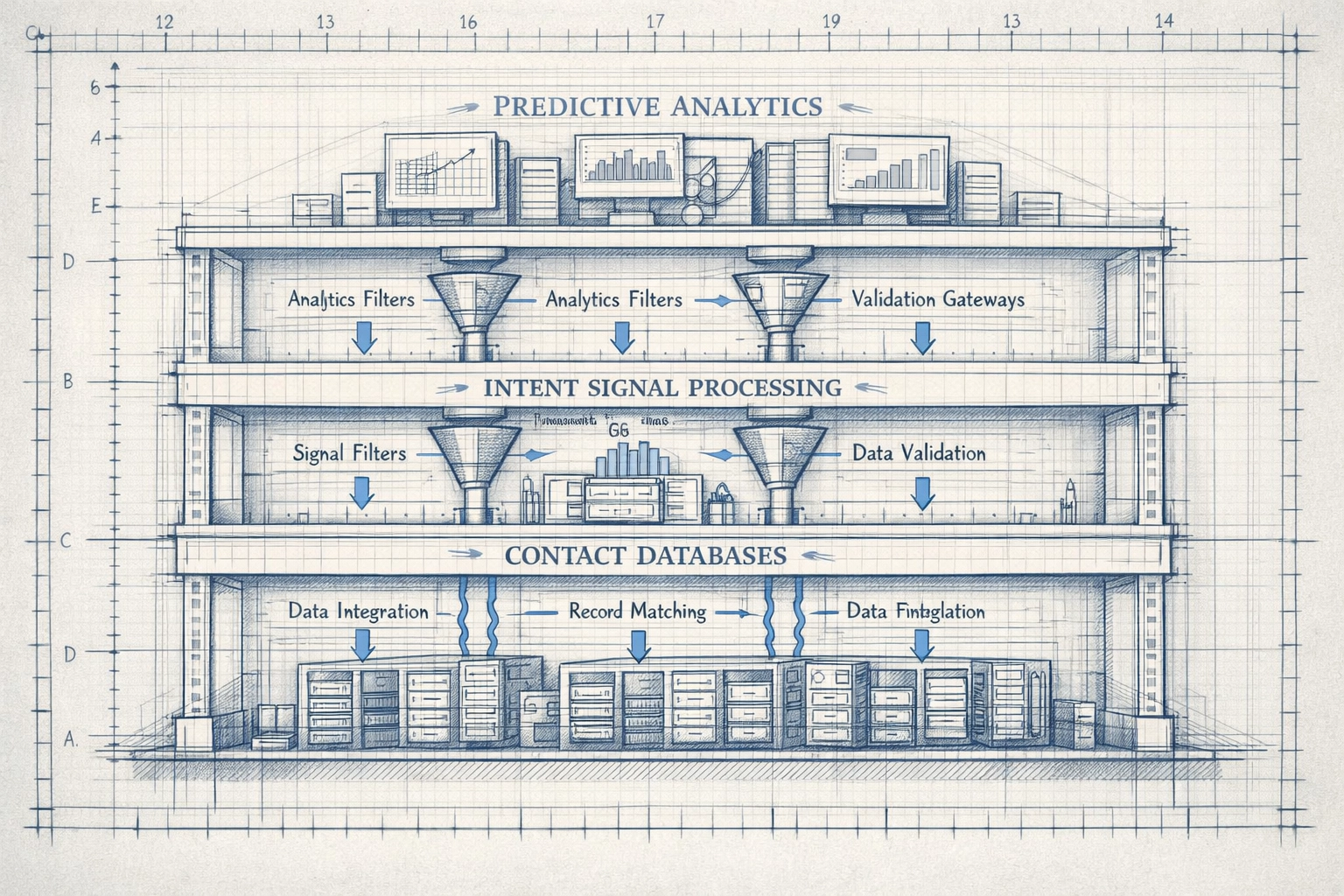
CRM and Pipeline Management Systems
Your CRM should provide visibility into deal progression and automate routine pipeline tasks.
HubSpot Sales Hub offers a genuinely useful free CRM tier with email sequences, meeting scheduling, and live chat. The Professional tier ($450 monthly for three users) adds predictive lead scoring and sales automation workflows.
Pipedrive emphasizes visual pipeline management with drag-and-drop deal stages. AI-powered deal recommendations highlight which opportunities need attention. Pricing starts at $14.90 per user monthly for the Essential plan.
Zoho CRM includes Zia, an AI assistant that prioritizes leads and predicts deal outcomes based on historical patterns. The platform integrates with over 800 third-party applications. Standard plans begin at $14 per user monthly.
Generally speaking, smaller teams benefit from simpler systems like Pipedrive or HubSpot's free tier. Organizations with complex sales processes requiring custom fields, approval workflows, and territory management need more robust platforms.
Enterprise Revenue Automation Solutions
Larger organizations face different pipeline challenges: forecasting accuracy, rep productivity across regions, and consistent process execution.
Salesforce Sales Cloud remains the dominant enterprise platform. Einstein AI provides forecasting, lead scoring, and opportunity insights. Pricing starts at $25 per user monthly for the Starter Suite, but meaningful implementations typically require Professional ($80) or Enterprise ($165) tiers plus significant configuration.
Salesloft specializes in revenue orchestration: coordinating activities across your entire revenue team. Conversation intelligence analyzes sales calls and emails to identify winning behaviors. Pricing is custom but generally suited for teams with 50+ sellers.
Clari focuses specifically on revenue forecasting and pipeline inspection. The platform aggregates data from your CRM, email, calendar, and conversation intelligence tools to provide real-time forecast accuracy. This helps revenue operations teams identify pipeline gaps before they impact quarterly results.
These enterprise solutions deliver ROI when you have dedicated sales operations resources to maintain them. For organizations lacking that internal capability, partnering with specialized implementation firms through networks like Bullpen Business provides faster time-to-value.
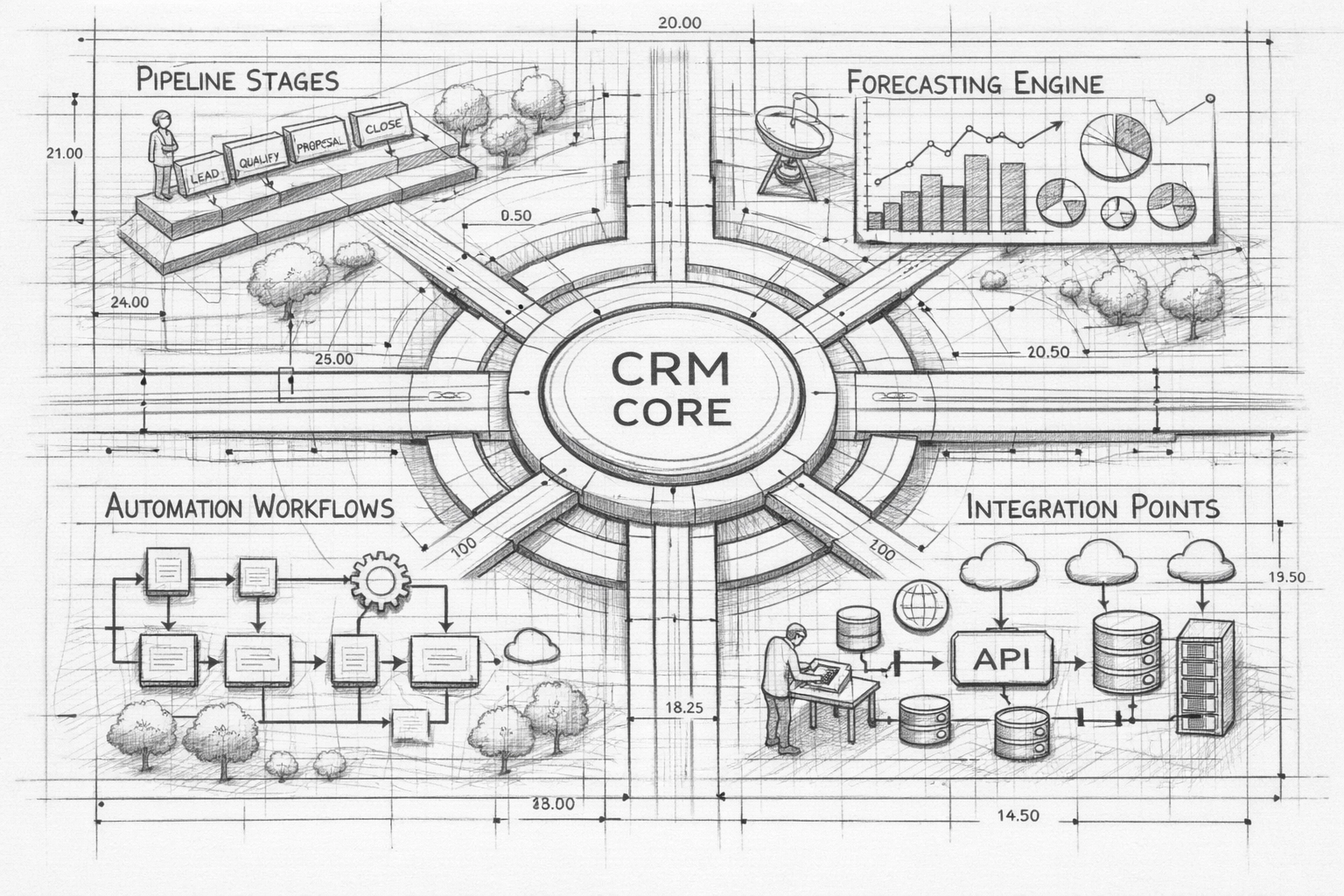
AI-Powered Sales Agents and Conversation Intelligence
The latest category of sales automation tools involves AI agents that handle specific sales functions autonomously.
Thunai AI provides autonomous sales agents operating across voice, chat, email, and social channels. Real-time agent assist features support your human sellers during live conversations. This technology works best for high-volume sales environments where initial qualification can be standardized.
Gong and Chorus.ai (now part of ZoomInfo) specialize in conversation intelligence. They record, transcribe, and analyze sales calls to identify successful talk patterns, competitive mentions, and deal risks. Sales managers use these insights for targeted coaching.
monday CRM enables AI-powered workflows without requiring coding expertise. The visual interface lets you automate lead routing, deal stage progression, and account management tasks. Standard plans begin at $12 per seat monthly.
You should approach AI sales agents with realistic expectations. They excel at routine qualification and information gathering but cannot replace strategic relationship building or complex solution selling.
Integration and Workflow Automation
Your sales automation tools must communicate with each other to prevent data silos and manual work.
Zapier integrates over 8,000 applications with point-and-click automation. The free tier includes 100 tasks monthly. Paid plans start at $19.99 monthly for 750 tasks.
Make (formerly Integromat) offers more complex automation scenarios with conditional logic and data transformation. Pricing begins at $9 monthly for 10,000 operations.
Native integrations within platforms like HubSpot or Salesforce generally provide better performance and reliability than third-party automation tools. However, Zapier and Make become essential when connecting niche applications or legacy systems.
Selecting Tools That Match Your Pipeline Stage
Your automation strategy should align with your current growth stage and sales methodology.
Early-stage companies (under $5M ARR) benefit most from:
Simple CRM (HubSpot free or Pipedrive)
One multichannel outreach tool (Lemlist or Apollo)
Basic automation (Zapier free tier)
Growth-stage companies ($5M-$50M ARR) typically need:
Robust CRM with forecasting (HubSpot Professional or Salesforce)
Sales intelligence platform (Apollo or ZoomInfo)
Conversation intelligence (Gong or Chorus.ai)
Dedicated sales operations resources
Enterprise organizations ($50M+ ARR) require:
Enterprise CRM with custom workflows (Salesforce Enterprise)
Revenue orchestration platform (Salesloft or Outreach)
Advanced forecasting (Clari)
Full-time sales operations and enablement teams
The common mistake is adopting enterprise tools before you have the team and processes to support them.
How Boutique Implementation Partners Accelerate ROI
Technology purchases represent only 30-40% of total sales automation costs. Implementation, training, and ongoing optimization account for the remainder.
Bullpen Business connects organizations with specialized boutique firms that handle:
Requirements assessment: Identifying which tools address your specific pipeline bottlenecks
Platform selection: Recommending solutions based on your industry, sales cycle, and team structure
Implementation: Configuring workflows, integrations, and automations
Training: Ensuring your team actually uses the tools properly
Optimization: Continuously improving performance based on results data
This approach provides faster time-to-value than internal implementations while costing significantly less than large consulting firms.
Mid-market organizations particularly benefit from this model. You gain access to enterprise-level expertise without maintaining expensive internal sales operations teams.
Making the Investment Decision
Sales automation ROI depends on three factors: tool selection, implementation quality, and ongoing optimization.
Before purchasing any platform, you should:
Document current pipeline bottlenecks: Where are deals stalling?
Calculate cost of inaction: What revenue are you losing to inefficient processes?
Define success metrics: What specific outcomes justify the investment?
Assess implementation resources: Do you have internal expertise or need external partners?
Generally speaking, organizations see positive ROI within 6-9 months when they select appropriate tools and implement them properly. Rushed implementations or tool mismatches can extend payback periods to 18+ months or result in abandoned systems.
Next Steps for Pipeline Growth
Consistent pipeline growth requires the right combination of technology, process, and expertise.
If you are struggling with pipeline predictability despite investing in sales automation tools, the issue may not be your technology choices. You may lack the implementation expertise or process discipline to extract value from your existing systems.
Bullpen Business specializes in connecting companies with boutique firms that solve these exact challenges. Our network includes specialists in CRM automation, B2B lead generation services, appointment setting services, and pipeline automation across multiple industries.
Schedule a consultation to discuss which tools and implementation partners align with your specific pipeline challenges and growth objectives.
Comments