%20(3)_edited_edited.png)


The Ultimate Guide to Sales Automation: Everything You Need to Scale Without Increasing Headcount
- Peter Casey
- Apr 9
- 5 min read

For growing organizations, the traditional approach to scaling sales revenue often involves a linear increase in headcount. The logic is simple: more sales representatives should equate to more deals. However, this model frequently leads to diminishing returns as overhead costs, training requirements, and management complexity rise.
Sales automation offers a strategic alternative. By leveraging technology to handle repetitive, manual tasks, we enable sales teams to process higher volumes of leads and opportunities with greater precision. This guide explores how sales automation, CRM automation, and specialized B2B lead generation services can help your company scale while maintaining a lean, efficient workforce.
1. Defining Sales Automation in a Modern Context
Sales automation refers to the use of software and pre-defined workflows to eliminate manual intervention in the sales process. This includes tasks such as data entry, lead scoring, email follow-ups, and document generation. When implemented correctly, these systems allow your high-value talent to focus on what they do best: building relationships and closing complex deals.
Statistics indicate that sales representatives often spend as little as one-third of their day actually selling. The remainder of their time is frequently consumed by administrative duties. By automating these non-selling activities, a company can effectively increase its sales capacity by 30% to 50% without adding a single new employee.

2. CRM Automation: The Foundation of Scale
The Customer Relationship Management (CRM) system serves as the single source of truth for any sales organization. However, a CRM is only as valuable as the data it contains. CRM automation ensures that this data is captured and updated without requiring manual input from the sales team.
Automated Data Entry and Syncing
One of the primary friction points in sales is the manual logging of calls, emails, and meetings. Automation tools can sync calendars and email servers directly to the CRM. This ensures that every interaction is recorded chronologically, providing a complete audit trail of the prospect journey.
Pipeline Management and Triggers
Pipeline automation allows deals to move through various stages based on specific triggers. For example, when a prospect opens a proposal or signs a contract, the CRM can automatically update the deal stage, notify the accounting department, and trigger an onboarding sequence. This reduces "deal rot" and ensures that no opportunity falls through the cracks due to human oversight.
For organizations looking to optimize their underlying infrastructure, reviewing available pricing plans can provide a baseline for the types of technology investments required to support these automated frameworks.
3. B2B Lead Generation Services and Prospecting
Scaling revenue requires a consistent influx of high-quality leads. Manual prospecting: where a salesperson spends hours on LinkedIn or company websites searching for contact information: is an inefficient use of resources.
Automated Lead Capture
B2B lead generation services utilize sophisticated algorithms and databases to identify companies that fit your Ideal Customer Profile (ICP). These leads can be automatically injected into your CRM, enriched with relevant data (such as company size, recent funding, or technographic information), and assigned to the correct territory.
Lead Scoring
Not all leads are created equal. Automated lead scoring systems assign numerical values to prospects based on their behavior (e.g., visiting a pricing page) and demographic fit. This allows your team to prioritize high-intent prospects, ensuring that your most expensive resources: your salespeople: are only talking to the most qualified buyers.
4. Appointment Setting Services and Communication
The gap between "lead generation" and "closing" is often where sales cycles stall. Appointment setting services and automated communication tools bridge this gap by maintaining a persistent, personalized presence in the prospect's inbox.
Automated Outreach Sequences
Modern sales automation platforms allow for the creation of multi-channel outreach sequences. These might include a combination of emails, LinkedIn messages, and automated tasks for a salesperson to make a phone call. Because these sequences are automated, follow-ups happen exactly when they are scheduled, regardless of how busy the sales rep is.
Frictionless Scheduling
Integrating appointment setting services with automated calendar links eliminates the back-and-forth of "what time works for you?" When a prospect is ready to talk, they simply click a link and book a time that is already synced with the rep's availability. This reduces drop-off rates and accelerates the sales velocity.

5. Proposal and Document Automation
The "last mile" of the sales process: generating a proposal, getting it approved, and securing a signature: is often where the most significant delays occur. Research suggests that document automation can accelerate proposal delivery by up to 4.2 times.
Consider a 10-person sales team that generates 200 proposals a month. If each proposal takes 3-5 hours to manually draft, the company is spending roughly 800 to 1,000 hours per month on clerical work. Automating this process by pulling data directly from the CRM into a pre-approved template can reduce the time spent per proposal to mere minutes.
This efficiency not only saves money but also improves the customer experience. In a competitive environment, being the first vendor to deliver a professional, accurate proposal often provides a decisive advantage.
6. Implementation Strategy: A Phased Approach
Transitioning to an automated sales environment should be handled systematically to avoid disrupting existing revenue streams.
Map the Current Process: Document every step from the first touchpoint to the final signature. Identify where manual data entry or repetitive communication is currently required.
Identify High-Impact Areas: Focus first on the tasks that consume the most time but require the least amount of critical thinking. Usually, this is lead enrichment and initial follow-up sequences.
Select the Right Stack: Choose tools that integrate seamlessly with your CRM. At Bullpen Business, we often help companies identify boutique firms that specialize in specific segments of this stack to ensure high performance and profitability.
Pilot and Test: Run a small-scale pilot with a single sales team or territory. Refine the messaging and triggers based on real-world feedback.
Scale and Train: Once the workflows are validated, roll them out to the broader organization. Training should focus on how the automation empowers the reps to spend more time in meaningful conversations.
7. Improving Profitability Through Specialized Partnerships
While the technology for sales automation is widely available, the strategy behind it determines its success. Many companies fail because they attempt to automate a broken process, which only serves to scale their errors.
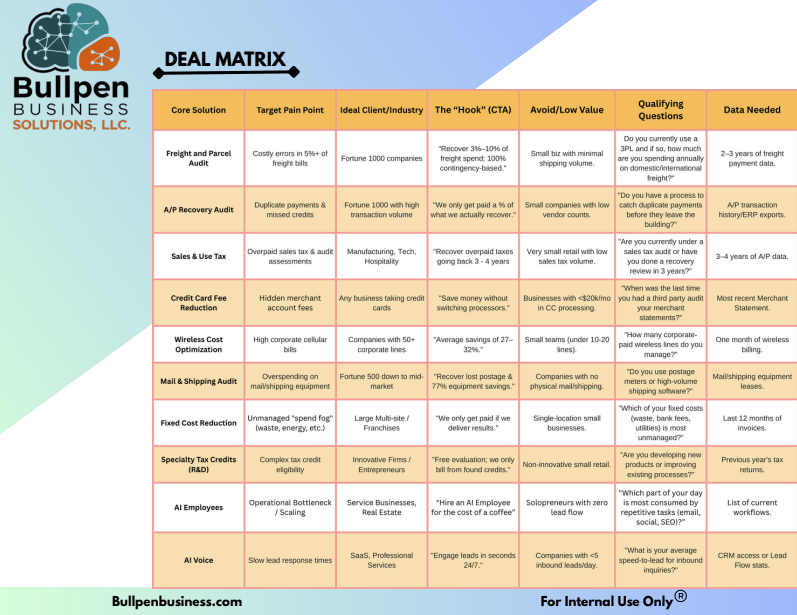
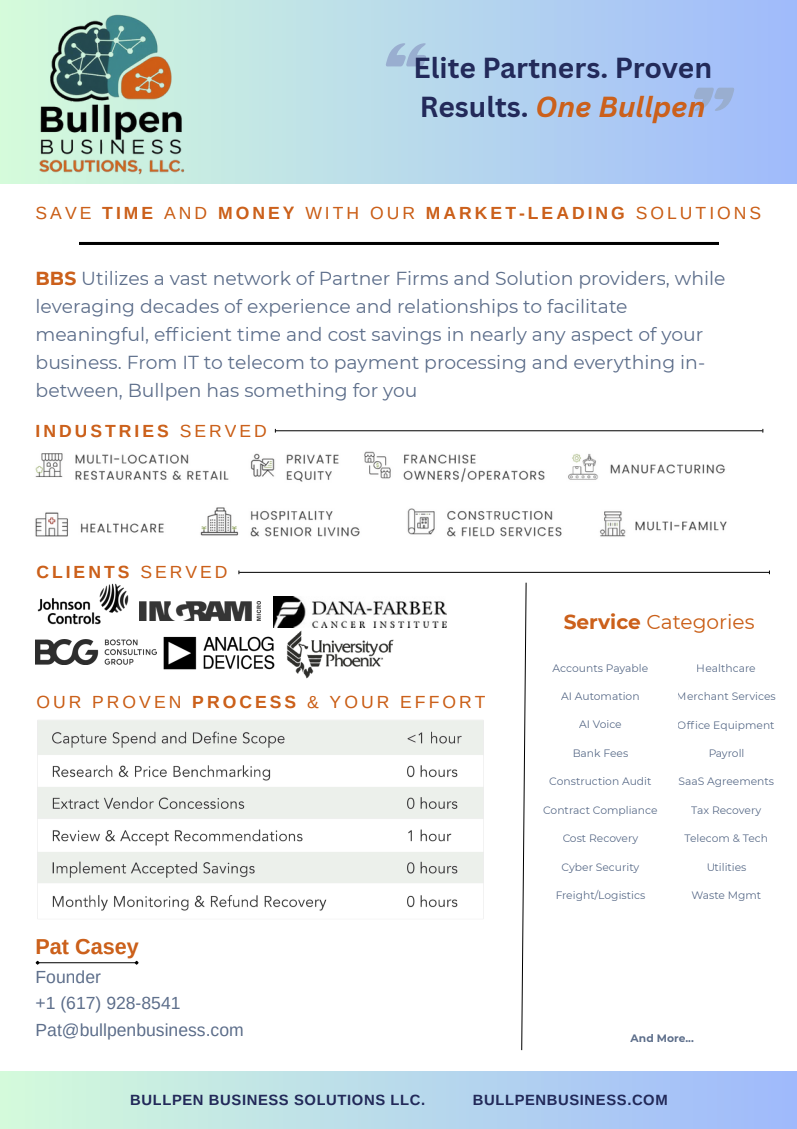
Bullpen Business acts as a strategic bridge, connecting companies with boutique firms that specialize in cost recovery, IT optimization, and sales process refinement. By focusing on niche expertise, organizations can achieve a level of precision that generalist agencies cannot match.
For example, implementing automated AI employees for routine customer interactions or administrative tasks can further reduce the need for administrative headcount, directly contributing to the bottom line.
8. The Quantitative Benefits of Scaling with Automation
The shift toward automation is not merely a trend; it is a fundamental shift in how business is conducted. The benefits are measurable and impactful:
Error Reduction: Automated data syncing reduces human error by up to 95%, ensuring that sales forecasts and customer records are accurate.
Increased Win Rates: By ensuring consistent follow-up and faster response times, companies typically see a 32% increase in win rates.
Enhanced Reporting: With all data flowing through an automated CRM, leadership has access to real-time analytics. This allows for data-driven decisions regarding lead sources, sales performance, and market trends.
Higher Employee Satisfaction: Sales reps prefer selling over administrative tasks. Reducing the "grunt work" leads to higher retention of top talent.
Conclusion
Scaling a business in today’s environment requires a departure from the traditional "hire to grow" mindset. Sales automation provides the framework to increase output, improve data accuracy, and enhance the customer experience without the proportional increase in payroll expenses.
Whether you are looking to refine your B2B lead generation services or seeking to implement comprehensive pipeline automation, the goal remains the same: maximizing profitability through efficiency. By partnering with specialized firms and leveraging the right technology stack, your organization can achieve sustainable growth and a significant competitive advantage.
For more information on how we facilitate these connections and help businesses optimize their operations, you can explore our full range of available services and specialized consulting solutions.
Comments