%20(3)_edited_edited.png)


7 Mistakes You’re Making with Sales Automation (And How to Use Found Money to Fix Them)
- Peter Casey
- Apr 2
- 6 min read

Implementing sales automation is often viewed as a "set it and forget it" solution for scaling a business. However, without a strategic framework, these tools can quickly become expensive distractions that erode your brand’s reputation and drain your resources. Many organizations find themselves paying for complex software that fails to deliver a measurable return on investment.
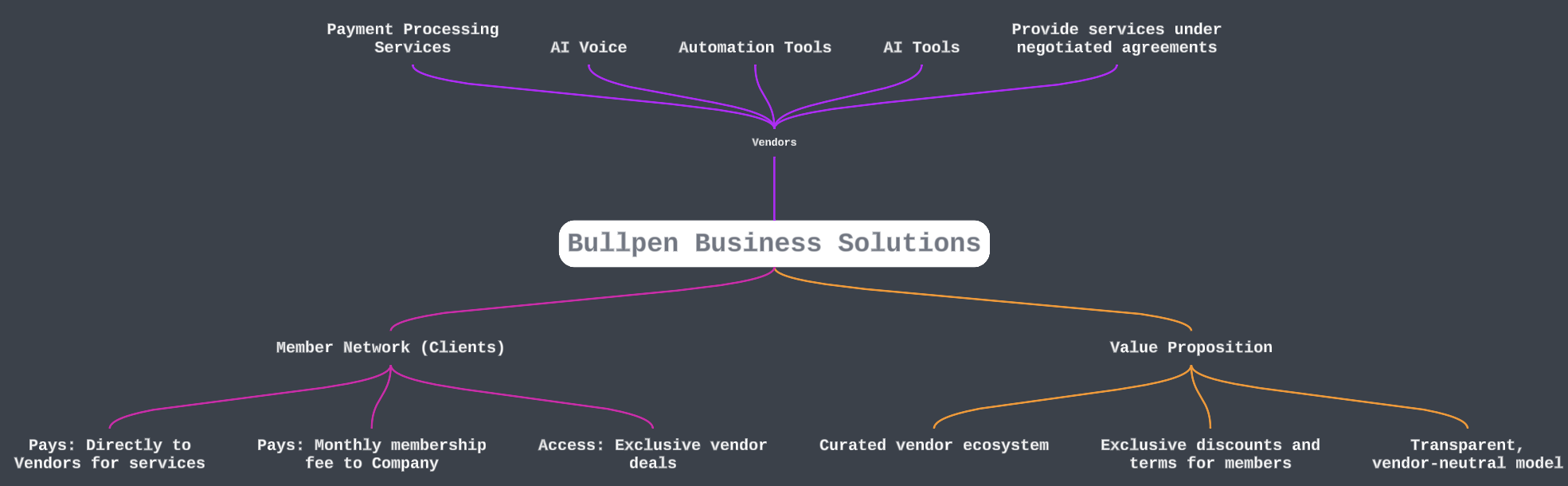
At Bullpen Business, we specialize in helping mid-market and enterprise organizations identify these inefficiencies. We connect you with boutique firms that provide specialized services to improve profitability through better technology and process optimization. Often, the capital required to fix your sales processes can be sourced through "found money": reclaimed waste from other areas of your business operations.
Below are the seven most common mistakes businesses make with sales automation and the strategic steps you can take to turn your pipeline into a high-efficiency growth engine.
1. Over-Automating and Sacrificing Personalization
The primary goal of sales automation is to increase efficiency, but many firms mistake efficiency for the total replacement of human interaction. When your automated messages feel robotic, you risk alienating your highest-value prospects. Research indicates that 62% of consumers are less likely to remain loyal to brands that provide impersonal, generic experiences.
The Fix: Use automation as a digital assistant rather than a replacement for your sales team. Let your systems handle routine tasks: such as sending a whitepaper immediately after a download: while leaving the nuanced engagement to your representatives. For instance, if a prospect engages with your content late at night, your system should trigger a notification for a human representative to follow up the next morning with a personalized message.
The "Found Money" Benefit: By balancing automation with human touch, you recover the lost revenue associated with high churn and poor response rates. High-touch personalization in the middle of an automated sequence can significantly improve your retention of "at-risk" leads.
2. Failing to Implement Proper Lead Qualification and Scoring
Many organizations use B2B lead generation services to fill their CRM with data, but they fail to implement a rigorous scoring system. Without lead scoring, your sales automation treats a low-level researcher the same as a C-suite executive with purchasing power. This leads to your sales team chasing unqualified leads while high-value opportunities grow cold.
The Fix: Develop a strategic scoring framework that evaluates both identity (industry, company size, job title) and behavior (frequency of website visits, email open rates, and webinar attendance). Your CRM automation should be configured to route "hot" leads directly to your top performers while directing others into long-term nurturing workflows.
The "Found Money" Benefit: Correcting this mistake can result in up to a 15% increase in lead-to-sale conversion rates. In a typical mid-market company, that 15% represents significant revenue that was already in your pipeline but was previously ignored or mishandled.

3. Relying on Single-Channel Automation
A common error in pipeline automation is sticking strictly to email. While email remains a powerful tool, roughly 72% of consumers prefer to connect with brands through multiple channels. If your outreach is limited to one platform, you are likely missing a significant portion of your target market.
The Fix: Diversify your outreach strategy. Use LinkedIn for professional networking, email for delivering detailed case studies, and SMS for time-sensitive updates or appointment reminders. Ensure the tone and length of your message match the platform; a 500-word pitch is appropriate for an email, but disastrous for an SMS.
The "Found Money" Benefit: Multi-channel strategies capture prospects where they are most comfortable engaging. This increases overall engagement rates and reduces the cost-per-acquisition (CPA) across your entire sales department.
4. Operating with Poor Data Quality
Bad data is perhaps the most expensive silent killer in a sales organization. Statistics show that sales representatives can spend up to 27.3% of their time dealing with incorrect contact information. This equates to over 540 hours per year, per representative, spent on unproductive tasks. On average, this costs a company approximately $32,000 per sales rep annually.
The Fix: Implement regular data cleansing protocols. Utilize tools that automatically verify email addresses and update job titles within your CRM. Think of data maintenance as a core operational requirement rather than an occasional chore.
The "Found Money" Benefit: Reclaiming 27% of your sales team's time is the equivalent of adding a new staff member for every four people currently on your team: without the additional payroll expense. Bullpen Business can help you identify boutique firms that specialize in data integrity and CRM optimization to unlock this hidden capital.
5. Neglecting Branching Logic in Workflows
Linear automations: where every lead gets the exact same five emails in the same order: often result in high unsubscribe rates. When automations lack branching logic, they fail to account for how a prospect is interacting with your brand. This creates a cluttered CRM and a frustrated sales force.
The Fix: Design your pipeline automation to branch based on engagement. If a prospect opens an email but doesn't click a link, they should receive a different follow-up than someone who clicked a link but didn't book a call. Use safeguards to prevent non-lead contacts (such as existing vendors or job seekers) from entering your sales sequences.
The "Found Money" Benefit: Strategic branching keeps your CRM clean and ensures your sales team is only focused on active opportunities. This focus translates directly into shorter sales cycles and higher deal velocity.
6. Automating Without Clear Strategic Goals
Many companies invest in appointment setting services or sales automation software because it feels like a competitive necessity. However, marketing automation is not a magic solution; it is a force multiplier for your existing strategy. If your strategy is flawed, automation only helps you fail faster.
The Fix: Before automating a single sequence, define specific, measurable objectives. Are you trying to reduce the time it takes to qualify a lead? Are you aiming to increase the average deal size through automated upsells? Map every automation to a specific touchpoint in the customer journey to ensure it is driving the prospect toward a conversion.
The "Found Money" Benefit: When automation is aligned with clear goals, the ROI is measurable. You stop spending money on "cool" features that don't impact the bottom line and start investing in the processes that actually generate revenue. You can learn more about strategic ROI in our guide on sales automation software truth.
7. Forgetting to Automate Lead Management and Entry
The final mistake is failing to automate the entry point of your funnel. If a lead fills out a form on your website and waits 48 hours for a manual entry into the CRM, they have likely already moved on to a competitor. Manual entry is also a primary source of data errors and typos that plague later stages of the sales process.
The Fix: Ensure that every lead source: whether it’s a social media form, a landing page, or a B2B lead generation service: is directly integrated with your CRM. Use automation to assign these leads to representatives immediately based on territory or expertise.
The "Found Money" Benefit: Speed-to-lead is one of the most critical factors in modern sales. By automating the hand-off from marketing to sales, you increase your chances of conversion by being the first to respond.
How Bullpen Business Helps You Fix the Foundation
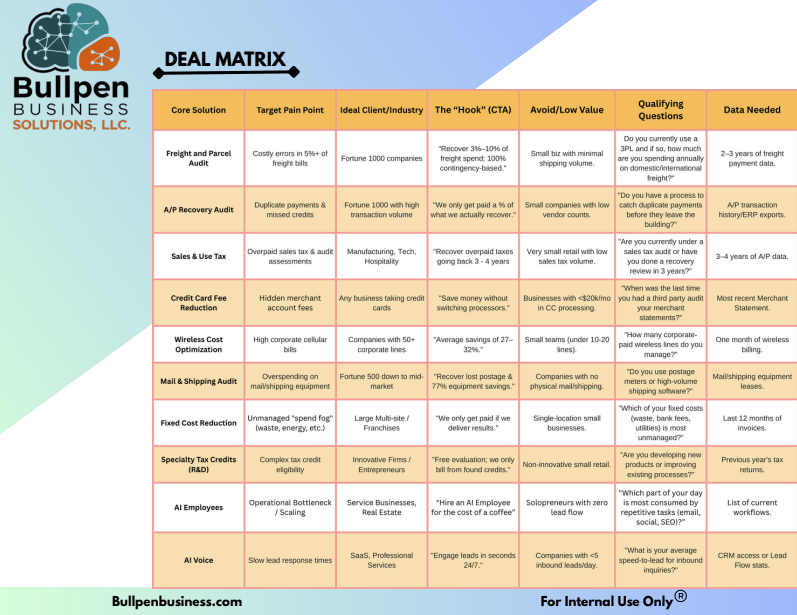
At Bullpen Business, we understand that finding the budget to overhaul your sales technology can be difficult. That is why our model focuses on "found money." We analyze your current business expenses: ranging from wireless optimization to freight audits and tax credits: to find immediate savings.
We then connect you with our curated network of boutique firms that specialize in:
Sales Automation: Building sophisticated workflows that scale your reach.
CRM Automation: Ensuring your data is clean and your pipelines are efficient.
Appointment Setting Services: Generating high-quality meetings without adding headcount.
By reclaiming wasted capital from your operational overhead, you can fund the very sales automation tools and services that will drive your next stage of growth. This allows you to scale your B2B lead generation without the financial risk of traditional hiring.
Moving Forward
Sales automation should be a strategic asset, not a source of friction. By avoiding these seven common mistakes and focusing on data-driven, personalized outreach, you can transform your sales department into a profit center.
If you are ready to stop wasting time on manual tasks and start leveraging the power of professional pipeline automation, Bullpen Business is here to guide the way. We help you navigate the complex ecosystem of vendors to find the perfect fit for your specific needs.
For more insights on how to scale your business efficiently, explore our blog categories or read our deep dive on mastering pipeline automation.
Comments