%20(3)_edited_edited.png)


How to Integrate Sales Automation With Your Existing "Found Money" Strategy
- Peter Casey
- Apr 3
- 4 min read

For many mid-market and Fortune 1000 organizations, the primary hurdle to scaling is not a lack of vision, but a lack of liquid capital and efficient processes. At Bullpen Business, we specialize in a dual-track approach to profitability: identifying "Found Money" through cost recovery and reinvesting those gains into high-performance sales automation.
Integrating these two concepts creates a self-funding growth engine. When you stop overpaying for utilities, wireless plans, and taxes, you unlock the budget necessary to implement world-class CRM automation and B2B lead generation services without touching your primary operating budget.
Understanding the "Found Money" Foundation
Before you can integrate automation, you must understand the source of the capital. "Found Money" refers to realized savings from specialized audits and tax strategies that most internal accounting departments overlook. These are not just cost-cutting measures; they are asset recovery initiatives.
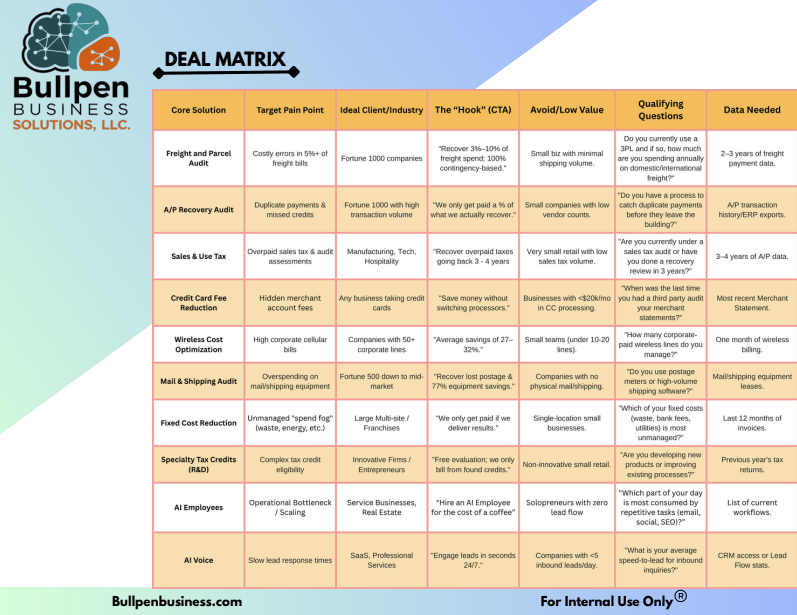
Common sources of Found Money include:
Wireless Optimization: Identifying unpublished rate plans to reduce monthly expenses.
Freight and Shipping Audits: Recovering overcharges and optimizing carrier contracts.
Tax Credits: Leveraging R&D or specialty energy credits.
A/P Recovery: Identifying duplicate payments and vendor overcharges.
By utilizing our network of boutique firms, companies often see immediate liquidity. For instance, a nationwide retailer might see a 47% reduction in wireless expenses, translating to tens of thousands of dollars in monthly savings. This is the capital we then direct toward pipeline automation.
Why Sales Automation is the Perfect Reinvestment
Once the Found Money is secured, the most strategic move is to reinvest it into systems that generate more revenue. Manual prospecting is a silent killer of growth. If your high-value sales executives are spending 40% of their day on data entry or manual follow-ups, your ROI is leaking.
Sales automation allows your team to focus exclusively on closing. By integrating automated workflows, you ensure that no lead falls through the cracks. This transition is essential for scaling without significantly increasing headcount.
If you are wondering if your organization is ready for this shift, you might find our guide on the truth about sales automation ROI helpful for your internal benchmarking.
Step 1: Mapping the Integration Points
Integration begins with a clear map of your current sales cycle and your Found Money sources. You must identify where manual friction exists. Generally speaking, if a task is repetitive and rules-based, it should be automated.
Start by auditing your CRM. CRM automation is the backbone of this strategy. It ensures that data from your cost-recovery audits: such as new budget allocations: is reflected in your sales planning.
When you use Found Money to fund these tools, you are essentially using "house money" to build a more robust infrastructure. This reduces the risk traditionally associated with software implementation.
Step 2: Implementing Pipeline Automation
Pipeline automation is the process of moving a prospect from "interested" to "close" with minimal manual intervention. This includes automated email sequences, lead scoring, and triggered notifications for your sales team.
For CFOs and operations leaders, the appeal here is the ability to self-fund your next AI move. By using the savings from a freight audit, for example, you can implement a pipeline tool that shortens your sales cycle by 15-20%.
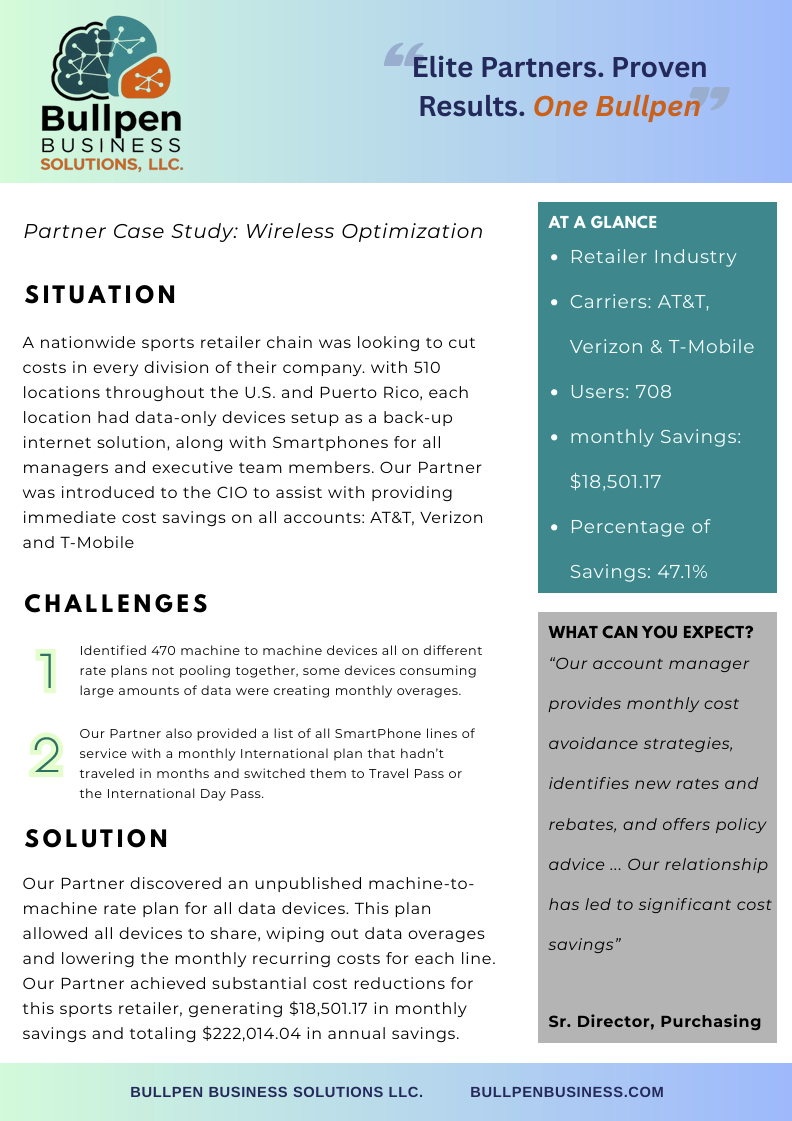
As seen in the case study above, a $18,501 monthly saving is more than enough to cover the licensing and management fees for a top-tier automation stack.
Step 3: Leveraging Appointment Setting Services
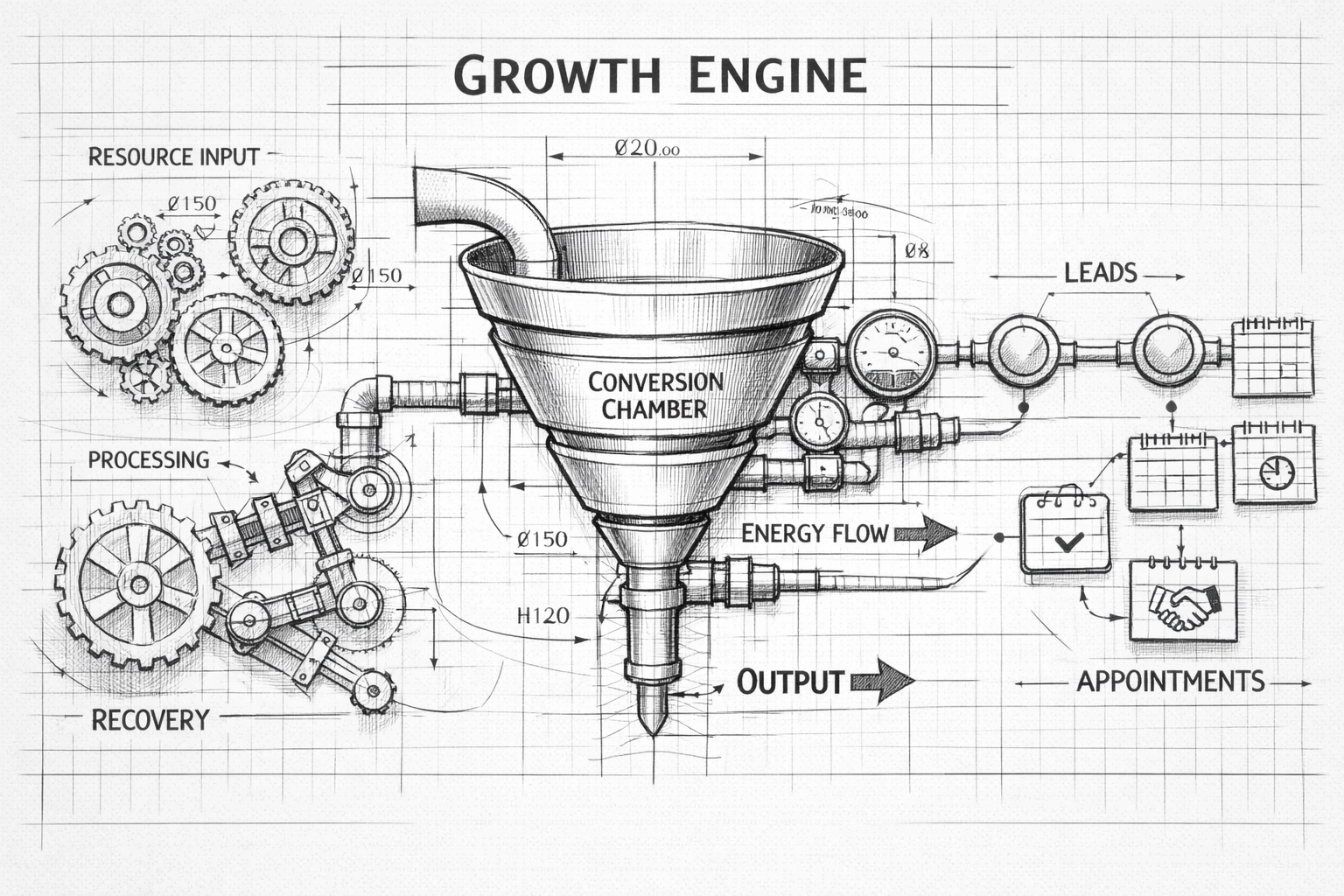
Found Money isn't just for software; it's for specialized talent. Many organizations struggle with the "top of the funnel." This is where appointment setting services and B2B lead generation services provided by boutique firms become invaluable.
Bullpen Business connects you with experts who specialize in outbound growth. Instead of hiring three new internal SDRs (Sales Development Representatives), you can use your recovered capital to hire a specialized firm that uses sales automation to deliver a steady stream of qualified meetings to your senior closers.
This model is significantly more scalable. If the lead generation firm performs, you increase the spend using more Found Money. If they don't, you haven't increased your permanent payroll.
Step 4: Synchronizing the Data
The final step in integration is ensuring that your automation tools speak to your financial reporting. You want to see a direct correlation between the capital saved in operations and the revenue generated in sales.
Centralize Lead Data: Ensure all leads from your B2B lead generation services flow directly into your automated CRM.
Automate Follow-ups: Use triggers to ensure every new lead receives a touchpoint within five minutes.
Monitor the "Found Money" ROI: Track how much new revenue was generated specifically from the budget freed up by cost recovery.
Common Pitfalls to Avoid
Even with "Found Money," it is easy to misallocate funds. One common mistake is over-complicating the tech stack too early. You do not need every feature available; you need the features that solve your specific bottleneck.
Another mistake is neglecting the human element. Automation should empower your sales team, not replace the personal touch required for high-ticket B2B deals. We recommend a "hybrid" approach: automate the reaching out and the scheduling, but keep the actual discovery calls and negotiations human-led.
For a deeper dive into common errors, review our article on fixing sales automation mistakes using found money.
Scaling Your B2B Growth
The beauty of the Bullpen Business model is its circular nature. As your sales automation and appointment setting services begin to close more deals, your company grows. As your company grows, your expenditures in areas like telecom, shipping, and energy increase. This, in turn, creates more opportunities for cost recovery audits: more Found Money: which can then be used to further refine and scale your automation.
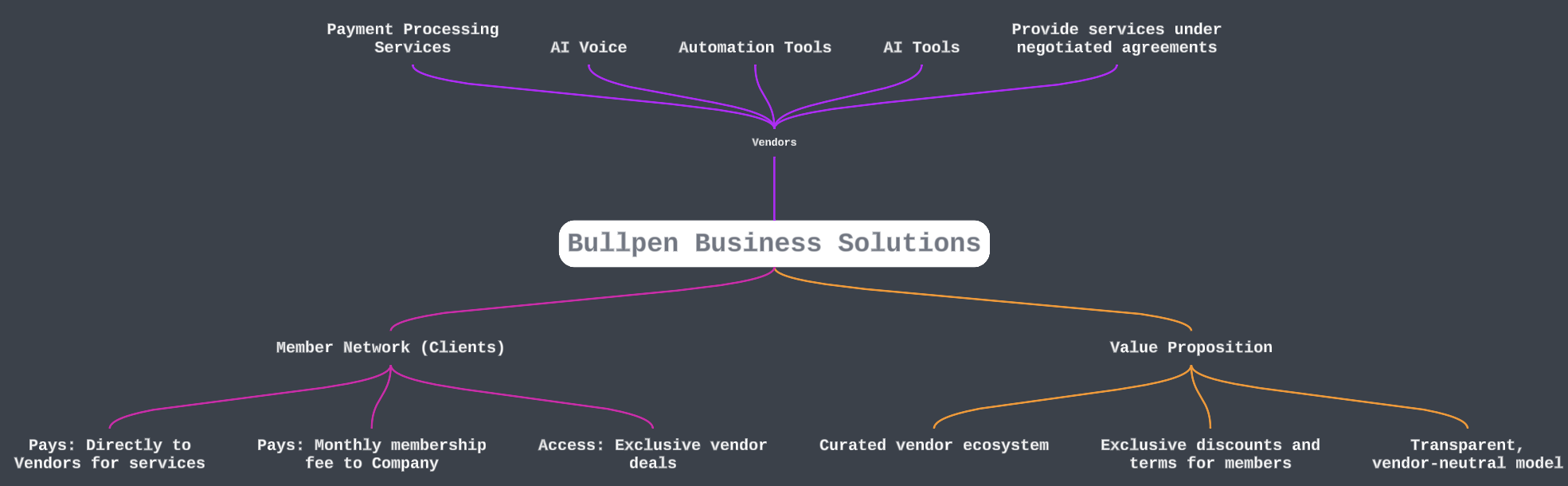
Our curated ecosystem of vendors ensures that you are always working with vetted professionals, whether you are looking for tax credit specialists or a firm to handle your pipeline automation.
Conclusion
Integrating sales automation with a "Found Money" strategy is the most fiscally responsible way to scale a modern business. It removes the "budget" excuse and replaces it with a logical, data-driven framework for growth. By stopping the leaks in your current spending, you provide the fuel for your future revenue.
If you are ready to identify the hidden capital in your organization and put it to work through advanced automation, we invite you to meet with our team here. We will help you navigate our vendor-neutral model to find the exact boutique firms you need to improve your profitability and streamline your sales process.
Comments