%20(3)_edited_edited.png)


The Ultimate Guide to Pipeline Automation: Scaling Revenue Without the Post-Layoff "Ghost Department
- Peter Casey
- Apr 23
- 5 min read

The modern corporate landscape has undergone a significant transformation. Many organizations now operate as "ghost departments": skeleton crews tasked with maintaining the output of full-scale teams following significant layoffs or restructuring.
While the headcount has decreased, revenue targets often remain aggressive. This creates a capacity gap that manual labor simply cannot bridge.
The solution to this dilemma is not to work harder, but to implement robust pipeline automation. By leveraging sophisticated tools and strategies, you can restore capacity and scale revenue without the traditional risks associated with increasing headcount.
1. Understanding the "Ghost Department" Efficiency Gap
A ghost department is characterized by high-stress environments where specialized talent spends more time on administrative upkeep than on high-value selling activities. Research indicates that sales representatives typically spend up to 71% of their time on non-selling tasks, such as manual data entry and CRM updates.
When your team is lean, this inefficiency becomes a critical failure point. Every hour spent manually moving a lead through a funnel is an hour lost on closing a deal.
Pipeline automation serves as a force multiplier. It allows you to maintain a high-frequency outreach and follow-up cadence that would otherwise require a team twice your current size.
2. The Foundation: CRM Automation and Data Integrity
Before you can implement advanced B2B lead generation services, you must address your foundational data. Automation layered on top of poor data quality will only accelerate your rate of failure.
Effective CRM automation begins with defining clear pipeline stages that reflect actual buyer decisions. These stages must have consistent entry criteria to ensure deals do not become stagnant or misclassified.
Audit your data quality: Ensure your contact information is enriched and accurate.
Standardize your stages: Move away from generic labels to action-oriented milestones.
Automate data entry: Use tools that automatically log emails, meetings, and notes directly into the CRM.
For a deeper dive into common pitfalls, you may find our guide on 7 mistakes you’re making with CRM automation and how to fix them helpful in stabilizing your foundation.

3. The Five-Tool Stack for Scalable Revenue
You do not need a complex ecosystem of dozens of tools. To succeed with a lean team, you need integration over complexity. Organizations running unified revenue operations grow up to 19% faster than those using siloed systems.
Your core automation stack should consist of the following:
The CRM: Your central source of truth for all prospect and deal tracking.
Engagement Platform: Tools for executing sequences at scale while maintaining a personal touch.
Orchestration Layer: Workflow automation that connects your various tools (e.g., Zapier or Make).
Data Enrichment Provider: To ensure your leads are qualified and your contact info is current.
Revenue Intelligence: Tools that record and analyze calls to provide coaching and deal insights.
Implementing this stack correctly allows you to transition from manual tracking to a proactive revenue engine. This transition is essential for restoring capacity without increasing your corporate career risk.
4. High-ROI Automation: The MQL-to-SQL Bridge
The most significant "leak" in the sales pipeline usually occurs during the handoff between marketing and sales. This is where pipeline automation delivers its highest return on investment.
Data shows that a 5-point improvement in the MQL-to-SQL conversion rate can result in an 18% lift in total revenue. For a ghost department, manual lead routing is too slow. Leads often go cold before a human can reach out.
Specific High-ROI Automations Include:
Instant Lead Routing: Assigning leads to the right representative based on territory, industry, or company size the moment they enter the system.
Predictive Lead Scoring: Using AI to prioritize prospects most likely to close, ensuring your lean team focuses only on high-value opportunities.
Automated Appointment Setting Services: Allowing prospects to book discovery calls directly onto a calendar without the back-and-forth of email scheduling.
5. Solving the Persistence Problem
The "rule of seven" in marketing is more relevant than ever. Studies show that 80% of sales require five or more follow-ups, yet 44% of sales representatives give up after just one attempt.
In a post-layoff environment, exhaustion often leads to a drop in persistence. This is where sales automation becomes non-negotiable.
By building automated follow-up sequences, you ensure that every prospect receives the necessary touchpoints. These sequences should combine:
Automated email and LinkedIn touchpoints.
Tasks for human intervention at critical decision moments.
"Deal rot" alerts that flag inactive opportunities after a 14-day threshold.
This systematic approach ensures that nothing falls through the cracks, allowing you to scale revenue without adding headcount.
6. Integrating B2B Lead Generation Services
Scaling revenue requires a steady stream of new opportunities. When your internal team is focused on closing, finding time for prospecting is difficult. This is why many successful mid-market to Fortune 1000 organizations partner with boutique firms for B2B lead generation services.
These firms specialize in the "top of the funnel," utilizing advanced technology and specialized expertise to identify and qualify leads.
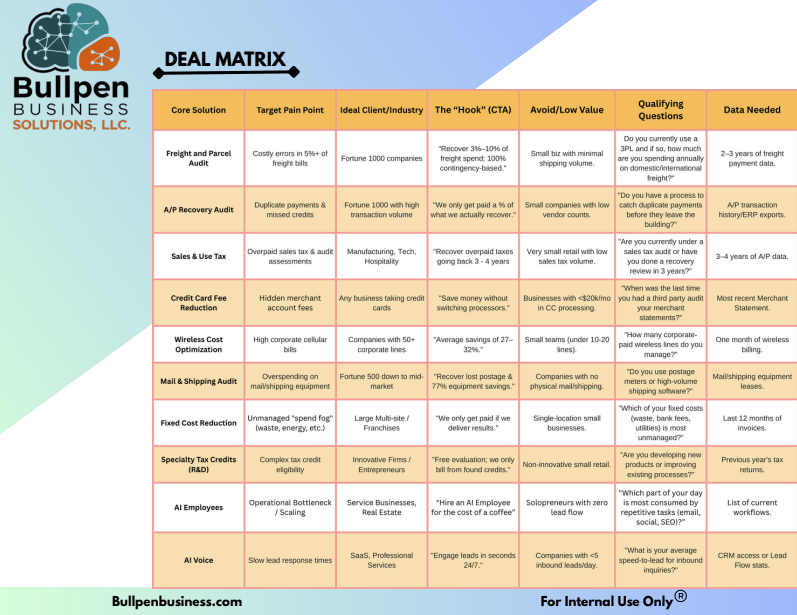
At Bullpen Business, we connect companies with these specialized boutique firms. We help you find partners who can integrate directly with your automated workflows. This creates a seamless transition from lead discovery to a booked meeting on your calendar.

7. The Power of Automated Appointment Setting Services
One of the most effective ways to restore capacity to a lean team is through professional appointment setting services. By the time a prospect reaches your sales team, they should be pre-qualified and ready for a discovery call.
Automating the scheduling process eliminates the administrative friction that often stalls deals. When you combine high-quality lead generation with automated scheduling, your sales team can spend 100% of their time in "selling mode" rather than "hunting mode."
This shift in focus is a primary driver of profitability. It allows you to maximize the output of your existing talent, turning a "ghost department" into a high-performance revenue machine.
8. Measuring Success and Forecasting Accuracy
Inaccurate forecasting is a significant risk for lean organizations. Over 55% of sales leaders report that inaccurate forecasts cost them their revenue targets.
Pipeline automation provides the data necessary for weighted forecasting. Instead of relying on a representative’s "gut feeling," you can assign win probabilities based on historical stage conversion rates.
Key Metrics to Track:
MQL-to-SQL Conversion Rate: The health of your lead handoff.
Average Sales Cycle Length: How quickly automation is moving deals through the funnel.
Rep Selling Time: The percentage of the day spent in active sales conversations versus administrative work.
9. What to Keep Human
While automation is powerful, it is not a replacement for human judgment. To maintain a professional brand voice and build trust, certain elements of the sales process must remain manual:
Discovery Conversations: Understanding the unique pain points of a prospect requires empathy and active listening.
Complex Negotiations: Pricing and contract nuances often require a human touch to reach a mutually beneficial agreement.
Strategic Account Planning: High-value accounts require a level of business context that AI and automation cannot yet replicate.
The goal of automation is to remove the "noise" so your team can focus on these high-impact human interactions.
10. How Bullpen Business Bridges the Gap
At Bullpen Business, we understand that implementing these systems can be daunting, especially when your team is already stretched thin. Our role as business consultants is to simplify this journey.
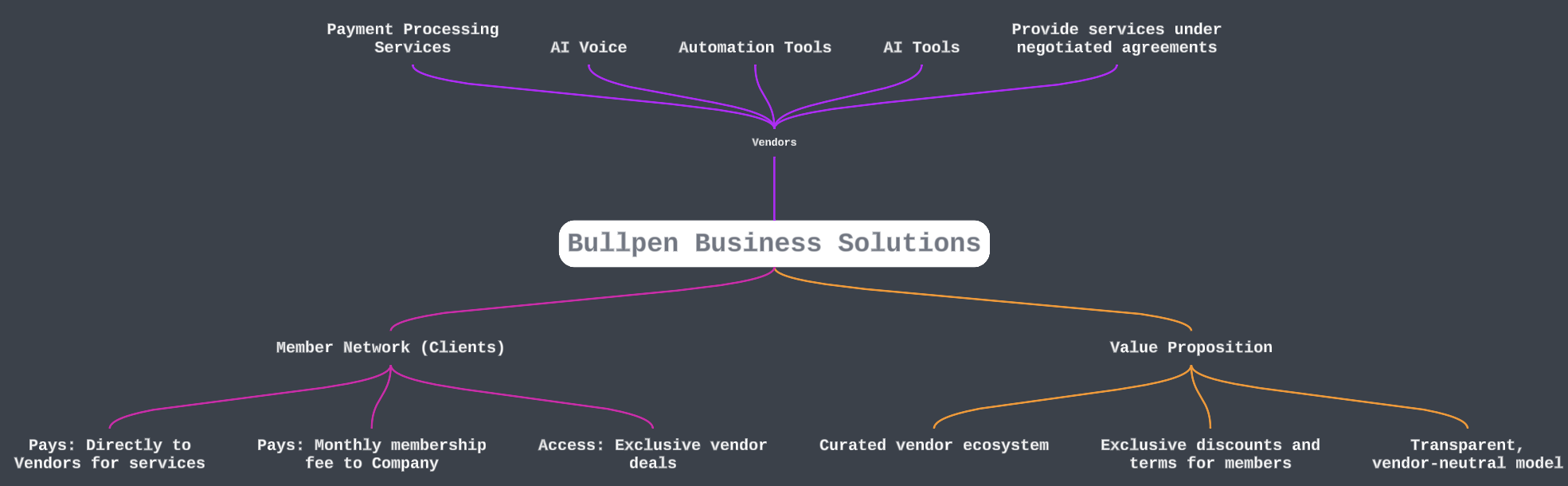
We provide a curated ecosystem of boutique firms specializing in:
Sales automation and CRM optimization.
B2B lead generation services tailored to your niche.
Appointment setting services that fill your calendar with qualified prospects.
We negotiate agreements with these vendors to provide our members with exclusive deals and a transparent, vendor-neutral approach. This allows you to deploy advanced pipeline automation rapidly, without the trial-and-error often associated with finding reliable partners.
By leveraging our network, you can integrate sales automation with your current team without adding headcount, effectively solving the "ghost department" crisis and securing your company's path to profitable growth.
Implementing these strategies is not just about survival; it is about building a more resilient, efficient, and profitable business model for 2026 and beyond.
Comments