%20(3)_edited_edited.png)


10 Reasons Your Sales Automation Isn't Working (And How the Orchestrator Model Fixes It)
- Peter Casey
- Mar 5
- 5 min read

In the current business landscape of 2026, sales automation is no longer a luxury; it is a fundamental requirement for staying competitive. However, many organizations find themselves in a frustrating cycle: they invest heavily in the latest sales automation platforms, yet their pipelines remain stagnant, and their sales teams are more overwhelmed than ever.
The promise of "set it and forget it" revenue is a myth. When automation is applied to a flawed foundation, it doesn't solve problems, it simply accelerates them. At Bullpen Business, we frequently see mid-market and enterprise companies struggling to see a return on investment because they have treated automation as a tool rather than a strategy.
To fix your revenue engine, you must first understand why it is failing. Here are the 10 most common reasons your sales automation isn't working, and how the "Orchestrator Model" provides a sustainable path to profitability.
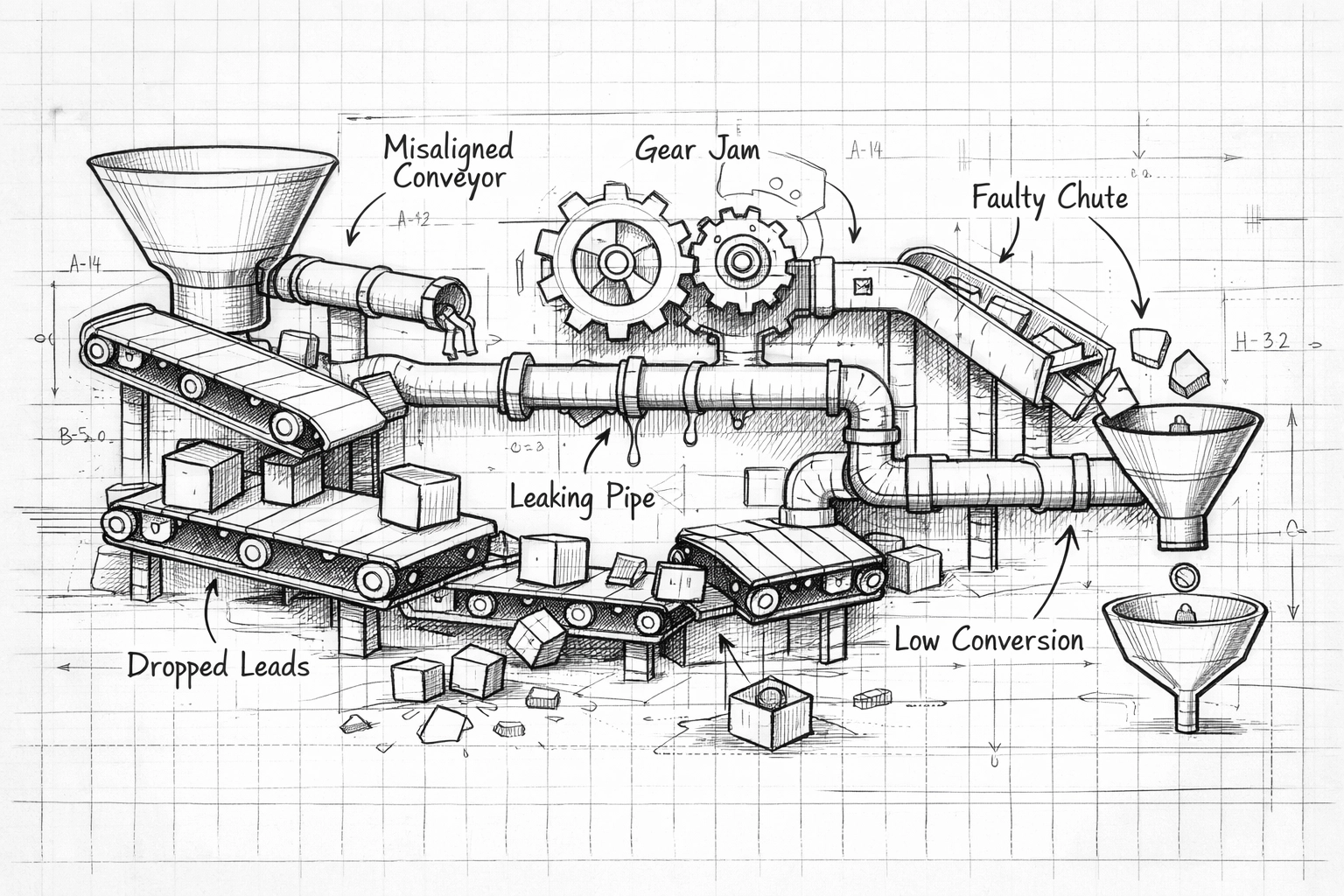
1. You Are Automating Broken Processes
The most frequent cause of automation failure is "garbage in, garbage out." If your manual sales process is inconsistent, unclear, or inefficient, automating it will only produce bad results faster. Robotic Process Automation (RPA) and pipeline automation tools are designed to follow rules. If those rules are logical fallacies, the system will fail.
Before deploying software, you must audit your workflow. Are your lead stages clearly defined? Is there a consensus on what constitutes a "qualified" lead? Without this clarity, you are simply digitizing chaos. You can learn more about avoiding these pitfalls in our guide on 7 mistakes you’re making with CRM automation.
2. The "Tool-First" Instead of "Strategy-First" Approach
Many businesses purchase sales automation software based on a feature list or a convincing demo without a clear implementation strategy. They hope the software will dictate the strategy. In reality, the strategy must dictate the software.
Choosing a platform before defining your objectives leads to "feature bloat," where you pay for high-end capabilities you never use, while your core needs remain unaddressed. A strategy-first approach involves identifying the specific bottlenecks in your B2B lead generation services and selecting tools that specifically alleviate those pressures.
3. Poor Lead Qualification and Scoring
Automation often leads to an influx of volume, but volume is not the same as value. If your automated systems are not correctly identifying and prioritizing high-intent prospects, your sales team will spend their days chasing low-quality leads.
Misconfigured lead scoring can result in a significant drop in lead-to-sale conversion rates. Effective appointment setting services require a surgical focus on data. If your automation doesn't filter out the "noise," your top performers will eventually ignore the system entirely, reverting to manual (and slow) prospecting methods.
4. Underlying Data Decay and Silos
Your automation is only as good as your data. In many organizations, customer information is scattered across marketing platforms, CRMs, and support tickets. This "data disconnection" means your automation is flying blind.
When your CRM automation pulls from stale or duplicate records, you risk sending the wrong message to the wrong person at the wrong time. This not only wastes resources but also damages your brand’s reputation. Ensuring a "single source of truth" is a prerequisite for any successful scale-up effort.
5. Lack of "Human-in-the-Loop" Personalization
While AI and automation have come a long way, B2B sales still rely heavily on trust and human connection. One of the primary reasons automation fails is that it feels, well, automated.
Generic, "spray-and-pray" email sequences are easily spotted and ignored. The most effective pipeline automation strategies use technology to handle the repetitive tasks: like scheduling and data entry: while freeing up humans to provide high-level personalization. If your prospects feel like they are talking to a bot, they will treat your brand like a commodity.
6. Failure to Scale Beyond the Pilot
Many companies find success with a small-scale automation pilot but fail when trying to roll it out across the entire organization. This usually happens because the pilot relied on a "hero" employee who manually managed the cracks in the system.
Scaling requires a robust infrastructure that doesn't depend on any single individual. It requires a repeatable framework that can be handed off to boutique firms or internal teams without loss of quality. For insights on scaling effectively, read our article on how to scale B2B lead generation without adding headcount.
7. Low Sales Team Buy-In
If your sales reps feel that automation is a threat to their jobs or an administrative burden, they will find ways to bypass it. Automation should be sold to the team as a "force multiplier" that handles the grunt work they hate, allowing them to focus on closing deals.
When the sales team isn't involved in the design of the automation flows, the resulting system often lacks the practical nuances of a real-world sales conversation.
8. Insufficient Integration Across the Tech Stack
A common failure point is the "gap" between tools. Your B2B lead generation services might be capturing leads perfectly, but if those leads don't flow seamlessly into your CRM and your appointment setting services' dashboard, the chain is broken.
Manual data transfers between "siloed" tools are where leads go to die. True pipeline automation requires deep integration where data flows bidirectionally, ensuring every stakeholder has real-time visibility into the customer journey.
9. Lack of Central Oversight (Bot Sprawl)
When multiple departments (Marketing, Sales, Customer Success) all create their own automations independently, you end up with "bot sprawl." This leads to prospects receiving conflicting messages or being entered into three different sequences simultaneously.
Without a central "Orchestrator" to oversee the entire ecosystem, the automation becomes a liability. There must be a strategic architect who understands how every piece of the puzzle fits together.
10. Neglecting the "Long-Tail" Follow-Up
Most sales are won in the follow-up, yet most automations focus only on the initial outreach. If your system isn't designed to nurture leads over 6, 12, or 18 months, you are leaving the majority of your potential revenue on the table. Automation should be the safety net that ensures no lead ever falls through the cracks, regardless of how long the sales cycle lasts.
How the Orchestrator Model Fixes It
At Bullpen Business, we believe the solution to these ten failures isn't more software: it’s a better model. We call it the Orchestrator Model.
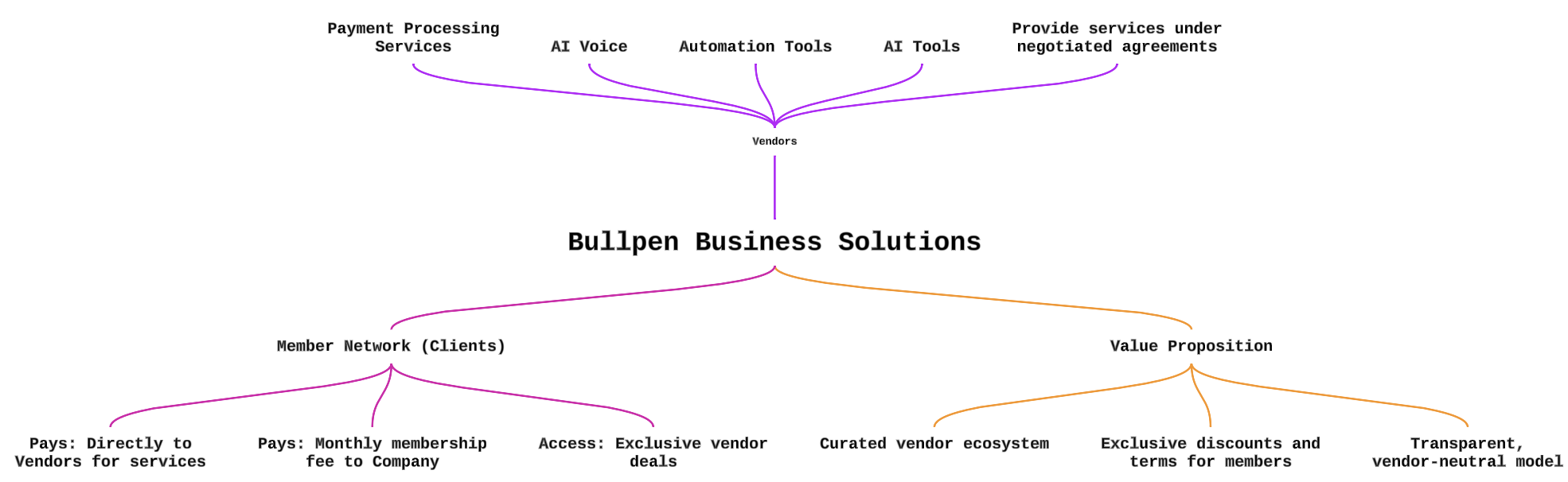
In this model, your business doesn't just "buy tools." Instead, we connect you with specialized boutique firms that act as the strategic architects of your sales engine. These firms don't just implement software; they design the entire revenue ecosystem.
The Role of the Strategic Architect
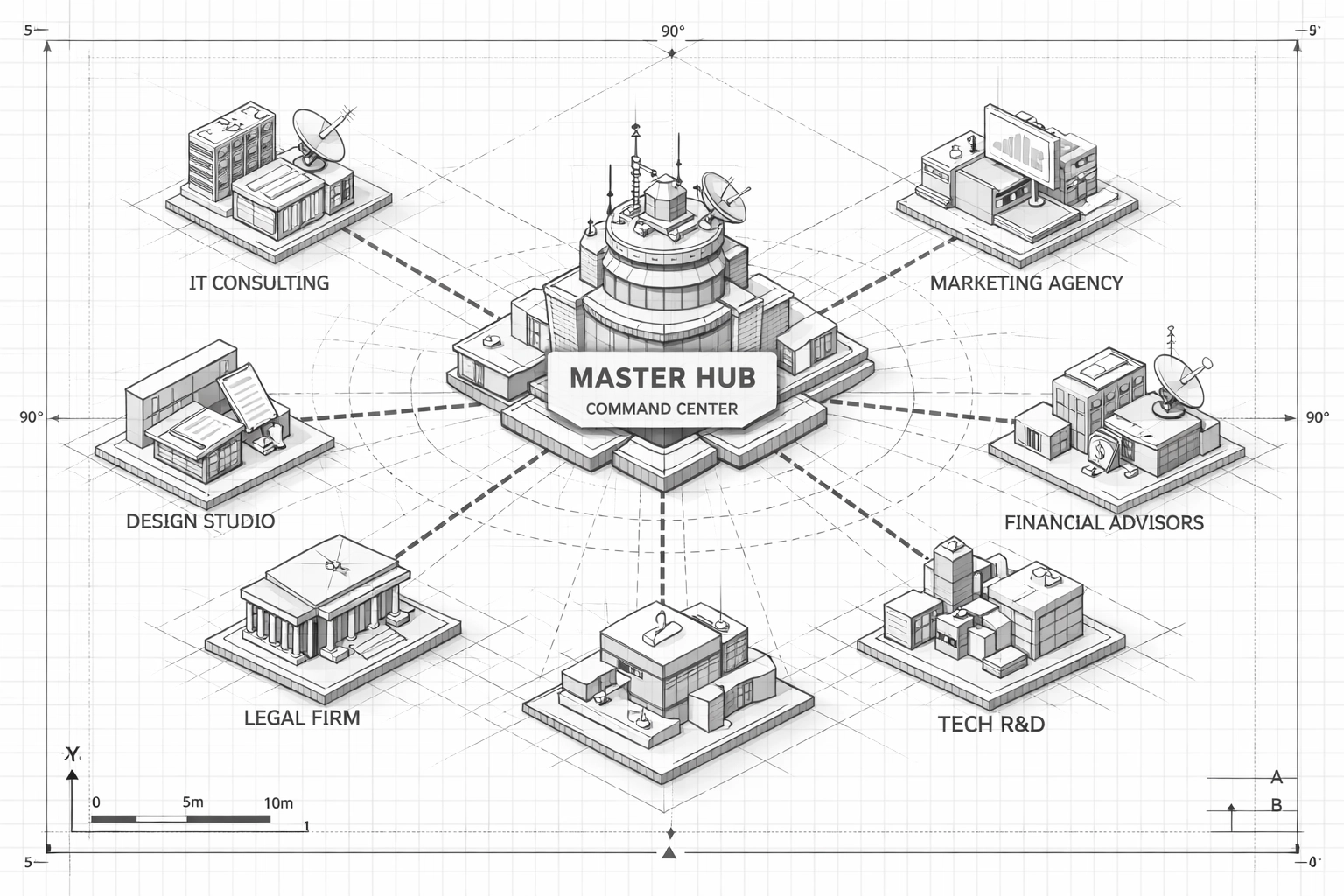
The "Orchestrator" or Strategic Architect is the central point of contact who ensures that your sales automation, CRM automation, and lead generation services are all pulling in the same direction. They bridge the gap between your high-level business goals and the technical execution of the tools.
By using this model, companies can achieve:
Modular Flexibility: You can swap out specific boutique firms or tools as your business grows without breaking the entire system.
Expert Oversight: You get the benefit of specialists who live and breathe pipeline optimization, rather than relying on a generalist internal hire.
Reduced Overhead: Instead of a massive, expensive internal department, you utilize a lean network of experts coordinated through the Bullpen Business ecosystem.
To see how this looks in practice, you should review the strategic architect's approach to pipeline automation.
Moving Toward a Profitable Future
If your sales automation feels like a burden rather than a blessing, it is time to stop the "patchwork" approach. Adding one more plugin or hiring one more entry-level SDR won't fix a structural issue.
The Orchestrator Model shifts the focus back to what matters: profitability and predictable growth. By connecting with the right boutique firms through Bullpen Business, you gain access to the same level of sophisticated automation used by Fortune 1000 companies, tailored for your specific mid-market needs.
Don't let your automation remain a cost center. Turn it into a revenue-generating asset by building a foundation based on strategy, integration, and expert orchestration.
Ready to optimize your revenue engine? Explore our pricing and partnership plans to see how Bullpen Business can connect you with the specialists needed to fix your sales automation once and for all.
Comments