%20(3)_edited_edited.png)


Sales Automation Secrets Revealed: How to Use "Found Money" to Scale Without More Headcount
- Peter Casey
- Apr 6
- 5 min read

In the current economic landscape, the traditional approach to scaling a sales organization: hiring more bodies to make more calls: is becoming increasingly inefficient. For many mid-market and enterprise organizations, the cost of recruiting, training, and maintaining a high-headcount sales team often outpaces the incremental revenue generated. This creates a ceiling where growth actually begins to erode profitability.
The solution lies in a concept we refer to as "found money." This involves extracting additional revenue from leads and data you have already acquired, without increasing your marketing spend or adding to your payroll. By leveraging sophisticated sales automation and strategic partnerships, you can transform your existing database into a self-funding growth engine.
The Hidden Cost of the "Hire More" Mentality
Generally speaking, when a company needs more revenue, the reflexive response is to hire more Account Executives (AEs) or Business Development Representatives (BDRs). However, this approach carries significant hidden liabilities:
Overhead and Benefits: Beyond base salary, the cost of benefits, taxes, and office space (or remote stipends) adds roughly 20-30% to each hire's cost.
Training Lead Time: It may take three to six months for a new hire to become fully productive. During this window, you are essentially subsidizing their education.
Human Error and Inconsistency: Even the best sales professionals have "off" days. Manual follow-up is inherently inconsistent, leading to "lead leakage."
To avoid these pitfalls, savvy organizations are turning to pipeline automation to ensure that no lead is ever truly "dead" and that every potential touchpoint is maximized.
Understanding the "Found Money" Framework
"Found money" refers to the revenue sitting dormant in your CRM. Research indicates that most businesses convert only a small fraction of their existing leads: often as low as 5-15%. The remaining 85-95% are typically discarded or ignored after a few failed contact attempts.
By deploying CRM automation and AI-driven follow-up sequences, you can re-engage these "dead" leads at scale. These systems apply persistent, empathetic outreach that mimics human interaction but operates 24/7 without fatigue. This allows you to scale revenue without the traditional overhead of building additional funnels or increasing operational complexity.

Strategy 1: Implementing High-Performance CRM Automation
The core of any successful "found money" strategy is a robust CRM automation system. Most organizations use their CRM as a digital filing cabinet: a place where data goes to die. To turn it into a revenue driver, you must move toward a proactive model.
A sophisticated automation setup can:
Trigger Conditional Workflows: If a prospect opens an email but does not click a link, the system can automatically send a follow-up three hours later with a different value proposition.
Segment by Intent: Use data to identify which leads are showing "buying signals" (such as visiting a pricing page) and automatically move them to the top of the priority list for your human closers.
Automate Data Hygiene: Ensure that contact information is regularly updated and scrubbed, reducing the time your sales team spends on "wrong numbers" or bounced emails.
By automating these administrative tasks, your existing team can focus exclusively on high-value activities: closing deals and building relationships. You can learn more about specific tactics in our guide on how to master pipeline automation and self-fund your next AI move.
Strategy 2: B2B Lead Generation Services Without the Headcount
Scaling your outbound efforts doesn't require a floor full of BDRs. Modern B2B lead generation services have evolved into boutique operations that utilize advanced tech stacks to deliver qualified meetings directly to your calendar.
At Bullpen Business, we specialize in connecting companies with these specialized boutique firms. These partners operate on a performance-oriented basis, allowing you to pay for results rather than hours worked. This model aligns their incentives with your growth goals.
Using external appointment setting services allows you to:
Test New Markets Rapidly: You can launch a campaign in a new vertical in days, not months.
Control Costs: You can scale your lead flow up or down based on your current closing capacity.
Access Expertise: Boutique firms often have proprietary databases and outreach methods that would be too expensive to build in-house.
For a deeper dive into scaling your outreach, consider reviewing the fastest way to scale your B2B lead generation.
Strategy 3: Pipeline Automation and the "Self-Funding" Model
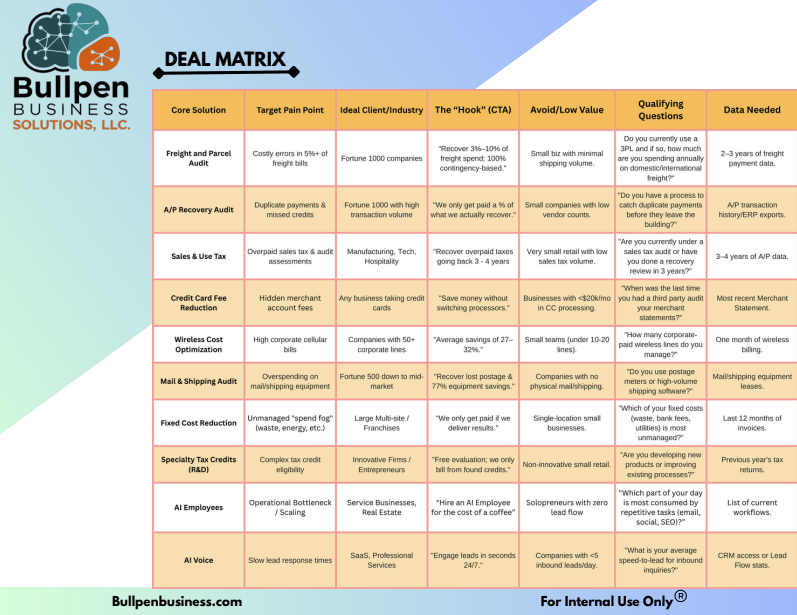
One of the most effective ways to implement sales automation is to tie it directly to cost-recovery initiatives. This is the ultimate "found money" play. By identifying overcharges in your existing expenses: such as freight, wireless, or payroll taxes: you can use those recovered funds to pay for your automation upgrades.
For example, our wireless optimization case study shows how a retailer saved over $18,000 monthly. These are not "new" dollars; they are recovered dollars. When you re-invest this "found money" into pipeline automation, your sales tech stack essentially pays for itself.
The Bullpen Business Advantage: Curated Excellence
The challenge most executives face is not a lack of tools, but a surplus of choice. The "MarTech" landscape is cluttered with thousands of platforms, many of which fail to deliver a true ROI.
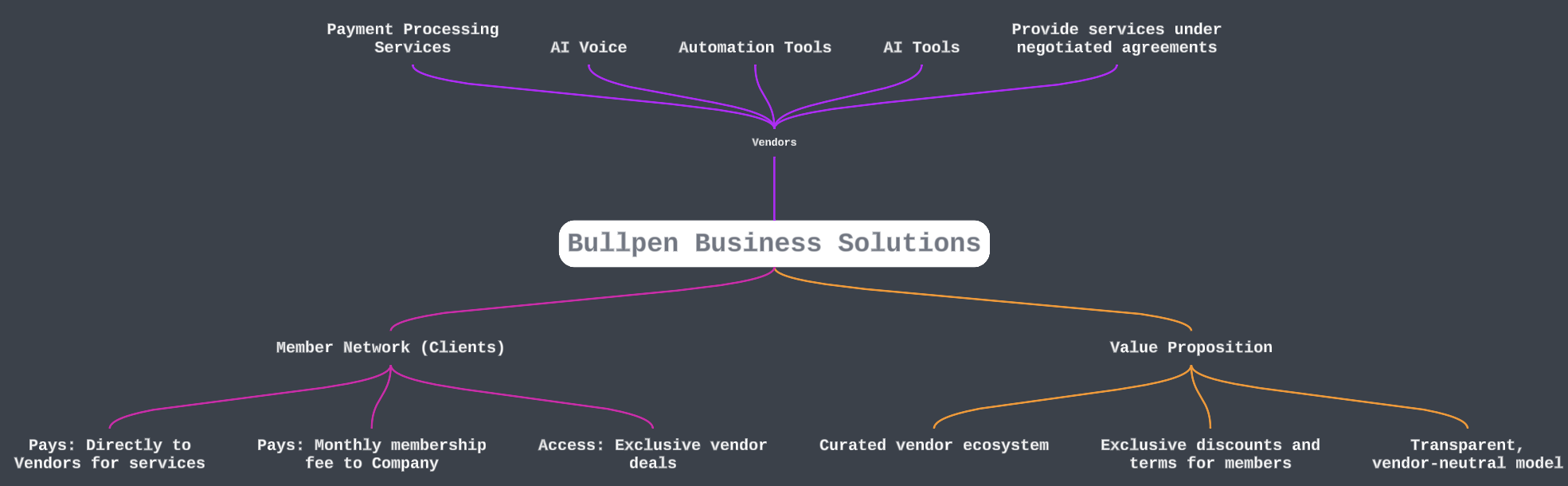
Bullpen Business acts as a strategic architect. We do not just sell software; we provide access to a curated ecosystem of vetted vendors and boutique firms. We help you navigate the complexities of:
Vendor Selection: Finding the right appointment setting services that actually understand your niche.
Negotiated Rates: Leveraging our member network to get pricing you couldn't achieve on your own.
Integration: Ensuring your sales automation tools play nicely with your existing infrastructure.
Our model is transparent and vendor-neutral. We prioritize your profitability because we know that a sustainable business relationship is built on measurable results. You can explore our specific offerings, such as our AI-driven sales solutions, to see how we bridge the gap between technology and revenue.

5 Steps to Start Scaling with "Found Money" Today
If you are ready to stop the cycle of hiring and start the cycle of automating, we recommend the following roadmap:
Audit Your Current Pipeline: Identify where leads are falling off. Is it after the first call? After the first email? This is where your pipeline automation needs to start.
Scrub Your "Dead" Lead List: Take all leads from the last 12-24 months that didn't close and run them through an AI-re-engagement sequence.
Optimize Existing Expenses: Use a service like freight audit or A/P recovery to find immediate capital to fund your automation efforts.
Outsource the Top-of-Funnel: Engage specialized B2B lead generation services to handle the "grunt work" of prospecting, so your senior staff stays focused on closing.
Refine Your CRM: Move from a "storage" mindset to a "workflow" mindset by implementing CRM automation that triggers tasks based on prospect behavior.
Conclusion
Scaling your business doesn't have to mean increasing your headcount and your headaches. By focusing on "found money": revenue from existing leads and savings from existing expenses: you can build a leaner, more profitable organization.
Sales automation is no longer a luxury; it is a fundamental requirement for any B2B company looking to remain competitive in 2026 and beyond. By implementing pipeline automation and leveraging expert appointment setting services, you can ensure your sales engine runs at peak efficiency regardless of your team size.
If you are unsure where to begin, we invite you to explore our quick start guide to pipeline automation or contact us directly to see how Bullpen Business can connect you with the right partners to scale your operations.
Comments