%20(3)_edited_edited.png)


The Simple Trick to Improve Your Sales Automation ROI Using Found Money
- Peter Casey
- Apr 7
- 5 min read

Most business leaders view sales automation as a capital expenditure: a cost that must be justified through future performance. While the potential for a high return on investment (ROI) is well-documented, the initial hurdle of budget allocation often prevents companies from scaling as quickly as they should.
What if you could fund your entire digital transformation using money your company is already losing?
At Bullpen Business, we specialize in uncovering "found money" through cost recovery and then reinvesting those savings into growth-driving mechanisms like sales automation and CRM automation. This strategic loop allows you to improve your profitability without increasing your corporate career risk or dipping into your existing operating budget.
Section 1: Understanding the Concept of Found Money
"Found money" refers to the significant capital recovered from overpayments, errors, and inefficiencies in non-core business expenses. These are often hidden in plain sight within your freight bills, utility invoices, wireless accounts, and tax filings.
Generally speaking, mid-market to Fortune 1000 organizations have complex billing structures where errors occur in approximately 7% to 10% of invoices. By auditing these areas, we help you reclaim capital that was otherwise lost.
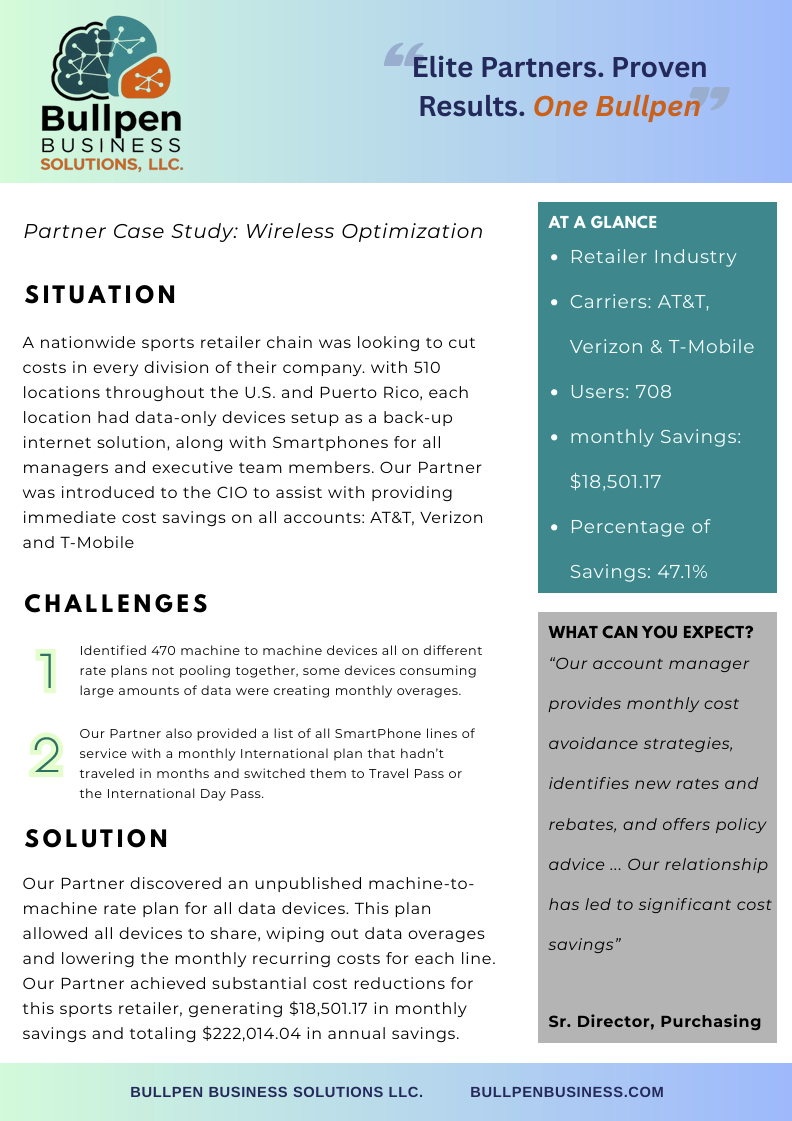
As demonstrated in the case study above, a nationwide sports retailer saved over $18,500 monthly simply by optimizing their wireless expenses. This represents over $220,000 in annual "found money." When this capital is redirected toward B2B lead generation services and pipeline automation, the ROI on your sales stack shifts from a projected gain to a self-funded reality.
Section 2: Why Sales Automation ROI Often Fails to Meet Expectations
Many companies invest heavily in sales automation software but fail to see a meaningful impact on their bottom line. This usually happens for three reasons:
Complexity Overhead: The software requires a level of management that the current team cannot provide.
Fragmented Data: Your CRM does not talk to your lead generation tools, leading to manual data entry and "ghost work."
Lack of Strategy: The tools are implemented as a "quick fix" rather than a cohesive part of a broader pipeline automation strategy.
To truly understand your potential returns, you must look at the truth about ROI and how it correlates with headcount efficiency. If your automation isn't reducing the manual workload of your top performers, it is simply adding another layer of cost.
Section 3: The Simple Trick: The Self-Funding Growth Model
The trick to improving your ROI isn't just about choosing better software; it is about changing how the software is financed and integrated. By using found money from cost recovery, the "cost" variable in your ROI calculation becomes zero: or even negative.
Consider this formula: (Total Gain from Automation – Total Cost of Automation) / Total Cost of Automation.
When your "Total Cost of Automation" is covered by the recovery of overcharged freight fees or tax credits, your gain becomes pure profit. This allows you to invest in higher-tier appointment setting services and more robust CRM automation without the usual budget constraints.
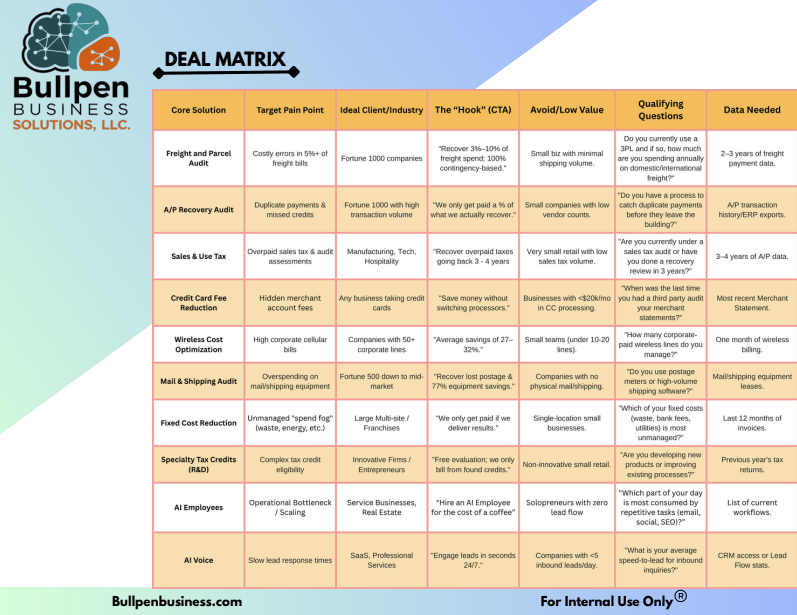
Our Deal Matrix highlights how we identify these pain points. Whether it is A/P recovery or tax credits, each recovered dollar serves as the fuel for your next AI-driven move. We recommend following a guide for CFOs to ensure this transition is handled with financial precision.
Section 4: Implementing Pipeline Automation for Maximum Impact
Once you have secured your found money, the first area of investment should be pipeline automation. This ensures that your leads are managed from initial contact to close without any manual intervention required from your sales team.
Efficient pipeline automation focuses on:
Lead Scoring: Automatically prioritizing leads based on their likelihood to convert.
Nurture Sequences: Using sales automation to keep your brand top-of-mind during long B2B sales cycles.
Capacity Restoration: Removing the "admin work" so your sales reps can focus on high-value conversations.
By automating the "boring" parts of the process, you close deals faster and improve the overall health of your sales funnel. You can learn more about this in our strategic architect's guide.

Section 5: Leveraging Appointment Setting Services to Scale
Scaling your outbound growth often requires more than just software; it requires a specialized workforce. However, hiring a full-time in-house team is expensive and risky. This is where boutique appointment setting services and B2B lead generation services become invaluable.
These services act as an extension of your company, utilizing high-level sales automation tools to fill your calendar with qualified meetings. When funded by cost recovery, these services essentially pay for themselves before the first deal even closes.
For those new to this model, we offer a beginner's guide to mastering outbound growth which outlines how to integrate these services into your existing workflow.
Section 6: CRM Automation: The Glue That Holds It Together
Your CRM should be the "source of truth" for your entire organization. Without CRM automation, you risk losing the data intelligence gained through your lead generation efforts.
Automating your CRM allows for:
Instant Syncing: Ensuring that data from appointment setting services flows directly into your sales pipeline.
Automated Reporting: Giving executives real-time visibility into ROI and conversion rates.
Trigger-Based Actions: Automatically sending follow-up emails or scheduling tasks based on lead behavior.
Comparing CRM automation versus manual tracking shows a clear winner in 2026. Manual tracking is not just slow; it is a liability that costs you visibility and revenue.
Section 7: The Bullpen Business Advantage
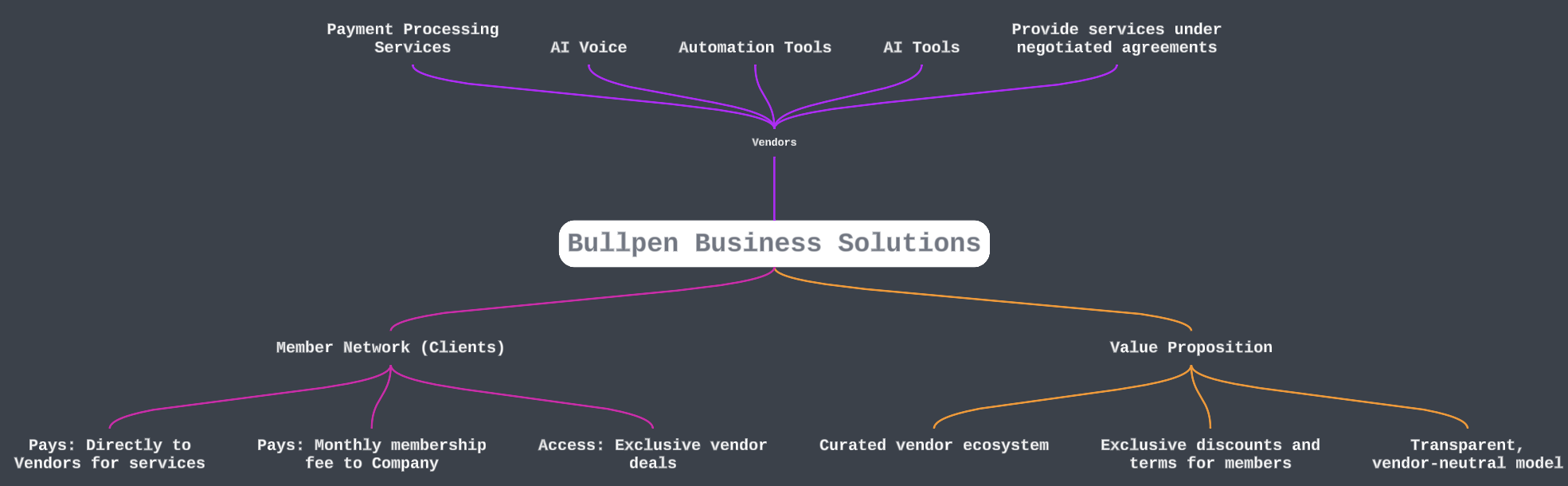
At Bullpen Business, we do not just suggest these tools; we provide the ecosystem to make them work. We are a vendor-neutral consulting firm that connects you with boutique providers specializing in cost recovery and sales automation.
Our model is designed to be transparent and member-focused. We help you find the money, and then we help you spend it wisely on the tools that will actually move the needle for your business. This approach minimizes your risk while maximizing your profitability.
Whether you are looking to fix mistakes in your current automation or you are ready to build a new system from the ground up, the strategy remains the same: recover waste, reinvest in growth, and automate for scale.
Section 8: Final Steps to Improve Your Sales Automation ROI
To begin your journey toward self-funded growth, we recommend a simple three-step process:
Audit Your Overhead: Look for found money in areas like telecom, freight, and tax. Bullpen Business can facilitate this with zero upfront cost.
Identify Bottlenecks: Determine where your sales team is spending the most time on manual tasks. This is where pipeline automation will have the highest impact.
Partner with Specialists: Instead of trying to build everything in-house, leverage our network of all products and services to find the right boutique firm for your specific needs.
By following this "simple trick," you are not just improving your sales automation ROI: you are building a more resilient, profitable, and scalable business. The money is already there; it is simply waiting for you to find it and put it to work.
Comments